Amazon Says It Has Enough Satellites to Launch Leo Broadband Service
Initial service is expected later this year following the latest Atlas V launch.

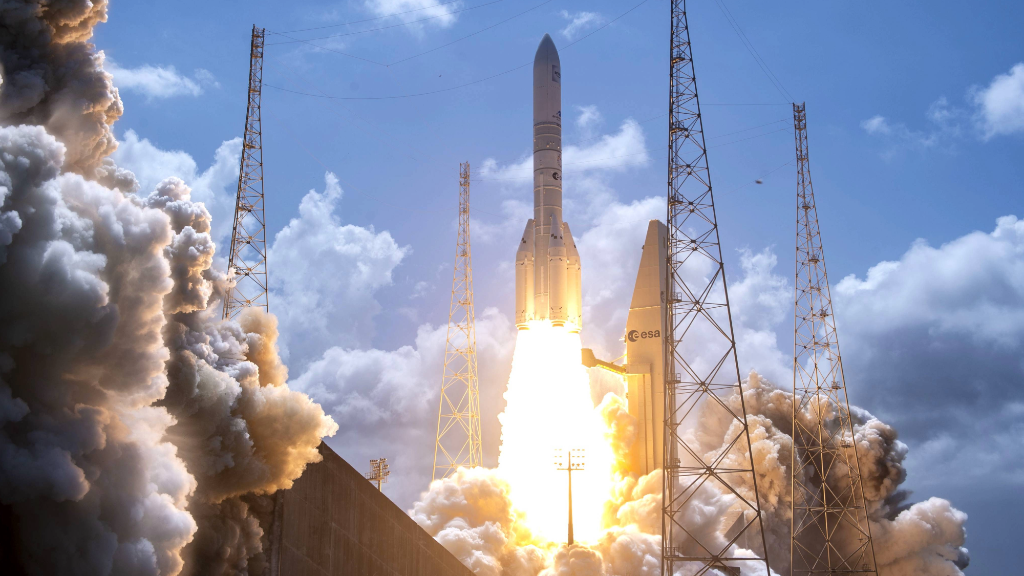
WASHINGTON, July 6, 2026 – Amazon says it has deployed enough satellites to launch its Leo commercial service later this year.
The company launched 29 additional satellites aboard a United Launch Alliance Atlas V rocket early Thursday, bringing its constellation to 396 spacecraft. That is sufficient to provide “continuous service across initial latitudes,” Chris Weber, vice president of business and product for Amazon Leo, wrote in a post on X.

The announcement moves Amazon closer to entering a market currently dominated by SpaceX's Starlink network. While Amazon has conducted limited enterprise trials of its service, it has not yet begun broad commercial offerings for residential, government, or most business customers.
Initial coverage is expected to be limited geographically as Amazon continues deploying satellites. The company said future launches will expand both network capacity and service availability.
Amazon trails SpaceX by several years in building its satellite constellation. SpaceX began deploying operational Starlink satellites in 2019 and has since launched roughly 10,000 satellites, serving more than 12 million customers worldwide, including 2.7 million in the U.S., according to New Street Research. Amazon announced its satellite broadband initiative that same year, when it was known as Project Kuiper.
The company ultimately plans to deploy approximately 7,700 satellites but has faced delays tied largely to launch availability. In a filing earlier this year seeking additional time to meet regulatory deployment milestones, Amazon cited industry wide constraints in launch capacity and delays affecting multiple launch providers.
Amazon secured dozens of launch contracts in 2022 with United Launch Alliance, Arianespace, and Blue Origin before later purchasing additional launch services from Starlink parent SpaceX. Several of those providers have experienced development and scheduling delays that slowed deployment.
The company suffered another setback in May when one of Blue Origin's New Glenn rockets exploded during a pre-launch hot-fire test, postponing a planned mission carrying Amazon satellites. Blue Origin has said it intends to return New Glenn to flight later this year after rebuilding launch infrastructure and completing its investigation into the anomaly.
Amazon said its next satellite deployment will fly aboard United Launch Alliance's Vulcan rocket, which can carry larger payloads than the Atlas V. The company said it has hundreds of completed satellites awaiting launch at Cape Canaveral and has expanded its processing facilities to support a faster deployment cadence.