
Amazon Wants More Time to Hit LEO Launch Milestone
Company said repeated launch delays, necessary prototype ‘reengineering’ slowed deployment

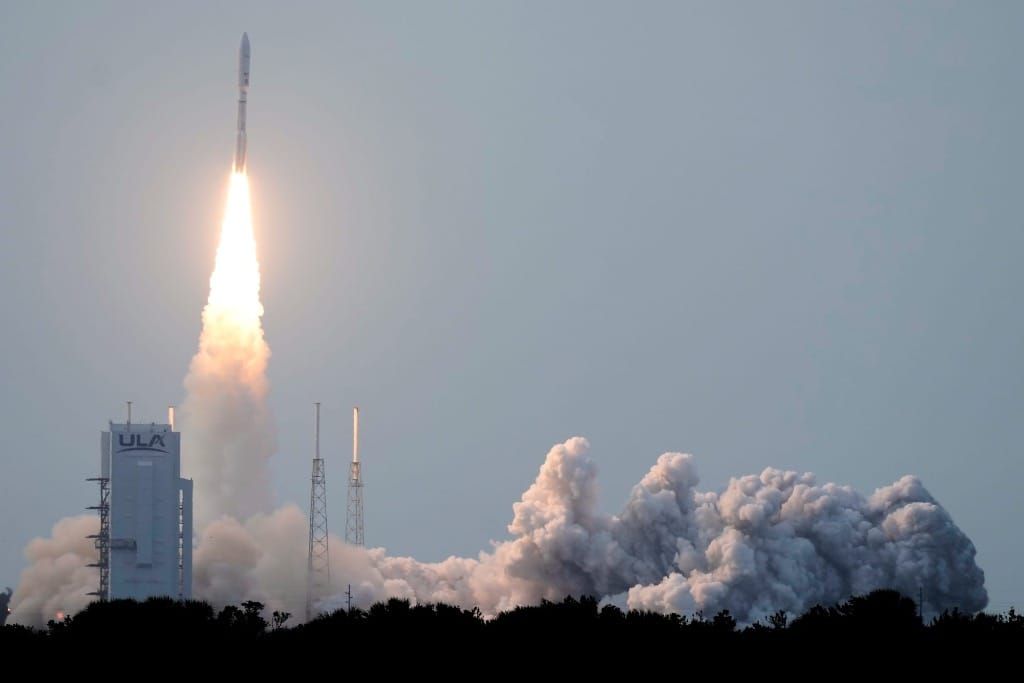
WASHINGTON, Feb. 2, 2026 – Amazon is asking for more time to deploy half of its planned 3,232 low-Earth orbit satellites, citing delayed launches and an unexpected need to re-engineer its prototype.
The Federal Communications Commission’s deadline for the company to deploy 1,618 satellites is July 30, 2026. Amazon wants until July 30, 2028, or to have the interim requirement waived entirely. The company currently has 180 satellites in orbit for the constellation, which will support its Amazon Leo broadband service.
The company said it still planned to meet the July 20, 2029, deadline for the full constellation and planned to have 700 satellites in orbit by July 30.

“From the launch of its initial production satellites onward, unexpected slips and scrubs of scheduled launch dates have extended Amazon Leo’s deployment timeline,” the company wrote in a Friday extension request. “Some delays pushed initial launch dates years beyond their original projections, resulting in significant backlogs that in some cases ballooned after additional issues delayed subsequent missions.”
Even before that initial production satellite was developed, Amazon said it faced 12 months of delays in launching two prototype satellites. After that launch finally happened, the company discovered its design needed “unexpected reengineering to improve performance and reliability,” which took another nine months.
Amazon said it bought 10 additional SpaceX launches on the company’s Falcon 9 rockets, something not disclosed before the filing, and noted other companies had completed successful flights in 2025, including French firm Arianespace, which is scheduled to launch Amazon leo satellites this month.
“Together, these developments suggest that several major programs on which Amazon Leo depends have moved into a more predictable phase,” Amazon wrote in the request, which was posted by GeekWire and other outlets.
The company noted it won nearly $300 million to connect more than 400,000 locations as part of the Broadband Equity, Access, and Deployment program. As a satellite provider, Amazon would have four years from grants being signed to certify it can provide service to those locations, and must offer free equipment and maintain minimum service standards for another 10 years.
Blue Origin, which is one of the rocket companies Amazon is using and is owned by Jeff Bezos, Amazon’s founder and board chairman, announced its own satellite broadband service last month. It’s planned to be capable of much faster speeds than Leo and SpaceX’s Starlink currently provide and targeted at a relatively small number of enterprise customers.
The extension request was expected, but satellite industry analyst Tim Farrar said on X that the timing seemed like “more than a coincidence” after the other Bezos-connected company’s announcement “led to speculation about a spinoff of Amazon Leo” to Blue Origin.
“It doesn't seem particularly wise for Amazon to plan on launching 3200 of the current design, rather than moving to a more advanced model that will be more competitive with Starlink V3,” he wrote. “However, it will at least quiet any questions about Amazon Leo's future for now. That's really important when Amazon Leo are trying hard to win customer commitments in the coming months, especially after recent layoffs at the company.”




Member discussion