
Anchorage Update: Lessons from the Frontier State
Industry executives, tribal leaders and policymakers came together to connect more Alaskans.

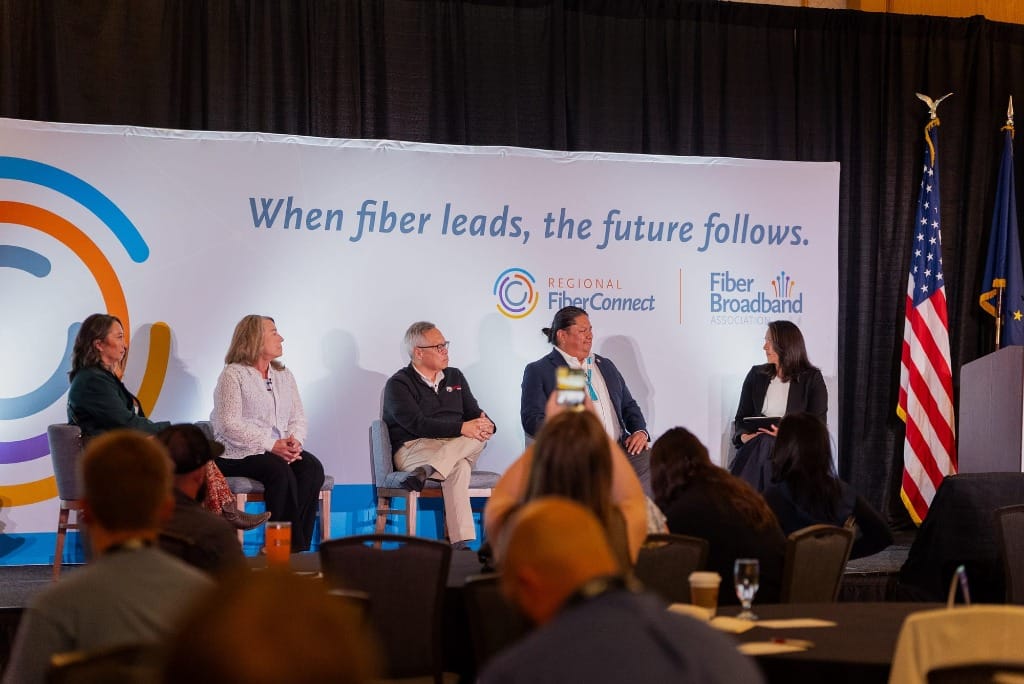
At the Fiber Broadband Association’s (FBA) Regional Fiber Connect Workshop in Anchorage last week, local broadband executives, tribal leaders, and policymakers came together to share best practices and lessons learned in a state that has unique challenges and opportunities connecting communities and people to fiber broadband.
Alaska has a significantly higher percentage of unserved communities and families compared to the national average of about 9% of communities and families being unserved. The state has received over a billion dollars for broadband, but this funding does not go very far due to Alaska's immense size, challenging topology (water, ice, snow, mountains), very short field season, and the reality of deploying broadband to over 60 different cultures across Alaska.
Broadband enables education in Anchorage and remote areas, supports telehealth including connections to doctors, research, and emergency preparedness - tsunami warnings the day before the workshop as a prime example. Today, over 60,000 people are without broadband access and nearly 200,000 for whom opportunity needs to be created.
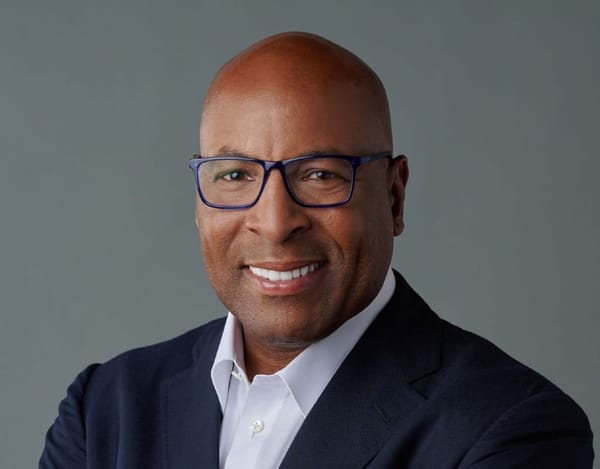
Thomas Lochner, Alaska’s state broadband director, whose office is in the middle of the NTIA’s Benefit of the Bargain application process, stated during his morning keynote, “There are many different ways to get broadband to Alaskans. We are technology agnostic, we want to make sure it’s the right one, that it’s scalable.” He anticipates that once completed, his office expects that 30% of the awards will fall into the satellite category and 60-70% will fall into the terrestrial category. Alaska was allocated $1,017,139,672.42 with BEAD and the state is working to use every single bit of it to connect every Alaskan.
Alaska has been able to leverage grants from the USDA ReConnect Program, and Community Connect Program, as well as NTIA’s Tribal Broadband Connectivity Program and Middle Mile Infrastructure (from Nome to Homer). Adding NTIA’s BEAD funding to the mix rounds out federal broadband funding sources in Alaska. This, along with the significant fiber investments from companies and dedicated fiber providers such as MTA, GCI Liberty, Alaska Communications, and others complete the picture in terms of how Alaskans will get connected.
“Broadband is seen as a tool to improve community welfare for generations,” added Lochner.
Of course, deployments are underway ahead of BEAD funding.
“Projects are planned three to five years out, allowing for priority adjustments if developers engage early,” said Robbie Nash, Vice President, OSP Engineering and Construction, MTA. “Permitting and right-of-way issues can cause delays and with construction season typically running from May 15th to October, the short construction season limits project timelines and any delay can have immediate implications on delivery timelines.”
Workforce development is another key issue for the industry
Workforce development is also a key issue that the industry is addressing. Melissa Caress, Statewide Training Director, Alaska Joint Electrical Apprenticeship & Training Trust, discussed its efforts, including the challenges and strategies of the 8,000-hour apprenticeship program, including recruitment, participant understanding, instructor sourcing, and program benefits. The program, which is about five years old, aims to grow to 96 participants.
As in many communities, there is a continuous need for skilled professionals in technology and broadband infrastructure. Partnerships with organizations like IBEW and MTA, as well as internship and youth engagement programs, aim to build and retain local talent.
During a discussion on the roles of fiber and fixed wireless deployments, a key challenge is the lack of middle mile infrastructure between remote communities and Anchorage, which is hundreds or sometimes thousands of miles away. Latency is a bigger issue than speed. For instance, from Western Alaska, Russia is closer than Seattle, highlighting the potential latency even with fiber. The Northwest Arctic region, for example, is about 40,000 square miles with 7,500 people, comparable in size to Indiana. Fiber is considered a tool in the tool bag, not the only solution. The choice of technology depends on the specific situation and need.
Fixed Wireless is seen as a solution for the next five to ten years, with the long-term vision being fiber to everybody, and the panel acknowledged that Fixed Wireless serves as a crucial interim solution. Given that permitting infrastructure in protected areas can take 7-8 years, the need to plan with long-term solutions is key. The industry must plan for broadband needs 20 years ahead. Projects are complex, large, and require rapid deployment.
Tribal and indigenous communities a key part of Alaska
Tribal and Indigenous Communities are part of nearly every community, each with their own unique challenges and requirements. Kelly Williams, CEO of OTZ Telephone Cooperative, shared that his company works closely with tribal communities and administrators to address concerns such as ensuring that operations, including helicopter flights, don’t interfere with caribou migrations. “Connectivity is crucial for these communities, as it literally saves lives, especially in villages where traditional lifelines are limited,” said Williams.
Cheri McConnell, Senior Vice President Infrastructure, Kawerak, Inc., discussed her experience deploying tribal broadband infrastructure in a community that has only three roads. She detailed her steep learning curve and commitment to ensuring that tribes in the Bering Strait region have access to the necessary broadband infrastructure.
A key factor discussed during the panel on tribal broadband is the fact that a mismatch often exists between the communication expectations of tribal governments and the practices of external vendors, leading to delays and inefficiencies in project implementation. The challenges of communication are compounded by tribal governments often being inundated with emails and having limited staff, sometimes only one person, that must manage government agencies, underscoring the need for more effective and respectful communication tactics beyond just email or phone calls. Furthermore, ensuring respect for data sovereignty was identified as a critical aspect of trust and partnership.
The panel, which included McConnell as well as Claudia Tarbell, Field Marketing for Tribal and Indigenous Communities, Calix; Gerald Spencer, Senior Manager, Tribal Relations and Business Development, Adtran; Joe Valandra, CEO and Chairman, Tribal Ready; and Keja Whiteman, President and CEO, Nokomis Strategies, Inc., shared that broadband enables tribal members to remain in their home communities, access language classes, and participate in tribal meetings via Zoom, fostering cultural connection and autonomy.
It provides the ability to live where one chooses, provides for family, and pursues education, offering an "incredible option" for remote communities in Alaska. The technology also supports the sharing of indigenous knowledge, crafts, and culture, with examples like Michael Running Wolf using AI for language preservation.
During the afternoon keynote, Sharayah Lane (Lummi Nation), Senior Policy Advisor, Indigenous Community Connectivity, Internet Society, shared her advice for working with tribal communities. She emphasized the critical role of funding, noting that financing occurs about twice a year to support staff and the challenges faced by smaller indigenous communities in ensuring sustainability. She discussed the dual focus on availability and affordability in community networks, particularly in fiber deployments which, while low in cost to users, require higher cost deployments.
Lane echoed the need for workforce development, citing the essential role of extensive training programs to ensure community network sustainability. Lane discussed the Internet Society’s Open Fibre Data Standard Initiative: a global effort aimed at standardizing fiber data and publishing fiber and opt-in infrastructure information. The initiative addresses current challenges in fiber mapping, including data accuracy, completeness, information, publication format, and validating spotting information.
Laying fiber conduits directly on top of frozen tundra
The final discussion of the event dove into specific deployment challenges in Alaska. Permitting challenges, short deployment season, and unique strategies were highlighted during the discussion. One strategy is used in laying fiber conduits directly on top of the frozen tundra and letting it sink into the ground as the ground thaws. Labor shortages remain a concern, and each operator discussed programs to address them.
Copper Valley Telecom CEO Joshua Berg shared that a unique challenge for them is finding housing for workers that are deploying networks in remote areas. Berg said the company has an apprenticeship program that is doing a good job and developing new talent, including retirees that want to keep working in a new field. “The program trains people on how to build networks, not just splice fiber in the lead. It includes building splice cases, troubleshooting, and understanding why to use a piece of equipment, not just how.”
Trish Ehlers is the Vice President of Operations for the Fiber Broadband Association. In that role, she manages marketing, events, webinars, IT, and administration for FBA. Her career in telecommunications spans 30+ years, starting her most recent position at FBA in 2021. This report is exclusive to Broadband Breakfast.




Member discussion