
Arizona Sees 33% Increase in BEAD Applications
New applicants represent a mix of technologies.

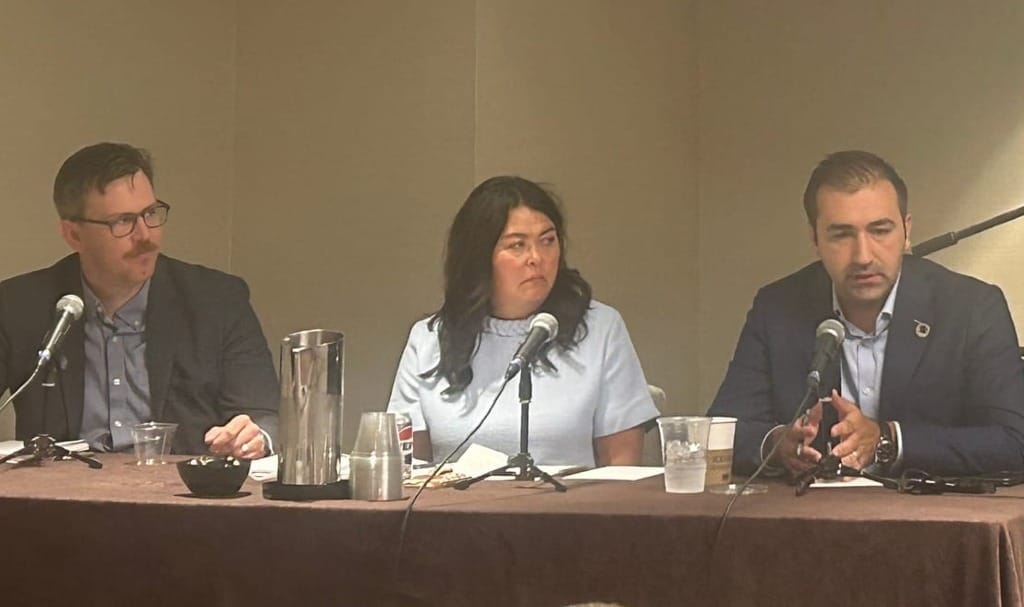
DENVER, August 6, 2025 — Arizona and New Mexico reported a surge in applications for federal broadband funding after being directed to relaunch “technology-neutral” grant rounds under the Broadband Equity, Access and Deployment program.
Nick Capozzi, Arizona’s state broadband director, told Mountain Connect attendees on Wednesday that the state received 33 percent more applications in the latest round. Capozzi said that every location in the state received at least one bid.
“We’re proud, too, that basically everybody who applied for BEAD in round one came back to the table,” Capozzi said. “We saw some new faces, too – and that’s not just satellite or fixed wireless; there was fiber as well.”

On June 6, states were instructed by the National Telecommunication and Information Administration to run new “technology-neutral” bidding rounds to disburse BEAD funding, called the Benefit of the Bargain round.
Arizona wasn’t the only state to report positive outcomes from the BoB round. Andrew Wilder, New Mexico’s BEAD program director, said two additional providers applied for funding and the state received 87 applications – 20 more than before.
“We also saw costs come down across the board for all technologies in the Benefit of the Bargain round versus our first round,” Wilder said.
Wilder noted that under the previous program New Mexico had made only unserved locations eligible for funding. After updates to location maps and an NTIA-mandated challenge process, the number of unserved locations declined sharply, allowing underserved locations to become eligible.
“Ironically, even though our overall number of locations decreased, we actually have more locations eligible for funding in the Benefit of the Bargain round than we did when only unserved locations were eligible,” Wilder said. “It went from 30,000 unserved locations to 44,000 combined unserved and underserved locations.”
The positive results from these two Western states differ markedly from outcomes in Minnesota and Arkansas. However, the shortened application window for the BoB round took a toll on broadband providers.
“One of my providers called me and said, ‘I’m going on 57 hours straight,’” Kimberly Glineski, project manager for Idaho’s State Broadband Office, said. “So it impacted everyone. I feel bad for them and their families.”






Member discussion