AT&T Adds Equal Number of Fiber and Fixed Wireless Subs: 292,000
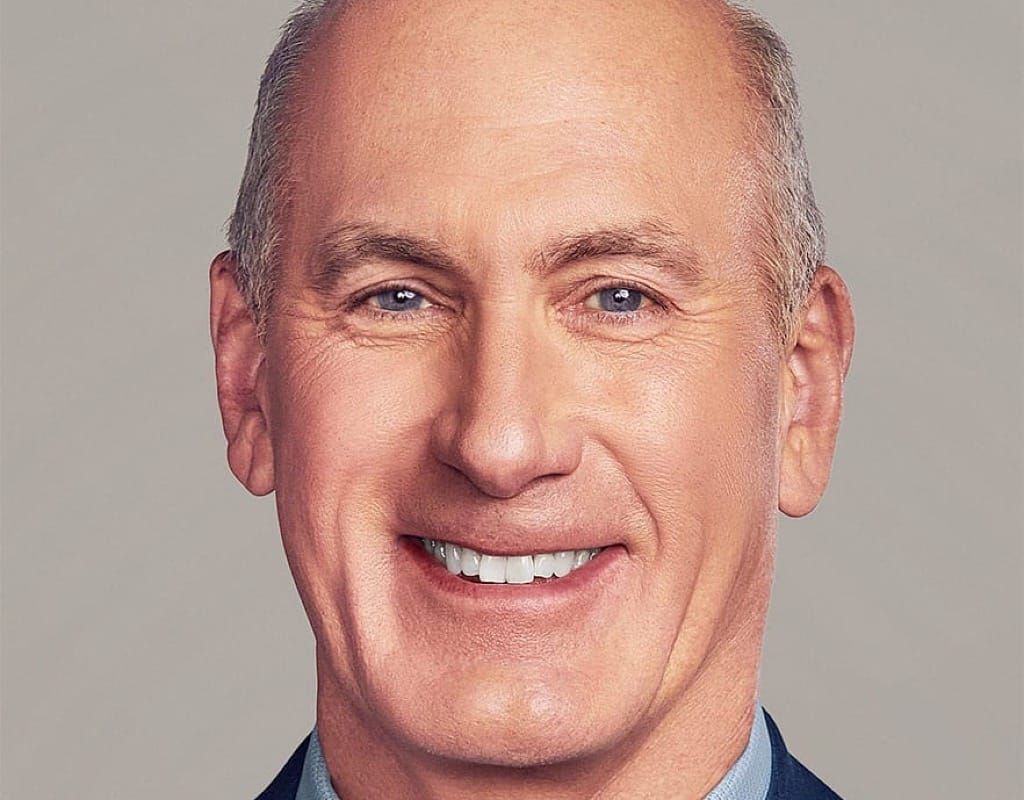
CEO John Stankey said the company might have wholesale relationships with more than one satellite provider in the future.

WASHINGTON, April 22, 2026 – AT&T added 292,000 fiber subscribers and 292,000 fixed wireless subscribers, including both consumer and business customers, in the first quarter of 2026.
That’s just below Wall Street expectations on the fiber front and in line with expectations for fixed wireless. Consumer additions for both were below expectations, but business net additions were worse for fiber and better for fixed wireless.
“The broadband subscriber results were fine and don’t portend anything good or bad for the Cable results,” New Street Research analyst David Barden wrote in a Wednesday investor note. “The slower fiber [average revenue per user] growth will be seen as a slight negative for the Cable industry as there is a fear among investors that broadband ARPU growth is slowing for the industry and the days of 3-4% ARPU growth are behind us, which is probably true.”

AT&T CEO John Stankey said on the carrier’s earnings call that 42 percent of AT&T’s home broadband customers – including fixed wireless – also take wireless service. The number jumped to nearly 45 percent when excluding the 1.1 million fiber customers AT&T recently purchased from Lumen.
The company recently launched a new set of bundled plans, called AT&T OneConnect, aimed at increasing the portion of those converged customers. AT&T and other major ISPs have reported lower churn when customers take both fixed and mobile broadband from them.
“These benefits remain robust, and we expect that as a greater portion of our customers purchase their wireless and internet connectivity from AT&T, we’ll demonstrate improved trends in churn and additional improvement in account growth,” Stankey said.
He added OneConnect was aimed at customers who had an existing device they were looking to port to another carrier for now. He said more variants of the plan would launch later this year, and that volume was not “massive” now but would increase.
The carrier now counts more than 12.5 million total fiber subscribers and more than 2.3 million fixed wireless connections.
Stankey said AT&T now reaches more than 90 million customer locations with either fiber or fixed wireless. The company reported 37.5 million fiber passings, implying 52.5 million locations where the company could offer fixed wireless.
AT&T is purchasing spectrum from EchoStar aimed at boosting that fixed wireless capacity, some of which it’s already using through a lease agreement.
AT&T CFO Pascal Desroches said the company still expects to grow its fiber footprint by 8 million in 2026, including the 4 million locations it purchased from Lumen. The company’s long-term goal is to meet or exceed 60 million fiber passings by the end of the decade, the most ambitious of the three major wireless carriers.
In a Wednesday note, MoffettNathanson founder Craig Moffett reiterated a level of skepticism about convergence. But, he wrote, it does make sense for AT&T to emphasize it given its lead in fiber deployment.
“At the end of the expansion, AT&T will still have a converged footprint that covers no more than about a third of the U.S.,” he wrote. “In that third of the U.S., AT&T will compete against a cable operator with a cost (and consumer price) advantage in offering a similar converged bundle, and against price-based stand-alone offerings from FWA and, increasingly, LEO satellite.”
Mobile
AT&T reported 294,000 postpaid phone net adds, beating Wall Street estimates. The carrier now counts more than 74.5 million such subscribers.
“There isn’t much of a direct read through for the other wireless carriers from these results, which is a good thing,” Barden wrote. “Postpaid phone net adds were higher than expected but not by a lot and ARPU was stable. If anything this may be a slight positive for the industry as it signals that the carriers are being rational and there isn’t much to fear.”
Some had feared a price was when Verizon CEO Dan Schulman took the helm last year and vowed to compete more fiercely for mobile subscribers. Schulman tried to emphasize on Verizon's January earnings call he would not be overly aggressive with promotions.
Satellite
Stankey said he wasn’t too worried about competition from low-Earth satellite operators for home or mobile broadband subscribers. He said AT&T was interested in partnering with LEOs to expand its cellular coverage beyond the reach of its terrestrial network, though.
AT&T and Verizon are working with AST SpaceMobile, which got Federal Communications Commission approval to offer direct-to-cell satellite service on the carriers’ spectrum Tuesday, while T-Mobile has partnered with SpaceX and already offers service.
Amazon is also in the process of buying Globalstar in a bid to add direct-to-cell capabilities to its Amazon Leo service.
“My goal would be that I have a good, strong wholesale relationship,” Stankey said. “And it may not just be with one of them, it may be with more than one of them.”
Most of the company's R&D spending on satellite, though, has been related to AST’s constellation, he said.
AST has had difficulty launching its next-generation constellation, and suffered another setback as a Blue Origin rocket failed to get one of its units to the correct orbit over the weekend. The company is still aiming to have 45 satellites in operation by the end of the year, compared to its seven currently in orbit.