AT&T Gets FCC Approval for Calif. Copper Retirement

The agency is still considering whether to preempt the state’s own rules and allow the discontinuance to move forward

AT&T Gets FCC Approval for Calif. Copper Retirement
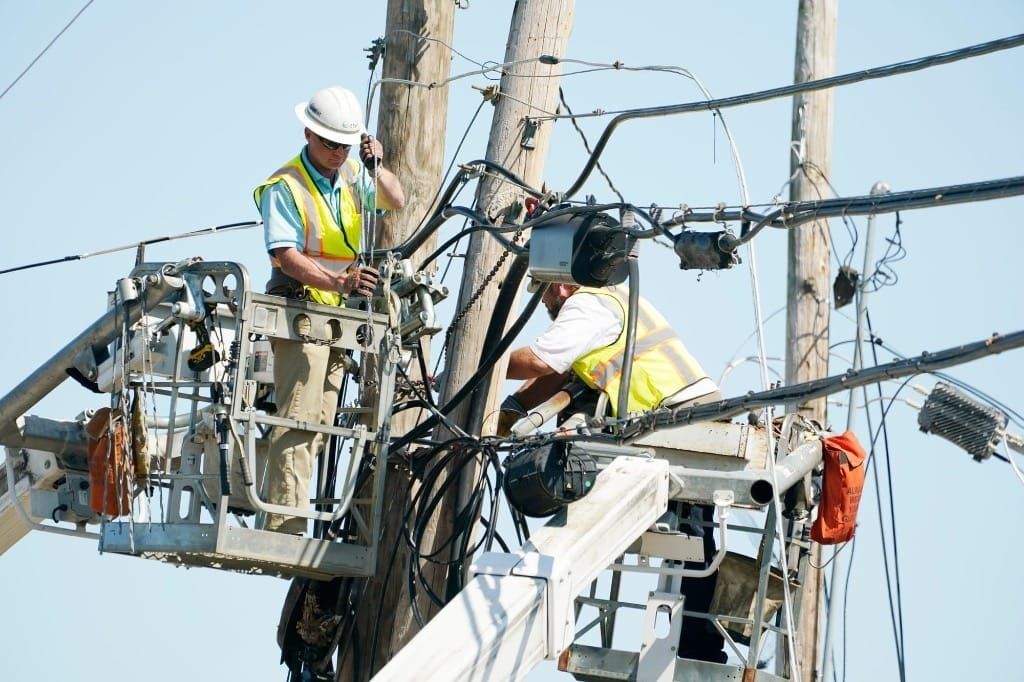
Photo of telephone company linemen repairing landlines after a 2023 tornado in Rolling Fork, Miss. by Rogelio V. Solis/AP

WASHINGTON, July 6, 2026 – On June 29, the Federal Communications Commission cleared AT&T’s request to discontinue copper voice services at more than 184,000 locations in California.

The company’s request for the agency to override the state’s copper retirement rules — and thus allow the discontinuance to move forward with just the FCC approval — is still pending.


The FCC sought comment on AT&T’s discontinuance request on May 29, and said in that notice the request would be automatically granted on June 29 unless the agency decided otherwise.

AT&T wants to start turning off service as soon as June 1, 2027, it said in its application. The company said it sent notices to customers in the affected areas on May 20 urging them to switch to a wireless plan or AT&T Phone – Advanced, a service the company developed as a replacement for copper landlines and would continue to do so.

ISPs are interested in retiring their legacy copper networks, since they can no longer provide competitive broadband service and are expensive to maintain. AT&T has been particularly outspoken about its copper retirement plans.

The company submitted the now-approved discontinuance application at the FCC with another request: that the agency preempt California’s rules preventing the retirement of copper services in those same areas. 

That would allow the company to move forward with its discontinuance without getting approval from California, which has stricter rules in an effort to prevent rural areas from losing essential services. 

AT&T argued in its application that FCC approval would “serve as the predicate” for granting its other request and axing California’s “outdated regulatory regime” on copper retirement.

The request is still pending. The FCC extended its comment deadline at the request of the California Public Utilities Commission, making the new due dates July 7 for public input and July 22 for replies.

The FCC said companies could make similar preemption requests when it approved new, streamlined copper retirement application rules in March. FCC Chairman Brendan Carr has been supportive of the industry’s effort to transition away from copper.

In a June 23 meeting with FCC staff, representatives from the Rural Country Representatives of California (RCRC) and The Utility Reform Network (TURN) urged the agency to remove AT&T’s application from streamlined treatment. 

The groups argued it wasn’t clear which exact locations would lose service, and that California had not approved AT&T Phone – Advanced (AP-A) as a complete copper landline replacement. The CPUC opposed the application on similar grounds

AT&T argued in a June 24 filing that its AP-A product had adequate 911 capabilities, and that every affected customer had access to at least AP-A, if not other wireless or fixed broadband services.

CPUC opposed to preemption

The CPUC is suing the FCC over the March order, asking federal judges to strike it down last month.

The state agency’s petition there was brief, but during the rulemaking process it urged the FCC not to preempt state-level rules.

“Absent some statement ‘unmistakably clear in the language’ of the Communications Act that Congress intended to permit the FCC to usurp California’s police power here, the FCC should not arrogate to itself the authority to decide what is best for Californians,” the CPUC wrote during the FCC’s rulemaking in November.

AT&T is also suing the CPUC over the state’s refusal to allow AT&T to shed carrier of last resort (COLR) status in certain areas in 2024, which would have allowed it to retire its copper without the stringent replacement service requirements the state places on COLRs.

In a bid to show consumers wouldn’t be left hanging, the carrier said in May that it would invest $19 billion in fiber expansion in the state by 2030, which it said would reach an extra 4 million homes.

The CPUC has an open proceeding in which it’s considering altering its carrier of last resort rules, and AT&T reached a partial deal with the state’s consumer advocacy office in which ISPs could turn down copper in areas where they deploy a certain amount of fiber.

Popular Tags