AST SpaceMobile Gets Green Light for Direct-to-Device Testing

The 30-day authorization covers non-commercial testing using up to 100 handsets.

AST SpaceMobile Gets Green Light for Direct-to-Device Testing
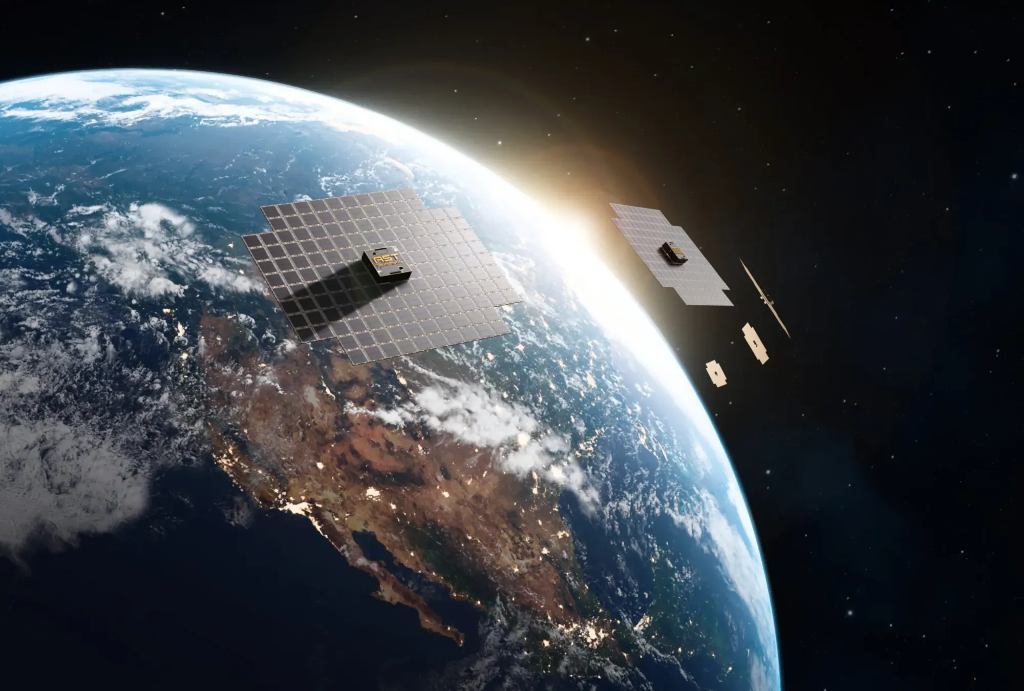
Rendering of AST SpaceMobile’s BlueBird satellites, designed to provide direct-to-cell 4G and 5G cellular broadband, from the company.

WASHINGTON, August 17, 2026 – AST SpaceMobile has been granted temporary authority to test its satellite-to-smartphone connectivity solution.

The Federal Communications Commission granted the limited authority on Friday, as the two largest U.S. carriers, AT&T and Verizon, are betting on AST rather than Starlink to supplement their cellular service with satellite – where terrestrial networks don’t reach.
CTA Image

Watch the online course preview!

See the Online Course Preview

The 30 day special temporary authority lets AST SpaceMobile test its supplemental coverage technology using up to 100 commercially available handsets. The grant covers testing in two bands, 817-824 MegaHertz for device-to-satellite uplink and 862-869 MHz for satellite-to-device downlink.

800 MHz spectrum recently transferred

The 800 MHz airwaves in question are part of a license portfolio T-Mobile transferred to investment firm Grain Management on Tuesday. 

Under the transaction, T‑Mobile transferred its 800 MHz spectrum portfolio to Grain in exchange for $2.9 billion in cash and all of Grain’s 600 MHz spectrum licenses.

AST SpaceMobile filed a letter supporting Grain’s acquisition, as the two firms are collaborating on direct-to-device satellite testing.

The 800 MHz spectrum sits right next to the 850 MHz low-band frequencies already contributed by major carrier partners like AT&T and Verizon, which would allow AST SpaceMobile, as a partner to Grain, to weave a seamless coverage layer.

The temporary authorization comes with typical guardrails: testing must be controlled and non-commercial, must stay within AST’s existing agreements with T-Mobile, and must stop immediately if it causes harmful interference to other spectrum users.

That authority requires AST to operate in coordination with the licensed spectrum holders, AT&T and Verizon, plus FirstNet, the first responder broadband network 

AST races to expand its satellite fleet 

The direct-to-device satellite race is increasingly a two contest between two companies, AST and SpaceX, and SpaceX’s Starlink has a substantial head start. 

In April, the FCC modified AST’s satellite license to authorize a 248 satellite constellation, up from a previously authorized 25, to provide commercial direct-to-cell service using low-band 700 MHz and 800 MHz spectrum. 

The commission set binding buildout deadlines: half the constellation, 124 satellites, in orbit by August 2030, and the full 248 satellite system by August 2033.

AST SpaceMobile currently has 9 active commercial and test satellites in low Earth orbit as of early August, and expects to have approximately 45 satellites in orbit in early 2027.

Starlink launched its first satellite mobile offering in partnership with T-Mobile on July 23, 2025. Initially offering text messaging in areas with no cellular coverage, data capability followed in October 2025, and voice and full mobile data are targeted for late 2027.  The service is live in 22 countries, and over 400 million people have access to it.

As of early 2026, Starlink has more than 650 direct-to-cell satellites in orbit. So many the company has signaled ambitions to expand to offer a “Starlink Mobile” cellular offering.

Still, AST SpaceMobile has commercial agreements with roughly 60 mobile network operators worldwide. The mobile network operators with whom the company has agreements and understandings collectively serve over 2.8 billion existing subscribers.

Popular Tags