
BEAD Supporting Funds Could Fill Critical Infrastructure Gaps, Panel Says
Experts warn that 14 states lack internet exchange points as billions in broadband funding await clearer guidance


WASHINGTON, Sept. 8, 2025 — The United States faces significant vulnerabilities in its digital backbone that could leave entire states without internet service if key facilities are disrupted, experts said at a recent forum on Resilient Critical Infrastructure.
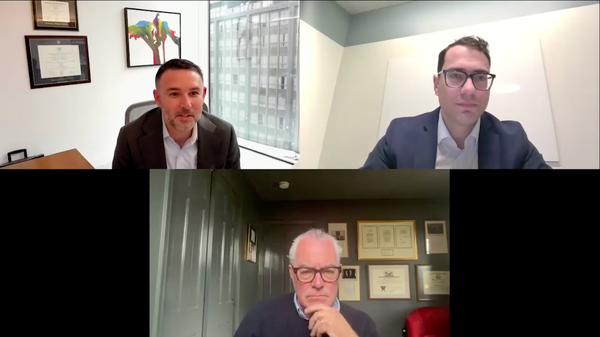
The panel, held ahead of the Resilient Critical Infrastructure Summit that will take place on Sept. 18, focused on the need for greater resilience in internet exchange points, energy systems and security planning.
The discussion, featuring experts in each of those spaces, focused on the lack-of-resilience-related risks associated with internet infrastructure – and what can be done with current infrastructure funding programs
States without IXPs remain at risk
Brent Legg, executive vice president of government affairs at Connected Nation, highlighted that 14 states lack internet exchange points — facilities where networks connect and local traffic is routed efficiently. Without them, states must rely on distant hubs.
“Kansas, for example, depends entirely on two buildings — one in Kansas City, Missouri, and another in Denver,” Legg said. “If one of those two buildings or both of those buildings were to go down, most connectivity in the state of Kansas is going to go down, regardless of what local internet service provider you’re with.”
Experts warned that this reliance on faraway facilities creates choke points that could be exploited during emergencies or attacks. They called for state and federal officials to prioritize distributed IXP development using remaining BEAD funds.
Puerto Rico was cited as a model. The territory invested $334 million of its BEAD allocation in an underground, islandwide conduit system to increase resilience.
Energy systems pose hidden weak link
Panelists said the energy sector also represents a critical weakness for digital infrastructure. Broadband facilities remain tied to single utility grids that may not withstand natural disasters, cyberattacks or cascading outages.
“Resiliency is really a state of thinking,” said Mahesh Krishnaswamy, CEO of Taara, a spinoff from Google’s Project Moonshot that now offers wireless broadband.
“It’s about predicting. It’s about anticipating and being prepared even before something goes wrong, not when something happens and you have to fall back.”
Experts urged closer coordination between broadband deployment and energy planning. Possible measures include backup generation, renewable diversification and microgrids to avoid single points of failure.
Security threats go beyond cyberwarfare
Security vulnerabilities extend beyond software and networks, the panelists said. Centralized facilities create what Al-David Saab, policy adviser to Sen. Roger Wicker, R-Miss., described as a “target-rich environment for adversaries.” He compared the threat to Cold War-era Soviet maps that identified strategic choke points in Washington, D.C.
Evan Feinman, former director of the federal Broadband Equity, Access, and Deployment program, added a caution that threats may be low-tech but devastating. “What about three guys with chainsaws who want to take that data center out of commission?” he said. “Has anybody tried to figure out what that looks like?”
Speakers called for more frequent wargaming and scenario planning that includes both cyber and physical attack scenarios. Building redundancy, they said, is not enough without practical response strategies.
Federal funding is critical to address needs
Panelists noted that billions of dollars remain unspent from the BEAD program. Legg said those funds could support the very measures the panel outlined, including new IXPs and distributed networks.
“The more that we’ve built out and created a connected nation, we’ve also created so many more exposure points that now we have to cover,” Saab said.
As the September summit approaches, experts said the focus must shift from expansion to durability. The challenge for policymakers is not only to connect every American but to keep them connected in the face of mounting risks.
 Broadband Breakfast





Member discussion