‘Beneficiary Pays’ Model Gains Traction With Lawmakers
Unclear cost allocation has led some states to oppose data center and transmission projects.

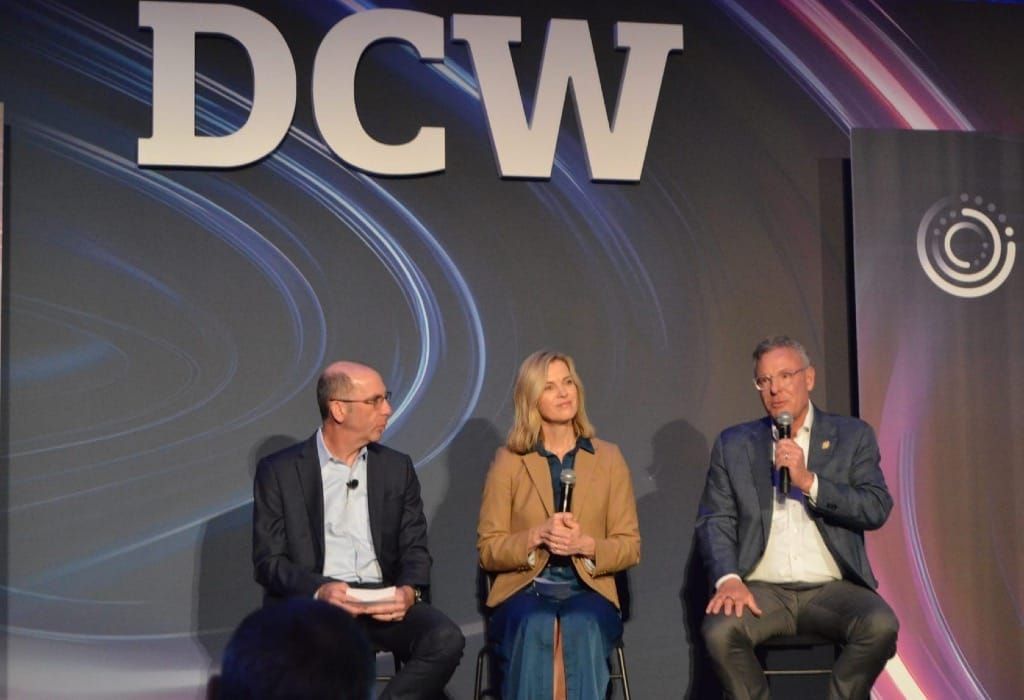
WASHINGTON, April 23, 2026 – Congress could require companies driving demand for new transmission lines to pay for them, lawmakers said Thursday at Data Center World.
Rep. Julie Fedorchak, R-N.D., said cost remains the biggest barrier to building transmission needed for data centers and other large electricity users.
“There’s an opportunity here to make sure that people who are driving the need for the lines are the ones paying for it,” Fedorchak said.

She said unclear cost allocation has led some states to oppose transmission projects when they do not directly benefit.
Rep. Scott Peters, D-Calif., backed that approach.
“The people who benefit from it should pay for it,” Peters said, adding Congress should define clear criteria for allocating costs.
Fedorchak said policymakers must stabilize, optimize, and grow the grid to meet rising demand.
The U.S. should first stabilize the system by slowing plant retirements, then optimize existing transmission through higher-capacity lines, and finally pass permitting reform to support long-term expansion, she said.
Fedorchak said the current regulatory framework, developed more than a century ago, is too slow to respond to rising demand, pointing to delays in implementing higher-capacity transmission technologies even after approval.
Peters agreed on improving transmission and planning but rejected keeping older plants operating.
“One thing I don’t agree with is the government keeping expired plants online,” Peters said, citing cases where ratepayers have been required to cover the cost of aging facilities.
He said the private sector should replace the retired generation while the government focuses on permitting and grid planning, pointing to large technology companies investing in energy infrastructure.
Transmission bottlenecks are already delaying energy and digital infrastructure projects, both noted.
“If you build a gas plant today in Kentucky, you can’t hook it up because there’s not enough transmission,” Peters said.
He said similar constraints are affecting large data center developments.
Fedorchak said data centers are often blamed for rising electricity costs, even though broader grid investments and policy decisions are major drivers.
Congress is close to a deal but lawmakers warned the window may be limited.
Failure to act now could make reform harder in future sessions, Fedorchak said, adding that bipartisan agreement will be necessary for any package to pass and remain durable.