Biden Delivers Remarks on Free Broadband to Qualified Households
Biden compared the value of broadband to telephone service, and drew parallels to the historic effort to connect the country.

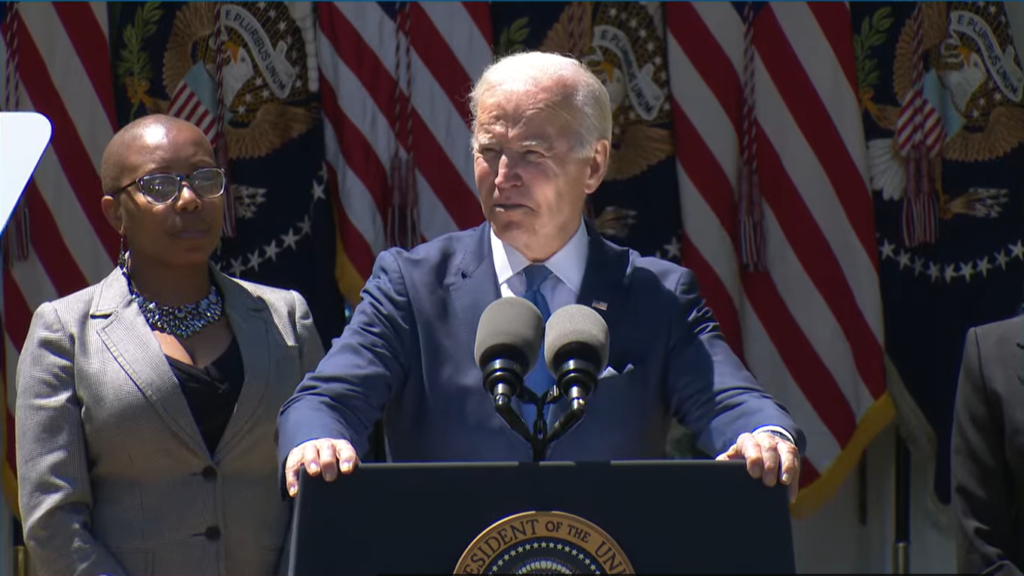
WASHINGTON, May 9, 2022 – President Joe Biden emphasized the essential nature of broadband during a public appearance on Monday.
Biden delivered remarks at the White House Rose Garden on the day’s earlier announcement that the federal government would work with both regional and national broadband providers to provide essentially free broadband to qualified households.
“Too many Americans simply cannot afford to get connected even if there is access to get connected. So, they go without high-speed internet, or they sacrifice other necessities in order to make it work,” Biden said.
“High-speed internet is not a luxury any longer – it is a necessity,” Biden said. “That is why the bipartisan infrastructure law included $65 billion to make sure we expand access to broadband internet in every region of the country.”
Biden also laid out the criteria for eligible households to take advantage of Affordable Connectivity Program, which when paired with the effort by ISPs to keep 100 Mbps download services under $30, provides free internet to consumers.
“If your household income is twice the federal poverty level or less – that is that’s about $55,000 per year for a family of four – or $27,000 for an individual – or a member of your household is on Medicaid or supplementary [social] security income or a number of other programs – you are eligible.”
It was Gore who told FCC Chairman Reed Hundt that his failing cable TV regulations needed a makeover.
The bill, known as the SPEED Act, would enact the most significant change in decades to the National Environmental Policy Act. It passed 221-196.
Kaptivate analysis finds some states’ references to rural America dropped 80 to 100 percent
Idaho, Massachusetts, Minnesota, North Carolina, and Utah had their final proposals approved.
Member discussion