
Bridging the Technical Divide for America’s Veterans
Through device access and digital skills training, Tech for Troops equips veterans with tools to rebuild their lives after service.

Jericho Casper
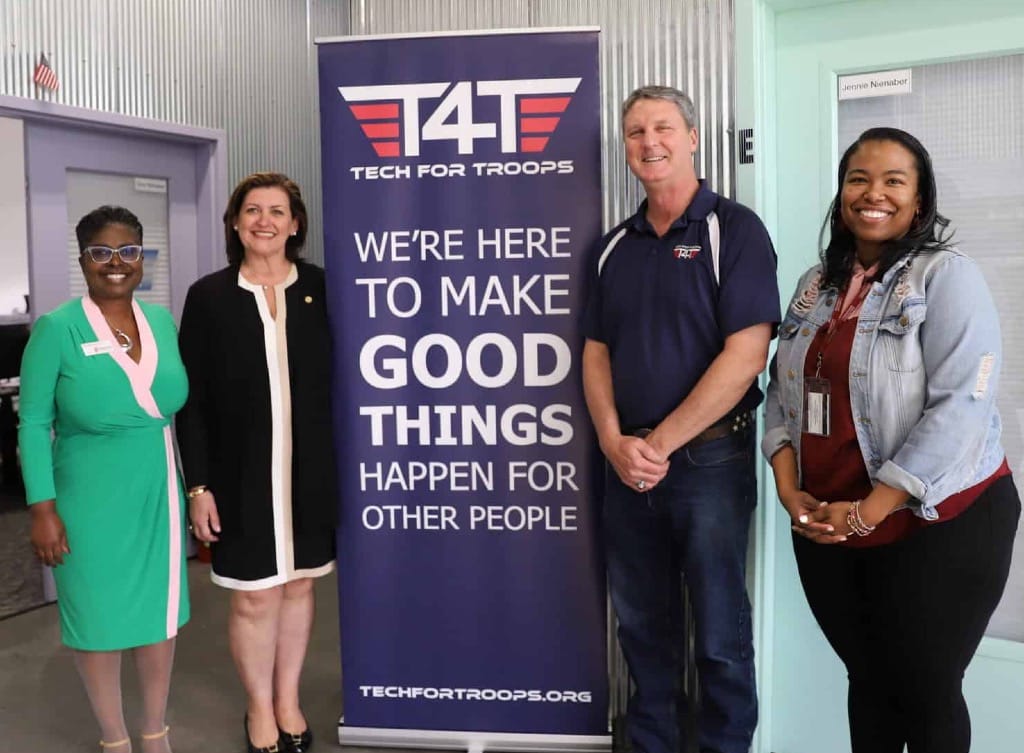
WASHINGTON, Nov. 11, 2025 – When Marine Corps veteran Mark Casper left the military, he struggled to find consistent work.
“When I got out, I had the tiger by the tail, I thought,” Casper recalled in a podcast interview. “I’m a Marine, I figured I’d be applying to corporate jobs. Come to find out, that was not good enough… I was floundering.”
Now, as president and CEO of Tech for Troops, Casper helps other veterans make that same transition. The nonprofit based in Richmond, Virginia collects donated devices, wipes and refurbishes them, and provides free laptops and digital literacy training to help veterans operate in today’s increasingly technology-centered world.
“We’re unique in that we train veterans to use the computer and then gift it to them at the same time,” Casper said. “Everything from powering it up to personal cybersecurity to Excel.”
Since 2014, Tech for Troops has processed more than 210,000 devices, recycled over 2,300 tons of hardware, and offset 73,000 tons of carbon emissions, giving thousands of veterans the tools to succeed in a digital economy.
One recipient, a Vietnam veteran, told Casper the program helped him turn his life around: “I was an alcoholic and a drug abuser. I’m clean now. Tech for Troops gave me a computer; I got a job. I’m self-sustaining now, and I’m giving my computer to the next vet.”
His experience reflects a broader challenge facing many veterans today. As more aspects of work, education, and healthcare move online, a lack of digital skills and access to technology has become a major barrier for veterans transitioning to post-military life.
“We’re not that far away from people that are not digital natives,” Casper said. “Even then, we are seeing younger veterans come in from Iraq and Afghanistan, who may have grown up without a computer.”
“When you join the infantry, you’re not lugging a computer out there,” Casper said. “They’re not teaching you how to use one, either. Veterans come to us to build on what they already know and learn additional skills.”
Hosting a donations campaign to support digital inclusion
This Veterans Day, the nonprofit is hosting a donation campaign to support its growing digital inclusion efforts. A contribution of $250 equips a veteran with a complete computer package, including accessories, technical support, and digital skills training.
Later this month, Tech for Troops will host a free laptop giveaway in Hanover, Virginia, providing 100 refurbished computers to eligible active-duty service members and veterans. The event is scheduled for Saturday, Nov. 22, and interested applicants should apply by Nov. 18.
“It’s not a hand-out – it’s a hand-up,” Casper said, emphasizing the nonprofit accepts donated computers and other devices to refurbish for veterans in need.
Technology can support veterans in many ways as they adjust to post-military life, from remote and flexible work opportunities, to access to telehealth and mental health resources, to improving civic engagement and education.
Mike McDowell, president and CEO of Valor Club USA, a community that supports transitioning service members, said the shift from the military can be especially challenging for many veterans.
Most veterans “have never lived autonomously as an adult,” McDowell said in an interview with PsychArmor. “Most were 17, 18, 19 years of age when they joined. They were put into this socialized system where everything is taken care of – you’re told what to do, where to go and how fast to get there. You’ve got the support requirements – a check coming twice a month, an identity and a rank, and you’ve got a tribe.”
After years of guaranteed pay, housing, and purpose, McDowell said, many veterans are simply handed their benefits and left to figure out what comes next.
For veterans transitioning out of uniform, Tech for Troops offers a pathway toward stability and self-reliance.
“I don’t want you to be that Vet with a sign on the street corner,” Casper said. “I want you to create that resume, get a decent job, and know how to handle your money, so you don’t roll back and have to start all over again.”



Member discussion