
Broadband Industry Wants FCC to Mandate 60-day Shot Clock for Local Permits
Local governments oppose the idea.

WASHINGTON, Dec. 23, 2025 – Major broadband industry groups are continuing their push for the Federal Communications Commission to preempt state and local permitting rules for wireline infrastructure deployments.

“Decades of fragmented policymaking across disparate federal agencies, states, and localities have enabled overburdensome and unnecessary procedural requirements that hinder important infrastructure deployment projects,” eight trade groups wrote in a joint filing Wednesday.
The letter was signed by USTelecom, NCTA, CTIA, and INCOMPAS, among others. They asked the agency to institute a 60-day shot clock for state and local permitting agencies to respond to standard permit and rights-of-way requests, after which the applications would be deemed granted.
The industry groups also asked the FCC to prohibit restrictions on bulk permitting and impose other conditions.
The agency voted at its September meeting to open an inquiry into state and local wireline permitting rules it could preempt under the Communications Act, which lets the agency overrule regulations that effectively prohibit broadband deployment. At the same meeting the agency sought comment on going further with some wireless siting rules it instituted in 2018.
The broadband industry has complained to the FCC and lawmakers about what it says are unnecessarily long wait times and excessive fees when seeking local permits, which companies say hold up their network deployments. Local governments have disputed that characterisation and said they don’t want ISP forcing through projects without important reviews.
“Patchwork permitting procedures pose a serious impediment to network deployment. The Commission can help tackle this challenge by ensuring that states and localities quickly approve ROW access applications and by restricting their ability to impose unnecessary and unreasonable barriers to communications network deployment (including fiber huts),” the trade groups wrote.
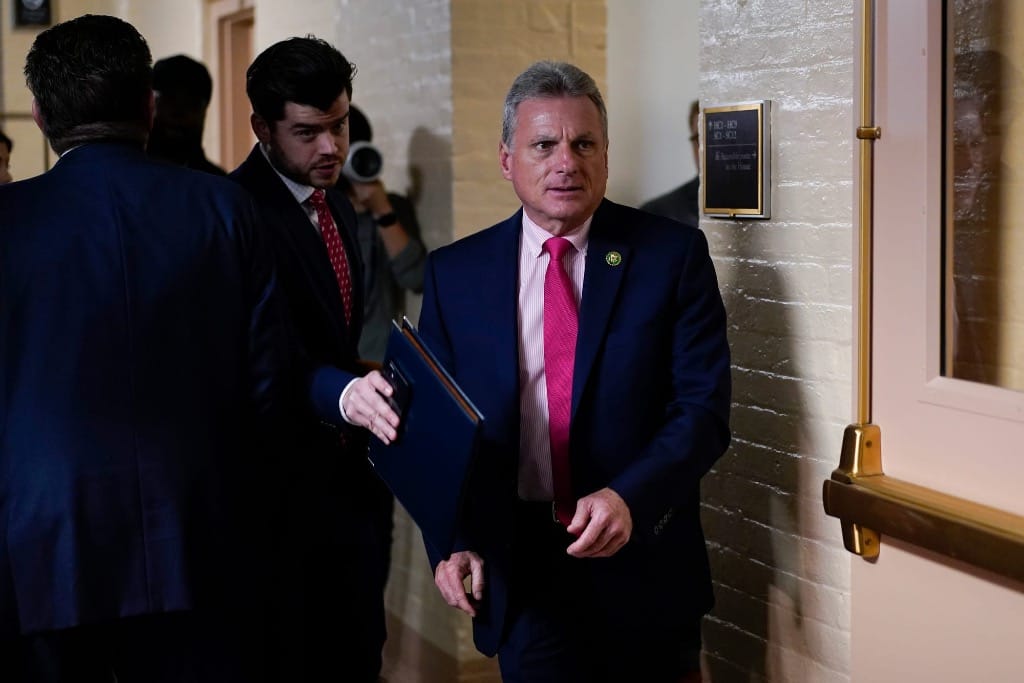
The House Commerce Committee cleared a bill earlier this month that would impose a similar 60-day shot clock for normal applications. The legislation was introduced by Rep. Buddy Carter, R-Ga.
Local governments oppose preemption
Many of the trade groups submitted their own separate reply comments arguing the record supported federal intervention.
Groups representing local governments disagreed.
“The Local Government Associations strenuously object to the industry’s depiction of local permitting as an obstacle to the provision of wireline telecommunications services,” four associations wrote in a joint filing. “The parties suggesting this are seeking to strip local governments of their ability to responsibly manage public assets in the rights-of-way, while still expecting to have access to rights-of-way that are safe, well-planned, and conducive to technology-neutral competition.”
The filing was signed by the U.S. Conference of Mayors, the National League of Cities, the National Association of Counties, and NATOA. They maintained local permit reviews were reasonable and necessary, and the FCC thus didn’t have legal authority to preempt them.
The groups said reviews were necessary to ensure public safety and were often done with scarce staffing and time resources. They cited an Atlanta News First report that tallied more than 12,000 gas line strikes due to telecom deployments from 2021 through 2023, arguing that new deadlines and restrictions would make the problem worse.
Affordable Broadband Act
ACA Connects and NCTA, which represent the cable industry, had asked the agency to preempt state laws regulating broadband rates for low-income households, with ACA specifically calling out New York’s Affordable Broadband Act.
The state's utility regulator, the New York State Public Service Commission, submitted a filing defending the state law. The agency said the law wasn’t a meaningful barrier to broadband network deployment and couldn’t be preempted under the Communications Act.
“This limited intervention in the competitive market bears no resemblance to the regimented rate structures applicable to natural monopoly utilities, like electric corporations,” the PSC wrote. “For that reason alone, the commenter’s general concerns that the ABA will make network deployment and buildout infeasible are incorrect.”
The law mandates broadband prices of $15 per month for low-income households, or $20 per month for higher speeds. It went into effect in January after unsuccessful legal challenges from the broadband industry, which culminated in the Supreme Court denying to review a decision upholding the law.
The ABA has exemptions for ISPs with under 20,000 subscribers, which the PSC said it had granted in many cases.






Member discussion