
Budget Law’s Spectrum Auction Mandate Raises Stakes for Wi-Fi, CBRS
The legislation would task the NTIA with finding about 500 megahertz and the FCC with finding another 300 megahertz for auction.

Broadband Breakfast

WASHINGTON, Dec. 16, 2025 — A budget law directing federal agencies to identify roughly 800 megahertz of spectrum for future auctions could reshape U.S. airwaves policy, but the effort should not come at the expense of Wi-Fi and newer “shared” spectrum models that have expanded competition and lowered prices, an NCTA executive said Wednesday.
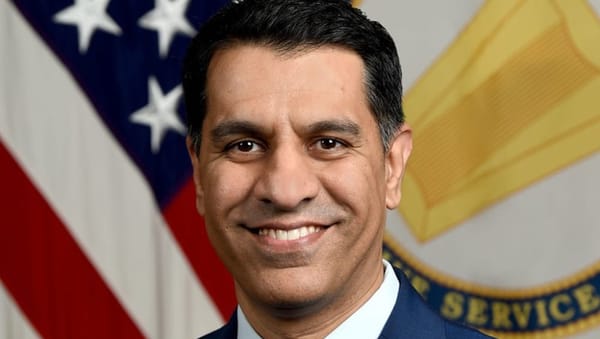
Austin Walton, vice president of government relations at NCTA — the Internet and Television Association, said the push to auction more spectrum is being driven in part by revenue goals, but warned policymakers against treating spectrum as a simple “revenue versus nonrevenue” decision.
“There’s relocation cost,” Walton said during a Broadband Breakfast virtual event as part of "The 12 Days of Broadband." “There may be a net negative based on how much it is to relocate” incumbent federal users, he said.
The legislation would task the National Telecommunications and Information Administration with finding about 500 megahertz and the Federal Communications Commission with finding another 300 megahertz for auction.
Walton argued that cable and broadband providers have become deeply invested in spectrum policy because most home broadband connections ultimately rely on Wi-Fi, and because cable operators increasingly use spectrum in mobile offerings. Comcast and Charter combined, he said, have grown into the nation’s fourth-largest mobile provider.
Walton also highlighted two FCC actions from 2020 that show the benefits of unlicensed and shared approaches. One was the FCC’s decision to open 1,200 megahertz in the 6 GigaHertz (GHz) band for unlicensed use, which he called “the lifeblood of Wi-Fi in America.” He also pointed to the Citizens Broadband Radio Service, a 3.5 GHz band built on a three-tier spectrum-sharing structure that protects federal incumbents, including Navy operations, while allowing commercial use.
CBRS has enabled “nontraditional” users, including manufacturers, airports and universities, to deploy private 5G networks, Walton said. Providers also use CBRS to support lower-cost mobile offerings, which he said can be 30% to 40% cheaper than plans from the big wireless carriers.
Walton added that the search for more spectrum will be complicated because there is little unused “greenfield” spectrum left, and relocating major federal systems could be costly and time-consuming. Moving some military systems, he said, could cost “tens of billions of dollars” and take years.
Walton also warned that spectrum policy is increasingly tied to geopolitics as countries prepare for the 2027 World Radiocommunication Conference. He said China is pressing European countries to backtrack on making the full 6 GHz band available for unlicensed use, a shift he argued could benefit Huawei and other Chinese vendors.
Looking ahead to 2026, Walton said he expects spectrum fights to intensify as federal agencies and lawmakers begin implementing the new spectrum mandates. His top hope, however, is continued expansion of Wi-Fi.
“Wi-Fi [...] democratizes connectivity for everybody,” Walton said. “Anybody can jump on Wi-Fi and hotspots and gain access to the rest of the world.”







Member discussion