
California Bill Modernizing 'Carrier of Last Resort' Rules Advances
AB 470 clears Senate committee by a 9–1 vote


WASHINGTON, July 22, 2025 – California lawmakers appear close to modernizing a century-old requirement that certain telecom companies guarantee basic voice services to households.
Assembly Bill 470, which advanced in the state legislature Thursday after a contentious July 15 hearing, would allow providers like AT&T to withdraw from their Carrier of Last Resort (COLR) obligations in areas deemed to be “well-served” by multiple, competing service providers.
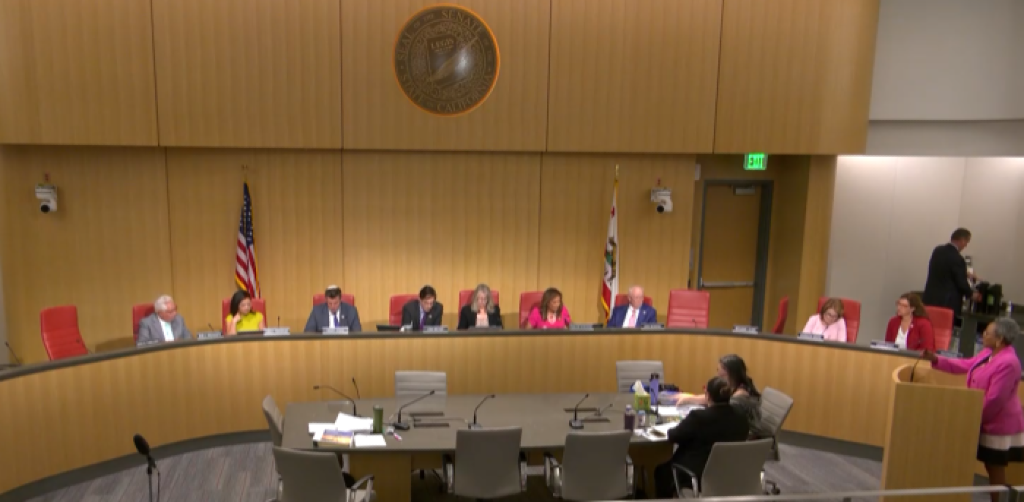
At the hearing before California’s Senate Energy, Utilities and Communications Committee, proponents described AB 470 a long-overdue step to modernize California’s communications infrastructure. Critics, meanwhile, warned the bill could strand rural communities without a dependable fallback for emergency calls, repairs, or basic voice service. Still, others described the bill as a carefully negotiated compromise.

Under AB 470, sponsored by Assemblymember Tina McKinnor, D-Inglewood, a provider could exit COLR obligations in California if at least three alternative communication providers offering basic voice service were available in the area, and at least one of those providers guarantees Lifeline and affordable voice services for three years.
Terri Nikole Baca, vice president of legislative affairs for AT&T, one of sixteen designated Carriers of Last Resort in California, and by far the largest, called AB 470 “a thoughtful approach” to modernizing California’s voice service rules.
“It is thoughtful because it provides a path to COLR reform only in areas of the state that are well served by other providers or have no population,” Baca said. “This legislation is carefully crafted. It requires interoperability, backup, power, compatibility, affordability safeguards, and prohibits providers from walking away from customers, with the process now firmly within the authority of the Public Utilities Commission.”
Baca highlighted what she called a “rainy day” provision included in AB 470, which acts as a safeguard to ensure continued voice service in areas.
If a COLR was granted relief from its obligations in an area, but no alternative voice service was available to a resident, the former COLR must resume service for that individual, a safeguard that remains in place for 10 years after the provider’s amended status was approved.
This would prevent complete service disruption, even in a worst-case scenario where all other providers withdraw, Baca argued.
Opposition to AB 470
Despite the safeguards, multiple state senators expressed their reservations about the elimination of COLR guarantees for low-income, rural, and underserved communities. Others voiced concerns about job losses and union protections for current COLR workers.
Leaders from over 30 locals of the Communications Workers of America denounced the bill, with multiple technicians warning that similar deregulation in Nevada left customers behind.
“COLR is about a responsibility. It's about a mandate. It's about a commitment,” said Frank Arce, international vice president for CWA. “Whether it's AT&T, Frontier or any other cable company, it is the key to guaranteed service.”
“However, we have already seen phone companies start to back away from their COLR mandate. We have reports that companies are not allowing our workers to respond to requests for repairs in certain communities,” Arce detailed. “A 90-year-old woman went without a landline for two months because the company refused to fix her service.”
Mark Toney, executive director of The Utility Reform Network, said AB 470 would allow providers to “pick and choose which neighborhoods they serve,” eliminating long-standing requirements for universal phone access.
Paul Yoder, speaking on behalf of a coalition of rural counties, urged lawmakers to reject the bill. “The counties of Butte, Del Norte, Kings, Mendocino, Nevada, San Joaquin, Shasta, Siskiyou, Solano, Humboldt, and Kern urge your 'no' vote,” he told the committee.
The Public Advocates Office, which operates within the California Public Utilities Commission, also remained opposed to AB 470 unless amended. Others opposed included the Los Angeles Unified School District, AARP California representing 3.2 million state members, and the California Federation of Labor.
More states rethink legacy voice mandates
Despite the vocal opposition, AB 470 has continued to gain traction in the California legislature. The California Assembly passed the bill on June 27 in a 58–2 vote, sending it to the state Senate.
On July 17, AB 470 was amended and re-referred to the state’s Senate Judiciary Committee, following a 9–1 vote in the Energy, Utilities and Communications Committee, signaling that lawmakers were still refining its language in response to concerns.
While California’s effort has drawn fierce debate, it reflects a broader national shift: At least 21 states have moved to roll back or eliminate COLR obligations in recent years.






Member discussion