California Utilities Have a Solution to Soaring Energy Prices: More Data Centers
PG&E believes more data centers may be the key to repairing the price crunch in California.


April 28, 2026 – As California’s energy prices continue to rise, utilities have a unique solution that may surprise: More data centers.
If everyday customers are on the same power grid as large data centers, won’t ratepayers bear that expensive burden? It’s actually the exact opposite, according to Pacific Gas and Electric (PG&E), the energy utility that covers most of California. Instead, the utility argued that data centers might be able to offset costs and put downward pressure on prices for all ratepayers.
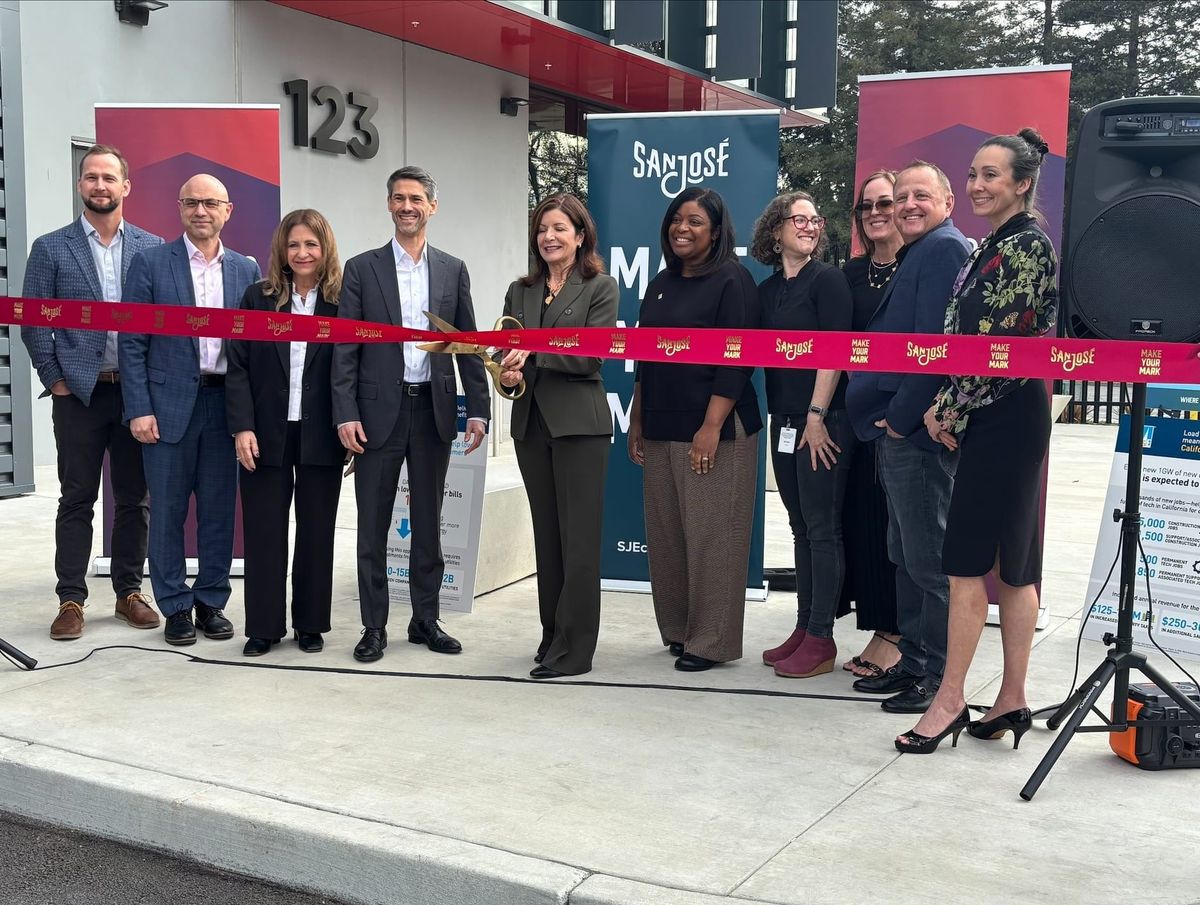
PG&E is moving full steam ahead on this approach. In January, PG&E cut the ribbon celebrating the first of a dozen large‑load customers. In San Jose, PG&E and data center company Equinix sent a message loud and clear: large energy users will lower bills for everyone.
Arquelle Shaw, president of the Americas for Equinix, a data center company, said at the ribbon cutting ceremony that it was incumbent on the data center industry to ensure they cover their share of costs and services and pursue the path that leads to lower energy rates for everyone.
“Historical data [shows] states or utilities that have experienced the most growth in electricity demand over the last 5 or 6 years, are also the states that tended to see their electricity prices decrease by the most in inflation adjusted terms.” said Ryan Hledik, co-leader of energy regulatory economics, finance and rates for Brattle Group, backing up Shaw and PG&E’s perspective.
California’s electricity rates have risen faster
According to a study produced by regulatory research firm Brattle Group and Lawrence Berkeley National Lab, California’s rates experienced a disproportionate rise compared to other states between 2019 and 2024, mostly due to wildfire hardening.

Current energy costs in California are the second highest in the country at 30.29 cents a kilowatt-hour (kWh) only behind Hawaii, according to data from the U.S. Energy Information Administration.
After California’s wildfires pushed PG&E to file for bankruptcy in 2019, the utility emerged in 2020 under a plan that shifted much of the cost burden onto ratepayers.
Hledik noted utilities that have excess capacity can add significant amounts of energy to the grid without major infrastructure upgrades. This allows for the fixed cost of the current grid to be spread across more customers, putting downward pressure on rates. Adding data centers to the grid to offset the rise in costs has been a clear strategy for PG&E.
PG&E said these data centers are already driving costs down. In March, the utility announced a rate decrease, and asserted that with each 1 gigawatt (GW) of data center load, electric rates could decrease by one to two percent.
Since July 2025, PG&E has led with this very belief that adding data centers to the grid could bring billions of dollars in benefits for rate payers.
“Data centers are powering more than just the digital world—they’re helping power California's future and PG&E is proud to lead the way in meeting growing demand for data centers,” said Mike Medeiros, vice president of South Bay delivery for PG&E, in the release. “This growth can help lower costs for all electric customers while creating tens of thousands of jobs and billions in local revenue.”
Beyond serving ratepayers, PG&E also has a significant stake in this. Hyperscalers are not just ordinary customers, they’re major ones. Adding data centers to California’s grid — which is only at 45 percent capacity right now — gives PG&E a unique customer and opportunity.
PG&E has since made clear it is courting data center customers, positioning hyperscalers as a solution to longstanding energy costs.
In a yearly data center forecast produced last July by PG&E, the utility expects to see significant load growth from data center auditions in the state up to 12.6 GWs based on current applications with the utility — that’s enough energy to power 8.4 million homes, or just over half of the total homes in California.
California’s biggest concern: Transmission
Besides expanding power generation, transmission capacity — or how much power can be sent through lines — is another hurdle that could lead to rate hikes.
According to California’s Public Advocate’s Office (Cal Advocates), transmission upgrades are required to meet the proposed demand from data centers, which could run in the billions.
The Cal Advocates analysis said utilities believe any required upgrades to transmission will be offset by the income made from powering data centers. However, the analysis noted that it’s possible projects may be withdrawn or won’t generate forecasted revenue, leading to hikes for all state rate payers to offset construction cost. Under current Federal Energy Regulatory Commission (FERC) ratemaking rules, all major transmission upgrades are paid by ratepayers.
“As data centers expand in California, the infrastructure costs required to serve them should not come at the expense of electric ratepayers,” said Karin Hieta, manager of the energy infrastructure branch of Cal Advocates, in the release. “By implementing practical cost-responsibility rules that don’t place undue risks on ratepayers and embracing flexible transmission planning, California can manage rising data center loads in a way that is fair and affordable for all ratepayers.”
PG&E agreed and took steps to mitigate the risk of rate hikes due to transmission infrastructure. In July 2025, the California Public Utilities Commission (CPUC) approved Electric Rule No. 30, which required applicants to agree to pay for all necessary transmission infrastructure work upfront in order to protect ratepayers from potential risk.
“Remedying these risks will require new safeguards that ensure data center developers, not existing ratepayers, bear the financial responsibility for their associated transmission infrastructure upgrades,” Hieta said in the release. “Other states with rapid data center growth, such as Ohio and Indiana, have already implemented new rules similar to the ratepayer protections our office is advocating for here in California.”
State lawmakers wade into in data center policy
While other municipalities are passing bans on data center construction, state legislators in California are betting on the idea that community members just want to see these projects “done right.”
In March, California State Sen. Scott Padilla, D, introduced a set of bills that will provide environmental review streamlining incentives for data center projects and institute a tariff on companies that would offset the costs they add for any increases to energy prices.
Under the bill, data centers that obtain the state’s Environmental Leadership Development Project (ELDP) certification would receive an accelerated environmental review. Under the ELDP, buildings must be environmentally efficient in energy use and water efficiency to earn LEED (Leadership in Energy and Environmental Design) certification, which has been key to California’s clean energy targets.
The senator believes these bills mark a balanced approach to allowing data center projects to move forward in an expedited manner, while addressing the concerns of communities.
On April 15, Rep. Ro Khanna, D-Calif., who represents Silicon Valley, echoed Padilla, and addressed those concerns by calling for a new AI social contract that balanced innovation with public responsibility. While he said he does not support the data center moratorium adopted by Maine and proposed by Rep. Alexandria Ocasio-Cortez, D-N.Y., and Sen. Bernie Sanders I-V.T., he wants data centers to cover ratepayers’ energy costs, prevent excessive water use, and invest in their local communities' public infrastructure.
A staffer in Padilla’s office noted that there is bipartisan support for this approach from none other than President Donald Trump.
At his State of The Union, Trump announced the Rate Payer Protection Pledge, a presidential proclamation agreed to by eight Big Tech companies intended to prevent rate hikes as data centers come online. The agreement was signed by Amazon, Google, Meta, Microsoft, OpenAI, Oracle, and xAI in March.
Hyperscalers such as Microsoft, Google, and Amazon have also made their own public commitments to offsetting their impact while also providing funds for grid upgrades and educational training.
Caption for photo at top, left to right: Parker Hanks, data center real estate and development leader-Americas- Equinix Manuel Pineda, San Jose Deputy City Manager Jennifer Maguire, San Jose City Manager Matt Mahan, San Jose Mayor, Arquelle Shaw, President of the Americas, Equinix, Carla Peterman, President PG&E, Erica Garaffo, Large Load Energy Customer Development, City of San José Ali Ruckteschler, SVP, Chief Procurement Officer, Equinix, Bill Strong, SVP of Americas IBX Operations at Equinix, Jen Baker, Director of Economic Development and Cultural Affairs at the City of San José.