Sen. Cotton Alleges Chinese Influence Behind U.S. Data Center Backlash, Demands DOJ Probe
The senator questioned whether domestic opposition to AI infrastructure is being manipulated by foreign adversaries

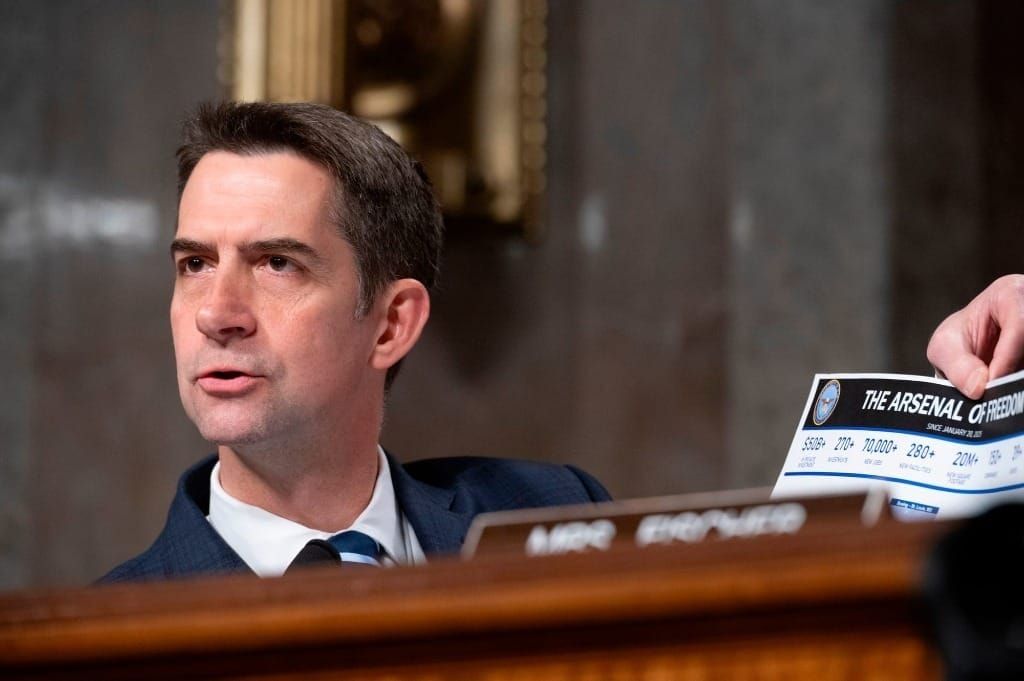
WASHINGTON, June 11, 2026 – Sen. Tom Cotton, R-Ark., questioned whether the domestic data center backlash is really home grown in America.
Cotton asked the Department of Justice to investigate foreign influence efforts targeting American AI infrastructure in a June 10 letter addressed to Acting Attorney General Todd Blanche.

The senator suggested that “a network of foreign actors, led by the Chinese Communist Party,” could be attempting to manipulate U.S. policy and public opinion on data centers. He added that “the Chinese government promotes its own AI ambitions at home, where sentiments are overwhelmingly pro-technology.”
Cotton alleged that a network of U.S. nonprofits funded by Shanghai-based American expatriate Neville Roy Singham has directed money into domestic advocacy groups opposing data center development. Singham has previously faced scrutiny over ties to Chinese media operations,
The senator’s letter comes amidst a tight race for AI dominance. Bloomberg reported on Tuesday that Beijing is preparing a roughly $295 billion, five-year plan to finance a nationwide network of data centers, with state-owned telecom companies expected to operate many of the facilities.
A recent Ipsos poll found that 64 percent of Americans oppose rapid AI data center construction, while just 33 percent support it. The poll found 77 percent of respondents were concerned the facilities would raise electricity prices, and 57 percent said they would oppose a data center in their own community.
Cotton acknowledged that Americans have “valid concerns” about the effect of data centers on energy costs and natural resources, but argued that those concerns could be exploited by foreign adversaries seeking to slow U.S. AI development.
His letter called out Sen. Bernie Sanders, I-Vt., for his recent panel including Chinese scientists focused on the “existential risk” of AI.
“This included a professor from Tsinghua University, a crown jewel of China’s Military-Civil Fusion strategy and a host to multiple defense research laboratories,” Cotton wrote.
Prior to convening the controversial cross-border discussion, Sanders introduced legislation aimed at placing a temporary federal moratorium on new data center construction until grid reliability and environmental impacts are fully studied.
“Let him go around the country and talk to people in small Republican towns who are not happy about huge data centers raising their electric rates and destroying their local environments,” Sanders told Broadband Breakfast. “I would suggest he do that.”
Cotton declined Broadband Breakfast’s request for further comment on the letter.