Carriers Want Upper C-band Rules in 60 Days
SES said it would cost $3.6 billion to clear the band, and Eutelsat estimated its costs would be $750 million

WASHINGTON, June 24, 2026 – Wireless carriers are looking for federal regulators to finalize operating rules for upper C-band spectrum in the next 60 days.
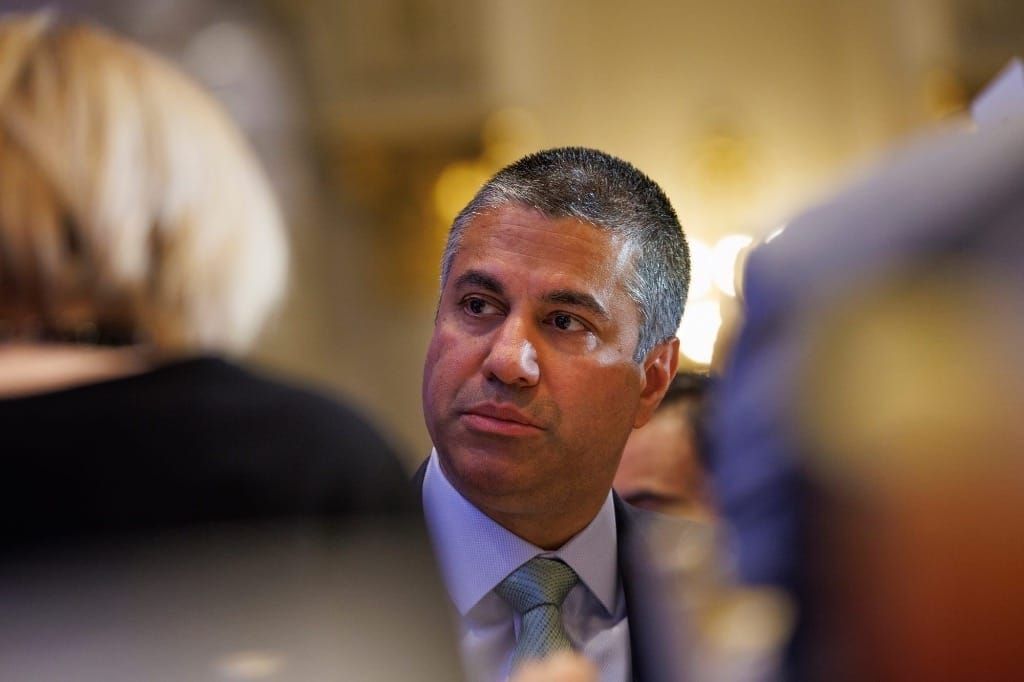
The Federal Communications Commission is set to auction off spectrum in the band — at least 100 megahertz by law — by July 2027. CTIA CEO and former FCC Chairman Ajit Pai said in a Monday blog post that carriers needed certainty to prepare for that auction.
“Now the key is finalizing service rules in the next 60 days,” he wrote. “Prospective bidders and existing users need time and cost-certainty to prepare for auction participation and commercial access by 2030.”
Pai said the band’s “160 megahertz would be a vital down payment on America’s AI and connectivity future.” CTIA had initially pushed for auctioning as much as 180 megahertz in the band, while satellite incumbents preferred 160 megahertz.
The wireless carriers and the aviation industry have disagreed on the technical standards for operating in the upper C-band. The band, at 3.98-4.2 GigaHertz (GHz), is adjacent to the spectrum used by altimeters, vital airplane components that measure altitude.
Airlines will have to replace all current altimeters for the upper C-band to be used safely by wireless carriers. The industry estimates the most essential aircraft can be finished by 2030, with the full retrofit costing anywhere from $4.5 billion to $7 billion.
The Federal Aviation Administration is crafting its own technical standards for those new altimeters, which stakeholders agree will have to match the FCC’s operating rules for upper C-band use to avoid interference. The carriers have told the FCC that the FAA’s proposal is too conservative, and would essentially add technical restrictions without a corresponding safety benefit.
The aviation industry has backed the FAA’s analysis, saying aviation analyses regularly guard against even highly unlikely scenarios to ensure passengers are as safe as possible.
In a filing posted Monday, representatives from CTIA and each of the big three carriers proposed alternative interference limits that they said were “more restrictive than warranted but will advance robust 5G.”
The carriers said they were proposing the spurious emission rule “in light of our dual goals for repurposing and auctioning as much Upper C-band spectrum as possible and timely access for new services.”
If the FCC adopted the carrier’s proposal, they said they would extend voluntary commitments to protect airports from lower C-band interference until the start date for upper C-band access.
Otherwise, the commitments will expire in 2028. Airlines have said that without extensions, interference could reach dangerous levels at 188 airports.
Other wireless industry spectrum goals
The FCC’s 2027 deadline for auctioning upper C-band airwaves comes from the One Big Beautiful Bill Act passed in July 2025. The law also tasked the National Telecommunications and Information Administration with finding 500 megahertz of government spectrum to be sold off to wireless carriers, 200 of which must be identified by July 2027
In his blog post, Pai said that of the three largest government bands undergoing study, “we will need to see at least two of these bands auctioned in 2028.”
He wrote that in the 2.7 GHz band, Congress has already authorized funding for replacement radars, making the band a good candidate for auctioning 110 megahertz in 2028, He wrote CTIA was “ready to work with government partners on an expedited transition plan and identification process” to facilitate such an auction.
He also wanted the 7 GHz band identified for mobile use, something the White House has also signaled support for, by the end of the year.
Upper C-band relocation costs
SES, the main satellite operator currently providing video distribution service in the upper C-band, told the FCC in a filing posted Monday that it will cost the company about $3.6 billion to clear 160 megahertz in the band.
Most of that, $2.62 billion, would be for building and launching seven new satellites, five Ku-band units to ensure continuity of service, and two more to provide extra capacity for those main satellites.
“SES is actively negotiating contracts for the satellites and launches,” the company told the FCC.
Eutelsat, another incumbent, said it estimated it would spend $750 million to clear anything more than 130 megahertz.
Incumbents like SES and Eutelsat will be reimbursed for clearing the spectrum, and will likely get extra cash for moving faster. The two companies disagree on how the FCC should calculate eligibility for those payments, with each accusing the other of trying to convince the FCC to hand them disproportionate amounts of money.
The wireless industry paid $9.7 billion to incumbents, including SES and Eutelsat, for quickly clearing the lower C-band after it was auctioned in 2020.
For the upper C-band, SES wants the agency to stick with a methodology that prioritises spectrum usage. The company recently acquired fellow upper C-band incumbent Intelsat and provides much of the services the band is used for.
Eutelsat has suggested basing payments on an operator’s presence across spectrum blocks, which would result in companies other than SES getting more money and having more of an incentive to participate, it argued.