
CES Unveiled Previewed AI, Industrial Tech Ahead of Las Vegas Show
Sunday preview event in Las Vegas event highlighted agentic AI, physical AI, and software-defined vehicles before CES opens on Tuesday.


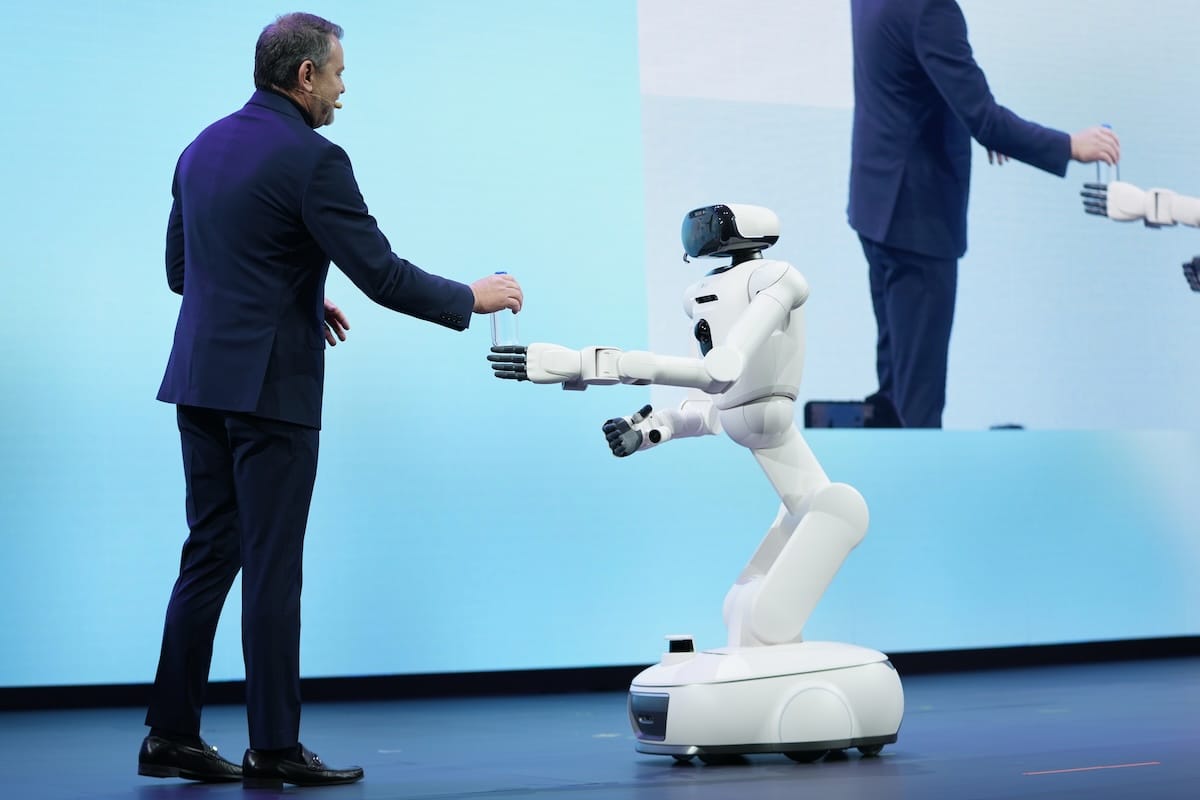
LAS VEGAS, Jan. 5, 2026 — The annual Consumer Electronics Show here shines a spotlight on the latest tech that companies plan to offer in 2026.
The multiday event, organized by the Consumer Technology Association, has become the destination where advances across industries like robotics, healthcare, vehicles, wearables, gaming and more are set to be on display.
Artificial intelligence will be anchored in nearly everything, again, as the tech industry explores offerings consumers will want to buy. AI industry heavyweight Jensen Huang will be taking the stage to showcase Nvidia's latest productivity solutions, and AMD CEO Lisa Su will keynote to “share her vision for delivering future AI solutions.” Expect AI to come up in other keynotes, like from Lenovo's CEO, Yuanqing Yang.

The AI industry is tackling issues in healthcare, with a particular emphasis on changing individual health habits to treat conditions — such as Beyond Medicine's prescription app focused on a particular jaw disorder — or addressing data shortages in subjects such as breast milk production.
Robots rising
Expect more unveils around domestic robots too. Korean tech giant LG already has announced it will show off a helper bot named “CLOiD,” to handle a range of household tasks.
Hyundai also is announcing a major push on robotics and manufacturing advancements. Extended reality, basically a virtual training ground for robots and other physical AI, is also in the buzz around CES.
In 2025, more than 141,000 attendees from over 150 countries, regions, and territories attended CES. Organizers expect around the same numbers for this year’s show, with more than 3,500 exhibitors across the floor space this week.
CES Unveiled
The preview event Sunday, CES Unveiled, reflected the expanding use of AI across products and industries, with a focus on agentic systems and vertical AI tailored to specific sectors such as healthcare, agriculture, and logistics.

Physical AI also featured prominently, with companies demonstrating robotics, autonomous vehicles, and intelligent machines designed to operate in real-world environments.
The CTA-hosted highlighted applications spanning industrial automation, mobility, and connected health.
Companies including Bosch, an industrial and automotive engineering supplier, and Qualcomm, a designer of mobile, automotive, and edge-computing processors, showcased AI integrated into manufacturing systems and software-defined vehicles. Demonstrations emphasized on-device inference, connectivity, and platforms designed to support continuous software updates.
Presenters cited survey data indicating 63 percent of U.S. workers had used AI at work, exceeding adoption rates in the United Kingdom, Germany, and several other European markets. Exhibitors pointed to vertical AI models in healthcare, agriculture, and logistics, alongside industrial deployments from Siemens.
Health and longevity technologies also featured prominently, with Withings, a consumer health tech company, displaying connected devices for continuous monitoring and early risk detection.
The Associated Press's Shawn Chen contributed background information for this article.








Member discussion