CES26: EU, South Korea Frame Early Global Push for AI Regulation

Officials from Ireland, South Korea and Canada said at the Consumer Electronics Show that shared rules are becoming essential as AI scales across borders.

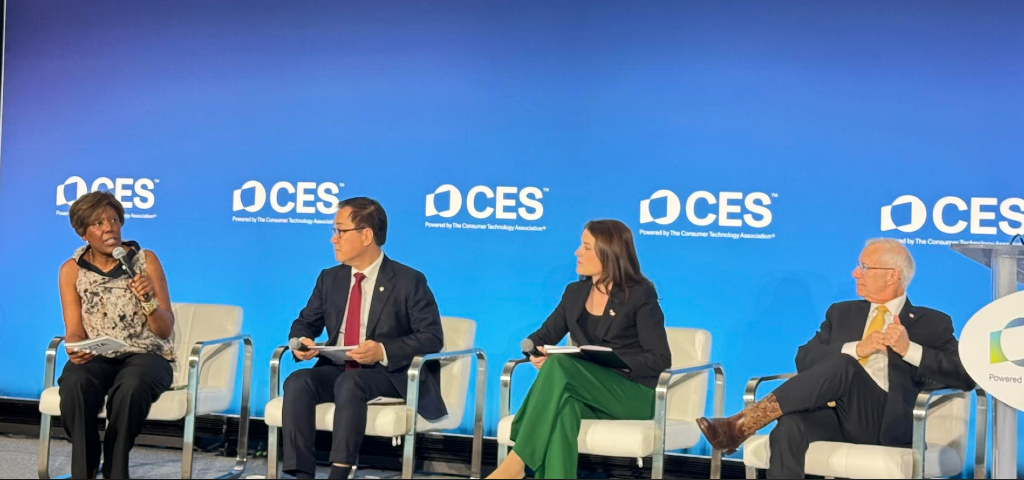
CES26: EU, South Korea Frame Early Global Push for AI Regulation
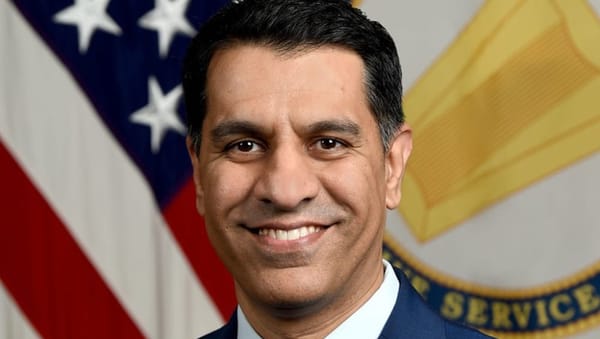
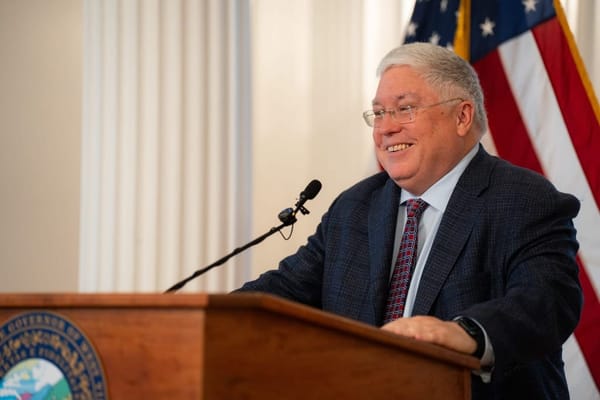
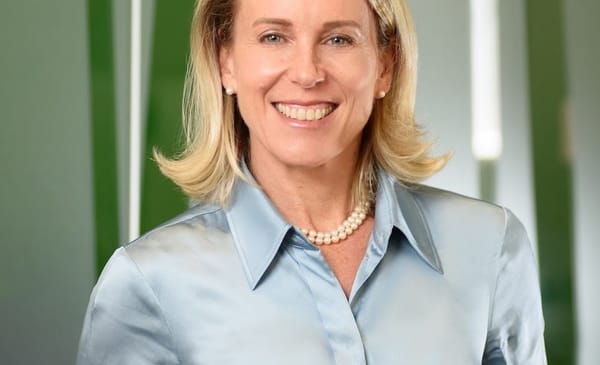
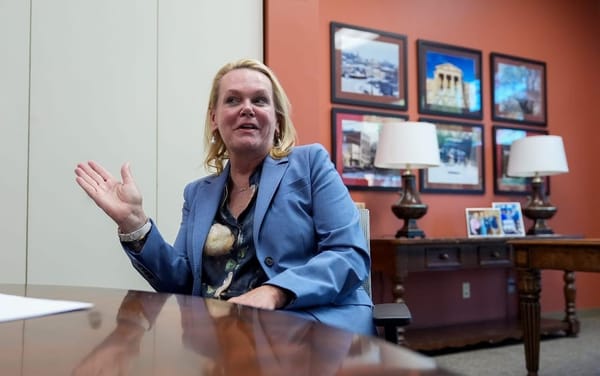
Photo of (from left), Tiffany Moore, senior vice president of political and industry affairs at the Consumer Technology Association; Hyung Du Choi, lead architect of South Korea’s AI legislation; Caitlín Higgins Ní Chinnéide, Ireland’s consul general to the southwestern United States; and Vic Fedeli, Ontario’s minister of economic development, job creation and trade, in Las Vegas on Jan. 6, 2025.

LAS VEGAS, Jan. 6, 2025 — Officials from Ireland, Canada and South Korea said at CES2026  on Tuesday that artificial intelligence policy and innovation are entering a phase where coordination across borders matters as much as domestic investment, as two major regulatory frameworks — the European Union’s AI Act and South Korea’s new AI Framework Act — begin to shape global standards.

Caitlín Higgins Ní Chinnéide, Ireland’s consul general to the southwestern United States, said the EU AI Act has become one of the most comprehensive regulatory regimes governing artificial intelligence. The law classifies AI systems in tiers of risk, imposing stricter requirements on high-risk uses such as biometric identification while allowing lower-risk applications to develop with fewer constraints.

Higgins Ní Chinnéide said Ireland supports the supranational risk-based approach because “AI technologies are inherently cross-border and require shared rules to scale.” At the national level, she pointed to Ireland’s AI strategy in July 2021, which has continued updating it as the pace of technological change accelerated, with a particular emphasis on reskilling and upskilling workers across sectors including health care and public services.

Ireland has paired that strategy with public investment. The government recently committed about €70 million for research infrastructure across higher-education institutions, supporting work in artificial intelligence, quantum computing and a national supercomputer based in Galway.  

She touted the U.S.–Ireland R&D Partnership, where Irish universities collaborate with U.S. research institutions. Ireland currently ranks sixth globally for AI vibrancy per capita, according to Stanford University, and has focused on bringing AI tools into small and medium-sized enterprises.

South Korea’s approach, outlined by Hyung Du Choi, a member of South Korea’s National Assembly and a lead architect of the country’s AI legislation, centers on its position in the global supply chain and a new AI Framework Act expected to be enacted this week. The law is widely viewed as the second major national AI framework after the EU AI Act, and differentiates itself through its sector-led and principle-based regulatory structures as opposed to broad, rights-based mandates.

Choi said South Korea’s strategy emphasizes encouraging AI development while addressing public concern over high-risk applications. He described AI development as resting on three pillars: computing hardware such as graphics processors and memory, high-quality data that can flow across borders, and trust built through shared standards rather than outright restrictions.

Canada’s perspective was presented by Vic Fedeli, Ontario’s minister of economic development, job creation and trade, who said AI governance cannot be handled effectively at the provincial level or through fragmented national approaches in the United States or Canada. “No single jurisdiction has the capacity to do this alone,” he said.

Ontario is working with the European Union on AI governance and with the United Kingdom on national digital infrastructure programs covering data governance, cybersecurity and trusted digital services. The province has committed $50 million to support startups and scaleups and backs research institutions including the Vector Institute, founded by Nobel Prize-winning machine learning pioneer Geoffrey Hinton, and Quantum Valley led by Mike Lazaridis, chief technologist of the BlackBerry smartphone.

Ontario graduates about 100,000 STEM students annually, with 1,800 AI master’s students enrolled this year alone. Venture capital investment in AI reached about $2.6 billion last year, officials said.

Across nations and provinces, panelists returned to the same conclusion: as AI systems expand globally, alignment on governance, infrastructure and talent development is becoming a prerequisite for sustained innovation.

Member discussion

Popular Tags