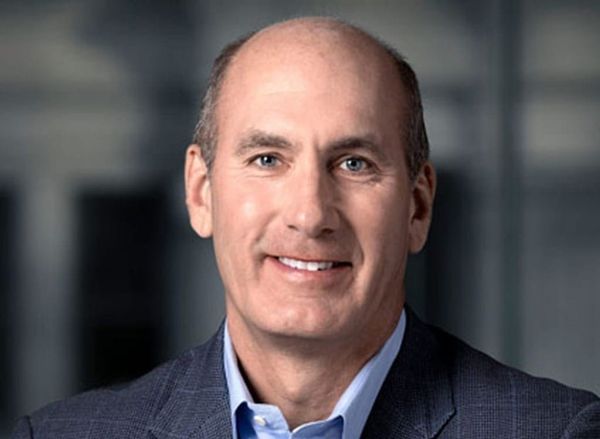
Charter, Comcast Also Confident Amid Starlink Competition
Charter reached settlements with two intervenors in California’s review of its Cox acquisition.

Jake Neenan

WASHINGTON, May 14, 2026 – Executives from Comcast and Charter said Thursday they’re confident in their ability to compete against satellite broadband from SpaceX’s Starlink.
Charter CEO Chris Winfrey said the cable operator’s rural builds were recently encountering existing Starlink subscribers rather than greenfield markets. The company was still hitting its penetration targets, he said, even if it took longer than usual.
Speaking at a MoffettNathanson conference in New York, he said the service was great for rural areas but was too capacity constrained to be a serious threat in urban and suburban markets.
“Do I think it will be the competitive solution for those? No. But I also understand they are very well capitalized,” he said. “They’re incredibly technologically savvy, they have a tremendous amount of government support, and we don’t take that for granted.”
He said Charter was “watching them very closely” but ultimately felt that “there may be more opportunities to cooperate with some of these providers than direct head-to-head competition.”
Executives from Verizon and T-Mobile at the show also downplayed the idea of SpaceX being much of a threat to them on broadband or mobility. The three major mobile carriers announced a joint venture Thursday that would pool their spectrum and make it easier for new direct-to-device companies to access, which some analysts saw as a bid to reduce SpaceX’s dominance in that space.
For his part, Steve Croney, CEO of Comcast’s connectivity division, said that “in reference to fixed wireless and satellite, our network far exceeds what they have.”
He said broadband-only customers were using 10 percent more download data, although he didn’t say over what time frame, and that upload use was increasing even more. He said spikes in congestion like sporting events and hours when more people were gaming were easier for wirelines networks to deal with.
Convergence
The cable giants have been pushing plans that bundle fixed and mobile broadband as a means of reducing subscriber churn and addressing years of continued broadband losses. Both Winfrey and Croney said that was still their plan.
“I’d say it’s core to the entire strategy,” Croney said. He said it was both about giving cheaper deals through bundling and investing in Wi-Fi routers, which handle 90 percent of the company’s mobile traffic, to provide a good experience.
Most of the other major ISPs have also bet big on convergence. AT&T and Verizon are racing to expand their fiber footprints to rival the already sprawling cable networks. T-Mobile hasn’t invested as much in fiber expansion, with executives repeatedly calling convergence a myth.
Winfrey said he wasn’t buying that, given the carrier offered its fixed wireless service nationwide.
“As much as T-Mobile says they don’t believe in convergence, they’re doing it every day,” he said. “They’re just doing it on the back of the same network.”
Charter’s stock tumbled 25 percent last month after executives said the company’s average revenue per user (APRU) would likely remain flat on the year. Winfrey said the company was facing competition and low rates of people moving houses in the short-term, but still had a competitive formula with cheaper service and high speeds and was trying to drive bundling as much as possible.
“Depending on how you allocate the revenue inside the bundle, you know your single-play product ARPU is going to be all over the place from time to time, particularly as you're trying new things and going to market,” he said.
Charter stock jumped nearly 7 percent Thursday morning but fell back to being up 3.5 percent on the day Thursday afternoon.
Cox merger
Charter is in the process of buying Cox for $34.5 billion. Federal and several state authorities have already given the deal the go-ahead, with California being the last remaining hoop to jump through.
Winfrey said Charter had reached settlements with two parties — the state’s consumer advocacy office and the California Emerging Technology Fund — to ensure they don’t oppose the deal before the California Public Utilities Commission.
Charter is asking the state to approve the deal in August, which would prevent Justice Department clearance from expiring and avoid extra filing costs. That’s a result of the Cal Advocates settlement and later than the companies’ previous request of a July approval.
MoffettNathanson founder Craig Moffett said it wasn’t clear to him why it would take that long, but Winfrey didn’t comment on the proceeding outside of acknowledging the settlements.
“I’m not going to say more about it just to respect the process that they and we have to go through,” he said.
Briefing is due to the CPUC by May 22 with replies due June 5.