Charter Down 120,000 Broadband Subs
CEO Chris Winfrey is open to more cable consolidation.

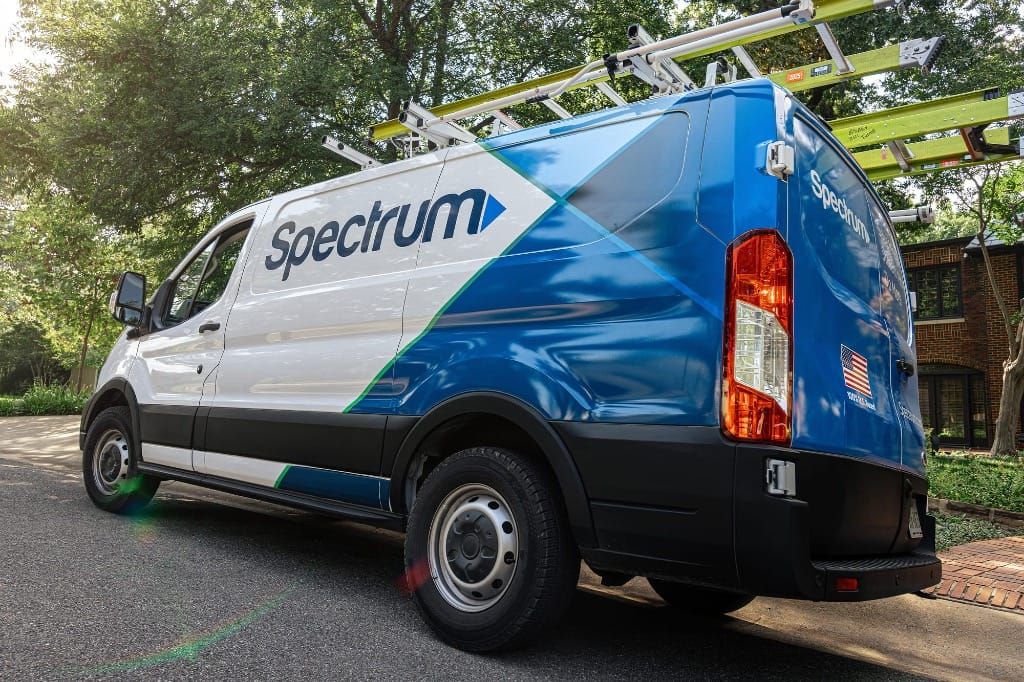
WASHINGTON, April 24, 2026 – Charter Communications posted deeper‑than‑expected broadband losses in the first quarter, underscoring the competitive pressure facing the cable giant as it works to close a major transaction later this year.
Charter said Friday it lost 120,000 broadband subscribers in the quarter, worse than analysts had expected and worse than the same time last year.
It was unwelcome news after fellow cable giant Comcast reported Wednesday it had lost just 65,000 subscribers in the same period. Charter stock tumbled nearly 24 percent after the company’s earnings call Friday morning.

Comcast had the benefit of a huge advertising platform from major sporting events like the Olympics and Super Bowl on its NBC network. Comcast executives attributed more than half the company’s improvement year-over-year, about 100,000 subscribers, to that advertising push.
Charter CEO Chris Winfrey said the company was still seeing rough competition from fiber and fixed wireless, particularly from AT&T, plus households ditching broadband altogether and relying solely on mobile service. He said the presence of satellite broadband was also likely impacting new subscriber rates in rural areas where Charter is expanding its footprint.
The company has been leaning into bundling its fixed broadband, wireless, and increasingly video services, plus more transparent pricing in a bid to turn customer perception around and slow the losses. Winfrey said that was still the plan.
“We offer more for less than our competitors,” Charter CEO Chris Winfrey said. “Our results don’t yet reflect that reality given the legacy reputation of cable.”
Comcast has been running a similar playbook and has instituted five-year price locks, as has cable operator Optimum, formerly Altice USA. Winfrey said Charter had tried out price locks before, but hadn’t seen much of a benefit.
“When we’ve run some trials around five-year guarantees or five-year price locks, we try different things, we haven’t necessarily seen the lift ourselves,” he said. “But maybe that’s because we didn’t do it at scale.”
He said the company was “happy to adopt” measures that worked for other cable operators, but that it was “trying things left and right” to attract new customers. About 45 percent of Charter’s residential customers are now on new pricing plans launched in late 2024, he added.
Charter ended the quarter with 29.5 million broadband subscribers, including residential and small business, and 58.6 million passings.
While the subscriber metrics were bad news, New Street Research analyst Vikash Harlalka noted that based on the companies to have reported so far, the residential broadband market is on track to add more subscribers than one year ago. That industry growth is a prerequisite for cable losses to stabilize, he wrote
“Broadband industry growth needs to recover for cable subscriber losses to recover. So, there are early signs we are getting there,” he wrote.
Mobile, convergence
Charter added 358,000 mobile lines for a total of 12.1 million. That was also below analyst estimates and lower than last year’s 507,000.
Charter CFO Jessica Fischer said the slowdown was partly due to “heavy device subsidy activity” by the major wireless carriers.
Bundling mobile and home broadband together is a major part of Charter’s strategy to keep customers around. Those bundles have also increasingly featured Charter’s video services, which have been losing much fewer subscribers in recent quarters. Video subscribers fell by 60,000, better than expected and much better than last year.
Pushing those bundles, in addition to Charter’s already lower prices, will be the plan once Charter acquires Cox’s more than 12-million location footprint and more than 6 million subscribers. Winfrey said the deal was on track for a summer approval by the California Public Utilities Commission.
The cable giants have “an enormous footprint advantage” with their sprawling wireline footprints, MoffettNathanson founder Craig Moffett wrote in a Friday note.
“If the new basis of competition is to be convergence, then the most important metrics to watch aren’t so much around broadband as around wireless” and video, he wrote. “Charter’s mobile sub growth remains robust, but as the subscriber base grows, churn exerts a growing drag on quarterly net additions.”
Cable M&A?
Like on Comcast’s call Thursday, analysts asked Charter executives about the possibility of more cable consolidation. Winfrey said he wasn’t opposed, but reiterated he wasn’t talking about a specific company.
“We like cable as an investment. I think it’s a great business. We’d like to acquire more cable assets if it can be done at an appropriate price [and] conditions,” Winfrey said. “In the end, we’re just regional competitors. Each of the cable companies is a regional competitor. We don’t overlap, and all of us are competing against national and global competitors.”
He did note that the larger the deal, the larger the cost savings from merging operations.
Comcast executives had also appeared open to a deal of some kind on Thursday.
“We feel even better about the odds of a Comcast-Charter merger today than we did before,” Harlalka wrote in a Thursday note after Comcast’s call.