Cooling Constraints Emerge as Major Challenge for Data Centers
Water use and rising AI demand are pushing operators to rethink traditional cooling systems.

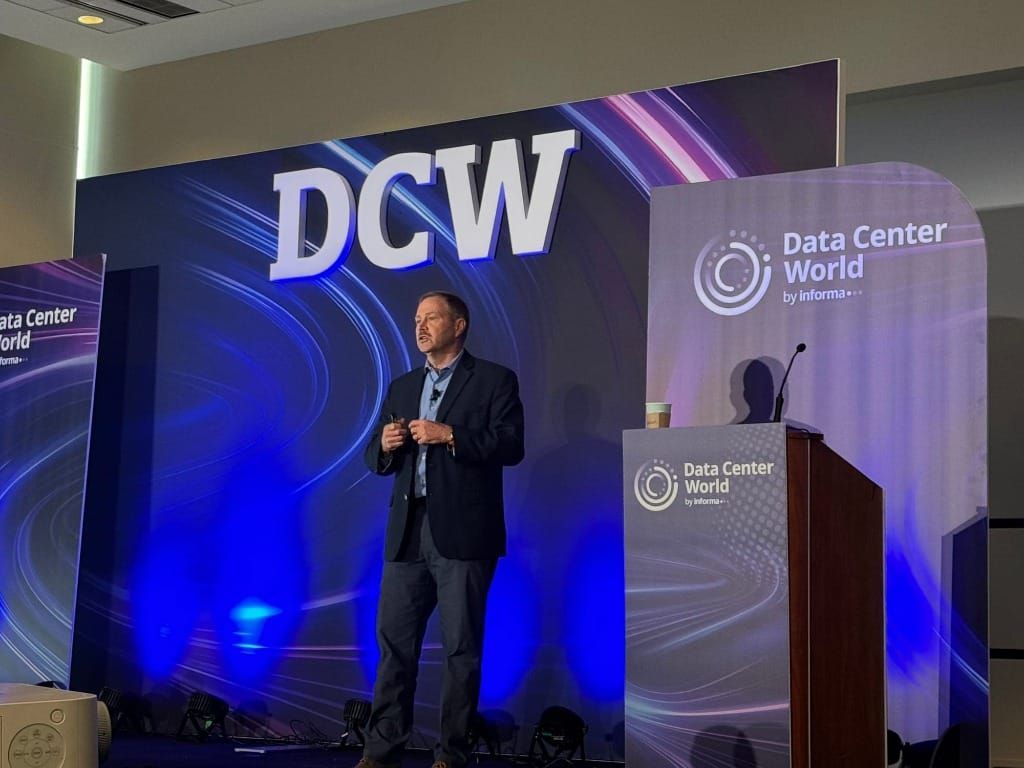
WASHINGTON, April 22, 2026 – Growing data center demand is straining traditional cooling methods, with industry experts warning that water-intensive systems may no longer be viable or sustainable at scale.
Experts speaking at the Data Center World conference in Washington said the rapid buildout of artificial intelligence infrastructure is driving increased strain on both energy and water resources.
“We heard it this morning… Nvidia’s Sean James made it very clear, you can’t use water,” Gary Hilberg, president of Continuum Energy, said, pointing to the scale of consumption.

Cooling remains critical to maintaining safe operating temperatures for high-performance computing and dense server environments. Experts warned that inadequate cooling can shorten system lifespans and reduce reliability over time.
Hilberg noted emerging approaches such as thermal storage could offer more efficient alternatives by aligning cooling demand with renewable energy supply. “I can provide 100 percent of the cooling for about 2 percent of the total power,” he said.
Other speakers highlighted the growing role of predictive technologies to better manage demand. Chris Mi, professor at San Diego State University, highlighted how advanced systems could be used to anticipate times of peak demand and optimize cooling accordingly, saving power in the process.
The shift reflects a broader trend among manufacturers and operators moving away from conventional cooling methods. Hilberg remarked that a single 300-megawatt data center can consume nearly 1 billion gallons of water annually, raising concerns about long-term sustainability.
For many communities, sustainable alternatives for cooling systems provide methods to avoid safety risks. Aaron Starling, data center segment manager at JST Power Equipment, said infrastructure choices such as dry-type transformers can help to reduce fire and spill risks, eliminating the need for oil-based systems traditionally used in power equipment.
As data center demand accelerates, presenters agreed operators will need to balance performance, cost and sustainability while rethinking how facilities are cooled.