
Cruz Blocks Bill to Extend Privacy Protections Nationwide
The bill would prevent data brokers from selling or trading personal information of anyone located in the U.S.

Jericho Casper
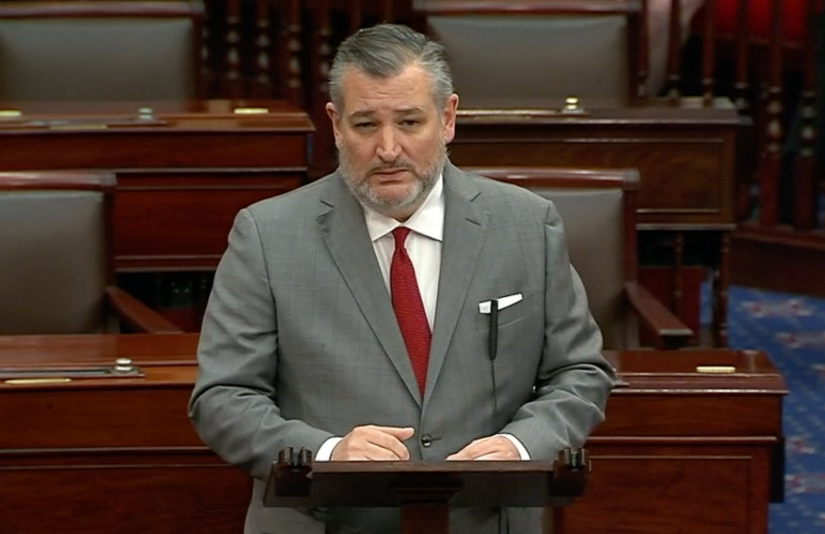
WASHINGTON, Oct. 3, 2025 – Sen. Ted Cruz, R-Texas, blocked an effort by Sen. Ron Wyden, D-Ore., this week to extend data privacy protections designed for federal lawmakers to all individuals in the United States.
Wyden sought unanimous consent Monday night to pass the Protecting Americans from Doxing and Political Violence Act. The bill, S.2850, would have prevented data brokers from selling or trading the personal information of anyone in the U.S., broadening protections already approved in the Senate for members of Congress and their staffs.
“Members of Congress should not receive special treatment,” Wyden said, speaking on the Senate floor. “Our constituents deserve protection from violence, stalking, and other criminal threats.”
Immediately, Sen. Ted Cruz, R-Texas, Chairman of the Commerce Committee, objected. He and Sen. Amy Klobuchar had earlier co-sponsored, S. 2144, a bill designed to tighten privacy protections for members of Congress, their families and congressional staff.
While praising Wyden’s longstanding privacy advocacy, Cruz instead said hearings on broader reforms were needed: “I am interested in expanding the protection to as wide a universe as is feasible, as is practicable, but that answer is not yet worked out,” he said.
Under Wyden’s bill, covered data would include: home addresses, personal phone numbers and emails, Social Security and driver’s license numbers, bank and card information, license plates or other vehicle identifiers, the names of minors in the household, schedules and routes to school or work, and precise geolocation tied to a person’s device.
After S. 2850 failed, Wyden immediately sought passage of a narrower bill, S. 2851, to extend those same protections to state and local officials, judges, and survivors of sexual assault and domestic violence.
Cruz again objected, repeating his offer to take the issue up in committee.
While Wyden credited the Commerce committee for passing protections for members of Congress, he called it “unfortunate” that the Senate would protect itself “but not all Americans.”
Wyden argued the only beneficiaries of Cruz's objection were “shady data brokers, would-be murderers and stalkers, as well as foreign adversaries.”
“Data brokers have amassed vast amounts of Americans’ personal information,” Wyden said, “which they are willing to sell to anyone with a credit card.”
“Would-be murderers can often find the home addresses and other personal information about their targets within a few search results on Google,” he said.
Wyden said the assassin who murdered Minnesota State representative Melissa Hortman and shot State senator John Hoffman repeatedly used ‘people search’ websites run by data brokers to learn the home addresses of the victims.
Cruz countered that he was sympathetic to Wyden’s concerns but not ready to back such a sweeping expansion.
“There are threats against state and local officials. Those threats are serious, and they deserve to be dealt with seriously,” Cruz said. However, he maintained he was not prepared to open protections for “a universe that comprises tens of thousands, if not more people.”





Member discussion