D.C. Circuit Upholds FCC Plan to Open More Public Safety Spectrum to FirstNet

The 3-0 decision said FirstNet could operate outside the 700 MHz band

D.C. Circuit Upholds FCC Plan to Open More Public Safety Spectrum to FirstNet
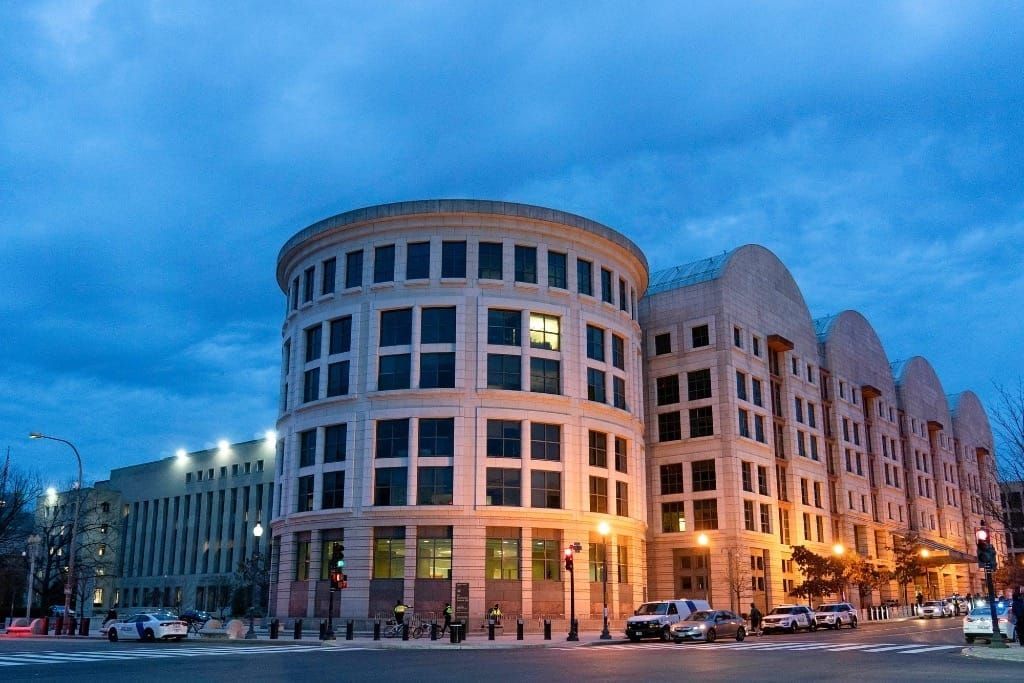
Photo of the E. Barrett Prettyman U.S. Federal Courthouse, which houses the D.C. Circuit, in Washington in 2024 by Jose Luis Magana/AP

WASHINGTON, July 21, 2026 – A federal judge upheld the Federal Communications Commission’s plan to open up more public safety spectrum to FirstNet, the government’s nationwide first responder network operated by AT&T.

A three-judge panel from the U.S. Court of Appeals for the D.C. Circuit unanimously ruled that FirstNet can operate in spectrum outside the 700 MegaHertz (MHz) band set aside for it by Congress in 2012. 
Circuit Judge Gergory Katsas wrote that the court couldn’t yet rule on whether the FCC was exceeding its “very limited authority” over federal entities by setting aside spectrum for FirstNet. He dismissed that part of the challenge and said the court could potentially take it up if opponents brought another lawsuit.

The National Telecommunications and Information Administration is the agency that handles spectrum allocations to federal users. The FCC’s plan is to select a band manager for the 4.9 GHz band and allow that entity to enter into a sharing agreement with FirstNet.

“There would seem to be no problem if the FCC were to authorize one of its licensees to transfer spectrum to a federal entity and the NTIA were to authorize the federal entity to accept the additional spectrum,” Katsas wrote. “We decline to definitively decide what role the NTIA must play in all of this without any clear sense of how the selection, negotiation, and transfer will unfold.”

The FCC first moved to make unused parts of the 4.9 GHz band, currently set aside for local public safety agencies, available to FirstNet in 2024 under then-Chairwoman Jessica Rosenworcel, a Biden appointee. Acting on a petition from a pro-FirstNet public safety group, the agency said it was a good way to address underutilization in the band.

FCC Chairman Brendan Carr, a commissioner at the time, voted in favor of the order.

T-Mobile, Verizon, and smaller carriers were not fans of the prospect. AT&T can use FirstNet spectrum for its commercial services under its contract with the government, and the other carriers estimated the move could amount to a windfall of up to $14 billion for AT&T.

The other carriers, along with utilities and public safety groups, formed the Coalition for Emergency Response and Critical Infrastructure (CERCI) and sued to block the order. 

Among other things, they argued the band manager structure was an effort to circumvent the FCC’s inability to assign spectrum to a federal entity.

Katsas wrote he would have “substantial doubts about the lawfulness” of the order if the FCC unilaterally tried to assign spectrum to FirstNet, but noted that’s not the framework the FCC drew up in its order. He wrote the issue might only be ripe for review if the FCC granted a license “without any separate approval from the NTIA.”

CERCI also argued that FirstNet could only use its 700 MHz allocation under the law that created it, regardless of the FCC’s authority.

Katsas disagreed. He wrote that the law standing up FirstNet did “not limit FirstNet to the 700 MHz band” and that NTIA had authority to assign it more.

Two pro-FirstNet public safety groups also sued: the Public Safety Broadband Technology Association and a group it houses called the Public Safety Spectrum Alliance, which proposed the idea.

They wanted the court to find the FCC should have gone further and seized for FristNet spectrum allocated to local users but not actively being loaded. Katsas denied their challenge, finding they didn’t have standing to sue, but the groups were still pleased.

“We look forward to the FCC beginning the Band Manager selection process and ensuring that the 4.9 GHz Band becomes a focal point for first responders’ use of advanced technologies,” a PSBTA spokesperson said in an email.

CERCI did not immediately respond to a request for comment. Nor did the FCC. AT&T declined to comment.

Popular Tags