
Daniel Suhr: Broadcast License Revocation Fact Check
Historical FCC precedent includes cases where station owners lost their broadcast licenses for deliberately skewing news coverage toward favored political candidates.

Daniel Suhr
In response to a recent X post from Federal Communications Commission Chairman Brendan Carr, there is a line circulating around broadcast world that the FCC "has never penalized a station for its news coverage” or “[t]here is no legal precedent for revoking a broadcast license for its news coverage.” I don’t think that’s an accurate recounting of the complete record of FCC precedent.
Prof. Chad Raphael did a deep dive looking at news distortion complaints from 1969-99. He found that “[i]n 2 [] cases, where distortion was compounded by numerous other infractions, the Commission issued short-term license renewals, a form of regulatory probation, but renewed the licenses thereafter. In the final 3 cases, distortion contributed to a host of violations that cost broadcasters their licenses.” So in five cases during that thirty-year window, news distortion did contribute to a license action, including three times where the license was revoked.
Of those five, several dealt with weather or sports reporting, and two concerned hoaxes reported as news. But one is very on point: Star Stations (51 FCC 2d 95 (1975)). In that case, the station owner ordered his staff to “slant” news broadcasts in favor of his preferred public officials. A station executive testified that the licensee desired “that Senator Hartke receive frequent, favorable mention in the station’s news broadcasts,” which the FCC characterized as “a scheme to afford the candidate favorable news coverage, . . . improperly providing publicity to the candidate on regular newscasts.”
In a second race, the station owner “endeavored to provide one-sided coverage of the campaign” – “Burden announced that his purpose was to put Mark Hatfield in the U.S. Senate and that only positive news items regarding Governor Hatfield and negative stories concerning Representative Duncan were to be carried.” The FCC found that Hatfield received nearly twice as many news stories as Duncan in a particular period, and the stories about Duncan were pro forma whereas those about Hatfield were positive.
The Commission concluded: “In both the 1964 and 1966 campaigns, newscasts were used as a vehicle to publicize Burden's preferred candidate – not as an exercise of news judgment, but as a deception of the public and to further his private interests. . . . Such attempts to use broadcast facilities to subvert the political process cannot be ignored or condoned.”
As a result of these findings and other misconduct, the Commission revoked Burden’s radio station licenses. Note that Burden’s stations never reported anything untrue or false or factually inaccurate—the intentional slant to a favored candidate did him in.
Two further cases outside Prof. Raphael's article are also instructive. In KMPC, Station of the Stars (14 Fed. Reg. 4831 (1949)), the Commission considered similar behavior to Star Stations: a station owner had “ordered the slanting of news in a manner hostile to those he disfavored, including prominent Democrats.” He also ordered favorable coverage of those he liked, such as presidential possibility Douglas MacArthur and other Republicans. Though the license review was mooted by his death, “the concurring opinions of Chairman Coy and Commissioner Hennock made clear that the FCC would consider denying a license renewal on grounds of news suppression or distortion: . . . ‘[C]onduct which manifests a disregard of the goal of objectivity in news presentation cannot help but adversely effect character qualifications under the Communications Act.’”
More recently, the Commission considered a licensee who was also a sitting Democratic state senator (100 F.C.C.2d 1607 (1985)). The licensee, acting as a moderator of a news Q&A program with a Republican gubernatorial candidate, accused the candidate on live tv of bouncing a check. The licensee later issued a kinda-correction. A Nevada court eventually found this was slander undertaken with actual malice (a campaign advertising agency had issued the check, not the candidate personally). The Commission found “a clearly improper private (political) purpose being served by [the licensee’s] antics, and his premeditated actual malice and later disingenuousness represent a serious abuse of licensee power and the public trust.” The program’s context also “raised” “questions of news slanting or news distortion.” Thus, the single incident “provides the basis for a highly negative predictive judgment about Hernstadt's future reliability as a Commission licensee.”
Commissioner Blumenthal, writing separately, was quite clear: “It is difficult to conceive of a more fundamental and egregious abuse of that public trust than [the licensee’s] flagrant and partisan libel of a political rival on his own television station; should his abuse ever be repeated, his basic qualification to be a licensee should be considered utterly forfeit. . . . [W]hen a licensee principal personally and willfully uses his broadcasting facility for improper political purposes, the Commission must move with firmness and finality.”
On top of this, the U.S. Court of Appeals for the D.C. Circuit’s 1998 Serafyn decision introduced a new “plaintiff-friendly method” for looking at news distortion complaints, such that “much that had been heretofore excluded as evidence of distortion would be rehabilitated,” according to Professor Lili Levi. So though such cases are still rare, the law has shifted in a more complainant-friendly direction.
Finally, I am not alone in suggesting that news distortion should be considered in license renewals or similar transactions. The National Black Media Coalition opposed a CBS license transfer because of alleged news distortion (15 FCC Rcd 8230 (2000)). A former Democrat U.S. Senate aide-turned-Democrat state legislator filed a petition opposing WBFF’s license renewal based on alleged news distortion (resolved in a 2016 order). And in their 2018 letter, a dozen Democratic U.S. Senators led by Ranking Member Maria Cantwell wrote that Sinclair’s alleged news distortion “affects its fitness to hold its existing broadcast licenses and its fitness to acquire even more broadcast licenses through the proposed merger with Tribune…” And then of course there's the Fox29 complaint from MAD in 2023.
Licenses are not sacred cows—the chairman has said that several times. Licensees who do not operate in the public interest can lose their licenses. Broadcasting inaccurate and slanted news is not in the public interest, as several licensees have learned the hard way.
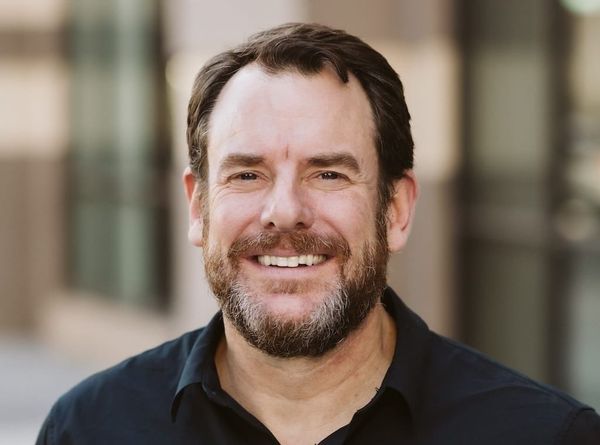
Daniel Suhr a leading constitutional litigator. As president of the Center for American Rights, he combines legal expertise with politically savvy communications and coalitions strategies to best serve the firm’s clients and causes. As former managing attorney of a nonprofit law firm firm, Suhr litigated cases of critical national importance to block nationwide public health mandates, halt the growth and abuse of administrative powers, and protect and expand school choice for students across the country. This Expert Opinion is exclusive to Broadband Breakfast.
Broadband Breakfast accepts commentary from informed observers of the broadband scene. Please send pieces to commentary@breakfast.media. The views expressed in Expert Opinion pieces do not necessarily reflect the views of Broadband Breakfast and Breakfast Media LLC.



Member discussion