Debate Over 'Cable Pollution' Pits Indiana Officials Against Telecoms

The hearing exposed a growing divide between local frustration and industry resistance over abandoned broadband lines.

Debate Over 'Cable Pollution' Pits Indiana Officials Against Telecoms
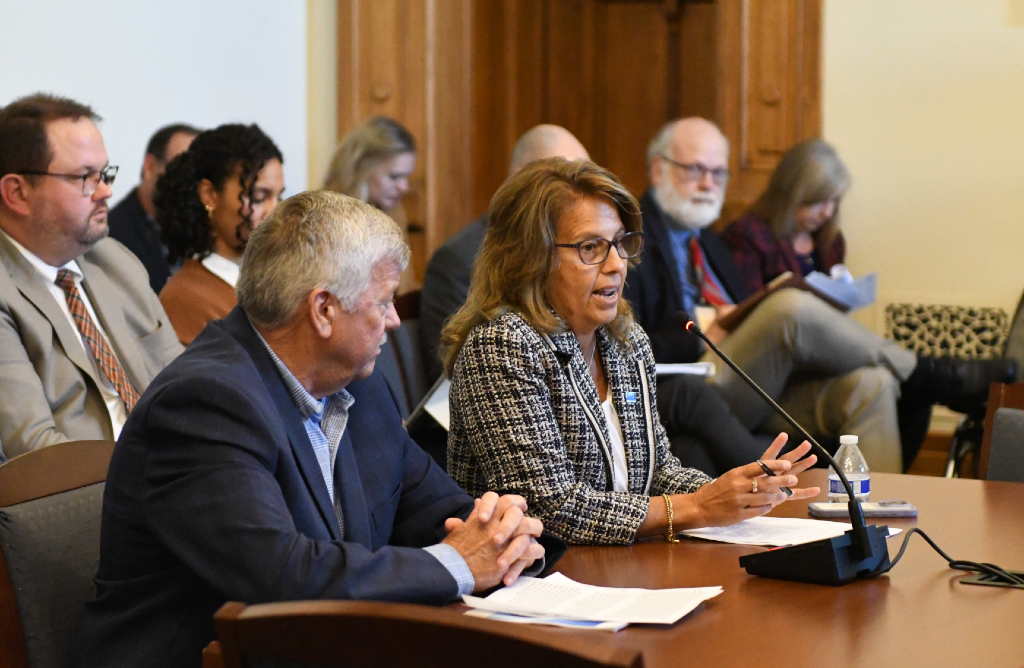
Photo of Indiana State Rep. Michelle Davis (R-Whiteland) (right) and Franklin Mayor Steve Barnett (left) at the Interim Study Committee on Environmental Affairs meeting on Wednesday, Oct. 8, 2025, from Indiana House of Representatives Republican Caucus press release.

Oct. 16, 2025 – Abandoned telecom lines are piling up across Indiana, and lawmakers want them gone.

Indiana lawmakers are weighing new rules to address what local officials call “cable pollution,”  or the growing problem of unused or sagging wires left behind by telecom companies along streets and public rights-of-way.

At a Statehouse hearing last Wednesday, Franklin, Ind., Mayor Steve Barnett (R) — whose city sits about 20 minutes south of Indianapolis — blamed telecom companies for leaving behind miles of low-hanging and buried cables. He said his city has spent about $60,000 locating and removing unused lines. 

“We shouldn’t have to spend taxpayer dollars fixing the telecoms’ problems,” he said. “It’s time for some oversight.”

Rep. Michelle Davis, R-Whiteland, and Rep. Robb Greene, R-Shelbyville, authored House Bill 1480 earlier this year to set standards for installing and maintaining telecom lines. Lawmakers said they are now considering similar legislation for the 2026 session after the bill received a hearing but no vote in 2025.

Lobbyists for AT&T and Comcast argued that new state mandates would duplicate existing oversight and slow broadband deployment. 

AT&T lobbyist Steve Rogers said adding layers of regulation could “slow down investment and deployment” and warned that giving cities broad enforcement powers would create “huge bureaucracies.”

Rogers told lawmakers that telecoms already follow strict safety and construction rules.

“We are subject to the National Electric Safety Code,” he said. “We’re subject to 811, ‘Call Before You Dig’ regulations, and FCC pole-attachment rules. The idea that there are no rules and we need to give cities and towns the ability to fine people — that is just not the case.”

Oversight currently rests with the Indiana Utility Regulatory Commission and the Federal Communications Commission, but lawmakers remain divided on whether that  was enough.

Sen. Rick Niemeyer, R-Lowell, backed local control, while Sen. Greg Taylor, D-Indianapolis, called for statewide rules and line identifiers to assign responsibility.

The debate highlighted Indiana’s struggle to balance broadband expansion with accountability for the infrastructure telecom companies leave behind.

Member discussion

Popular Tags