Distributed Data Centers Could Help With Public Trust
70% of Americans oppose a data center near their home, more than the 53% that oppose nuclear plants.

Akul Saxena
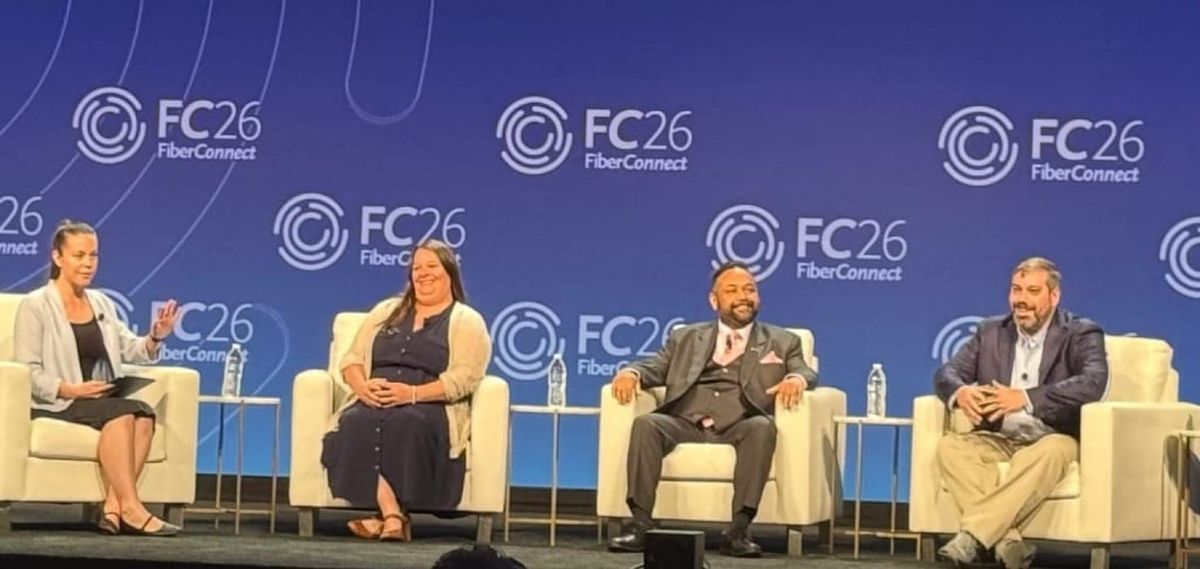
ORLANDO, May 20, 2026 — AI data centers require power at a scale that is straining American infrastructure, and the communities where that power must be deployed are pushing back. A panel Wednesday examined how distributed data center architecture, connected by fiber, could resolve both problems simultaneously.
Seventy percent of Americans oppose having an AI data center built near them, more than the 53 percent who oppose a nuclear plant nearby, said Sachin Gupta of Centranet, the Stillwater, Oklahoma-based fiber broadband provider. The figures come from a Gallup poll published this month.
AI training workloads must locate where large-scale power generation exists, but inference, the process of running a trained AI model to answer a query or complete a task, must move closer to the user, Gupta said. Global AI power demand is projected to double by 2030, and no single centralized location will have enough power to meet it, he said.
The solution, Gupta argued, is distributed data centers, smaller facilities of five to twenty megawatts deployed within a hundred-mile radius of the users they serve, connected by fiber. AI-enabled applications require less than ten milliseconds of latency, a physical constraint that defines how close a data center must be to its users to function effectively.
The internet was originally designed to be distributed, Gupta said, but centralized infrastructure proved easier to build, concentrating traffic through a handful of internet exchange points, the facilities where networks connect and exchange traffic, across the United States.
AI cannot repeat that mistake, he said. A single hyperscaler outage, he said, becomes national news.
Speed to power is already the constraint on data centers
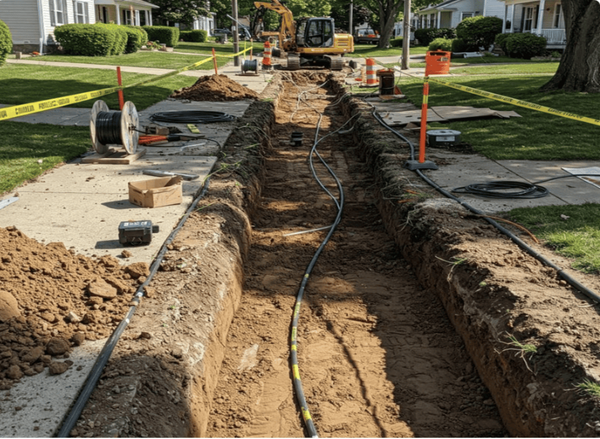
Speed to power is already a constraint in active markets. In some Texas locations, it takes 45 days to get fiber communities powered up, said Joshua Turiano, chief innovation and AI officer at Blue Stream Fiber, the Florida-based fiber provider. Utility workers are being pulled toward data center construction, tightening labor supply for fiber builds, he said.
Existing colocation facilities, buildings that house servers and networking equipment for multiple companies, like Equinix and Infomart Dallas, should be considered potential partners for fiber providers rather than competitors, Turiano said. Routing inference workloads, the process of delivering AI-generated responses to end users, through those facilities would bring AI closer to where users actually live.
Inference is what happens when a user asks an AI a question and gets an answer. Training is what builds the model that answers it.
Renewable energy options including solar and small modular reactors must be part of any rural power conversation, said Sarah Davis, vice president of market development at Fidium, the fiber provider serving more than 700 communities across 20 states. Communities need clear explanations of how data centers will benefit them, Davis said, and ISPs should be offering renewable energy arrangements alongside connectivity.
The fiber supply chain is a separate constraint. Current engagement in the BEAD program is straining the availability of fiber optic glass, Davis said. Getting enough glass to scale data center and broadband infrastructure simultaneously is the challenge “keeping providers awake at night.”
Data centers owned and operated within communities, with decisions made democratically rather than imposed from outside, are the model that can overcome public resistance, Gupta said. Bringing communities into that decision, he said, has become increasingly difficult as opposition hardens.