Early Community Engagement May Avoid Data Center Delays, Industry Panel Says
Experts say communication gaps and local opposition can derail projects.

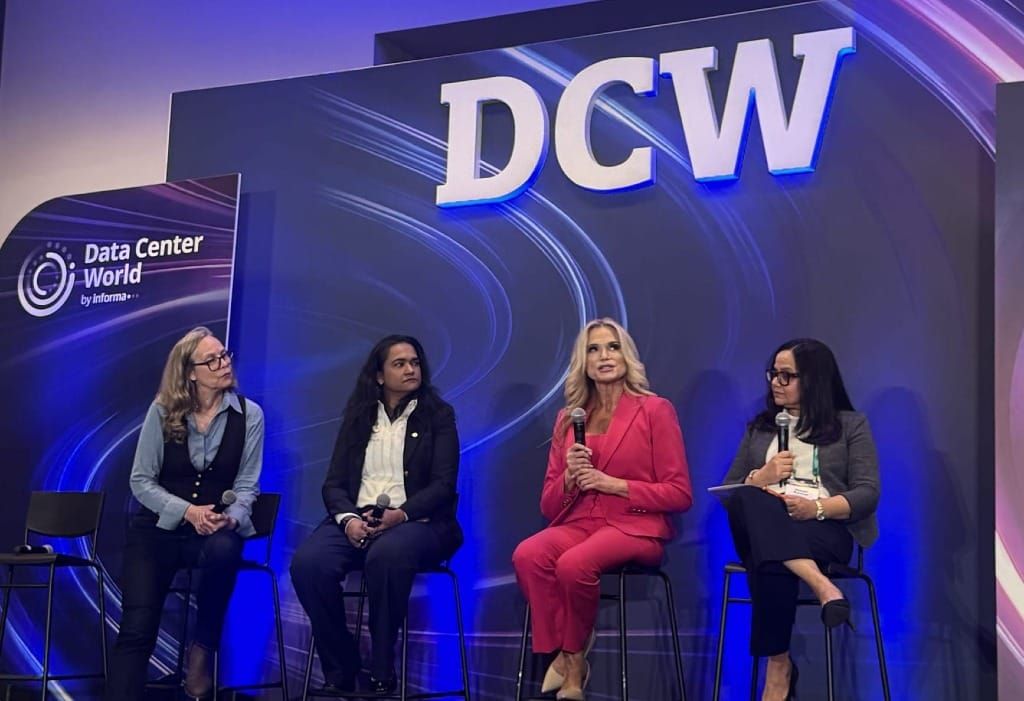
WASHINGTON, April 20, 2026 – Data center developers must prioritize early communication with local communities and policymakers to avoid project delays and cancellations, said panelists speaking Monday at Data Center World.
Governance challenges increasingly shape where and how projects move forward, said Brandie Williams, corporate senior manager of business development at Data Center Mission Critical, and lack of coordination among stakeholders is a major obstacle.
“Over 70% of projects between 2020 and 2019 never came to fruition [due to] a failure to communicate,” she said, emphasizing the need for developers to engage not only engineers but also landowners, utilities, and local residents early in the process.

Williams described developers as needing to become “bilingual,” capable of translating technical requirements into terms communities and policymakers understand. Without that alignment, projects risk stalling due to concerns about infrastructure and resource use.
Himali Parmar, vice president of energy markets at ICF International Inc., warned that regulatory and community opposition is becoming a growing barrier.
“There are several dozen states that are enacting rules, including Maine being one where it is just not open for data centers anymore,” Parmar said, as new utility tariffs on data centers, specifically, can introduce financial and timeline risks for vendors.
Even projects with strong technical fundamentals can fail if local sentiment turns negative. Parmar cited an example in Ohio where community opposition halted development despite sufficient grid capacity. “That backlash, if you will, was really a governance decision,” she said.
Panelists also pointed to site selection as a critical factor, as repurposing industrial locations such as brownfield sites or former manufacturing facilities can ease zoning challenges and align with local economic goals, particularly when paired with state incentives.
“Data centers are going to go for the thing that shortens their timeline,” said Sasha Ishmael, principal engineer of technology and industry solutions at Veir. “They're going [where] they can get energized and online as fast as possible.”
Panelists agreed that the speed of hyperscalers needed to be balanced with community engagement. The problem becomes further ingrained when policymakers react retroactively to projects, which, Williams notes, can underscore the importance of including everyone in decision-making.
As demand for data centers grows alongside energy needs, experts at this panel said companies that proactively address local concerns, from cost impacts to land use, will be better positioned to navigate permitting hurdles and complete projects successfully.