Education Representatives Warn of Obstacles on Teaching and AI

Educators from across the U.S. are tackling the promise and pitfalls of AI in classrooms.

Education Representatives Warn of Obstacles on Teaching and AI
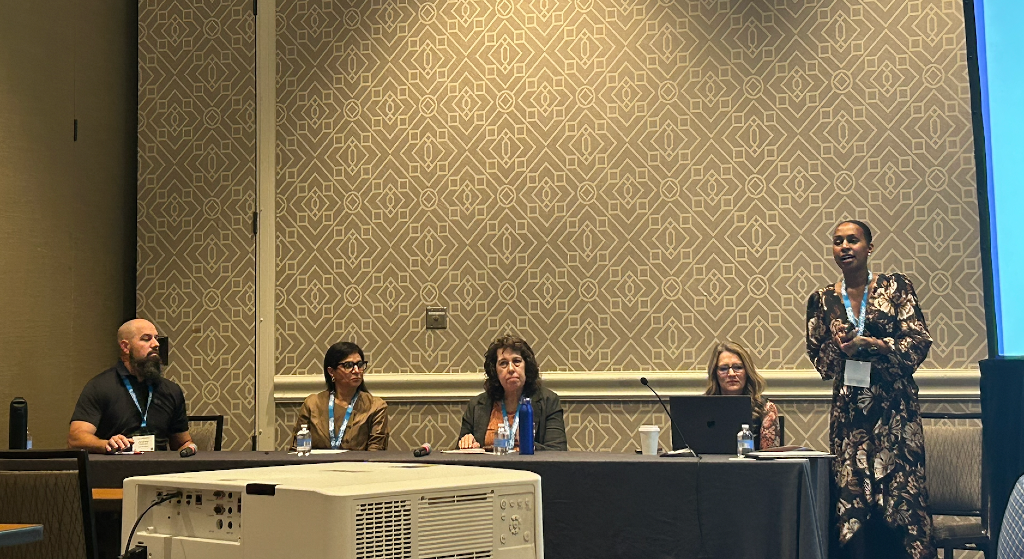
Photo of (from left): Andrew Fenstermaker, Instructional Technology Coordinator at Iowa City Schools; Tania Moneim, Instructional Specialist for Equity and Innovation at Indian Prairie School District in Illinois; Lisa Milenkovic, STEM and Computer Science Supervisor for Broward County Schools in southern Florida; Brooke Morgan, Director of Innovative Programs for Talladega County Schools in Alabama; and Dr. Mekka Smith, Deputy Chief of Strategic Partnerships & Community at Digital Promise

ARLINGTON, Va., Oct. 30, 2025 — School district representatives from across the nation shared differing progress on teaching students about artificial intelligence but warned of a growing digital divide in access and knowledge of AI tools.

Lisa Milenkovic, STEM and computer science supervisor for Broward County Schools in southern Florida, spoke about using AI companions in her district, and the cost disparities it faced. 

“We can’t afford to purchase. We’re a rural, rural district, and so our funding is lacking. So luckily, we are a Google district, so we have the benefit of having Gemini for free,” said Brooke Morgan, director of innovative programs for Talladega County Schools in Alabama.

Tania Moneim, instructional specialist for equity and innovation at Indian Prairie School District in Illinois, addressed how Gemini has helped with issues specific to the education sector. “Our teachers are burnt out. The demands on our teachers are increasing. How can they be more efficient? How can they create more standard-aligned questions and assessments?” she said.

While the panelists agreed on issues such as teacher shortages, they also acknowledged students’ needs for teachers to evaluate individual personalities and capabilities.

Different inequalities manifest in different ways. Morgan brought up disparities in internet access that became apparent during the COVID-19 pandemic. “We had to provide hotspots to probably about, I would say, 10% of our students,” she said.

Moneim described working in a school district that spans a wide range of socioeconomic backgrounds, including students who struggle with homelessness. “It’s becoming a kind of knowledge divide. Some have more resources, systems, and teacher capacity to create lessons, curriculum, and safeguards around technology. But other schools are still just trying to figure out how to feed their students,” she said.

Different schools have different approaches to AI in classrooms. Andrew Fenstermaker, instructional technology coordinator at Iowa City Schools, spoke about how the schools he works with integrate lessons on AI starting in kindergarten, in a state where computer science is a requirement.

“Each of our elementary schools has a library dedicated to the building, so within the library class, they were able to already embed some computer science and computational thinking lessons,” he said.

Yet Fenstermaker expressed concern about the need for transparency from companies in disclosing how their models are built, how they address bias, and what data they were trained on. He said one company refused to disclose which large language models they use, highlighting ongoing transparency challenges in the industry.

Member discussion

Popular Tags