Energy Permitting Delays Threaten U.S. AI Growth, Senator Warns
Politicized reviews and court rulings are stalling infrastructure needed to support rising AI-driven energy demand, Armstrong said.


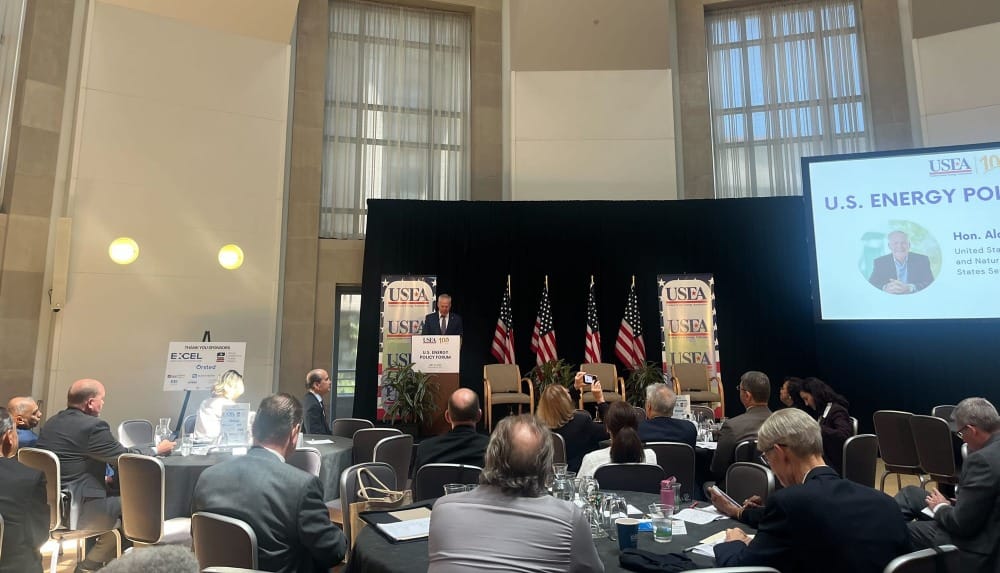
WASHINGTON, May 12, 2026 – Permitting reform legislation moving through Congress must avoid becoming so compromised that it fails to accelerate construction of major energy infrastructure projects, Sen. Alan Armstrong, R-Okla., said Tuesday.
Armstrong said the United States already has the resources, companies, and technical expertise needed to expand domestic energy production, but lacks a permitting system capable of supporting large-scale infrastructure development.
“What we don’t have is a permitting process that allows us to get the infrastructure built,” Armstrong said during remarks at a United States Energy Association event in Washington.
Industry groups and lawmakers have increasingly framed permitting reform as critical to AI infrastructure development and broader competition with China.
Armstrong pointed to lengthy environmental reviews, sequential agency approvals, and legal uncertainty surrounding permits as major obstacles increasing costs and discouraging investment.
He argued current permitting rules have become increasingly politicized, delaying projects at a time of rapidly growing energy demands.
“We have enjoyed a tremendous amount of investment in infrastructure in the past,” Armstrong said. “And now all of a sudden this growth is coming at us.”
The senator criticized what he described as duplicative permitting reviews between federal and state agencies, arguing some states force companies through additional review processes after federal environmental studies are completed.
He also criticized court rulings that vacate permits after infrastructure projects are already operational, saying those decisions create uncertainty in capital markets.
“If you think about the process where companies go through all of the procedures they’re asked to by an agency ... and can still be told that they can’t operate a facility, you talk about icing up the capital markets,” Armstrong said.
Armstrong said Congress should focus on practical reforms rather than rewriting permitting laws entirely, including requiring concurrent agency reviews and strengthening judicial standards for blocking projects.
He also tied permitting reform to rising electricity demand from artificial intelligence, arguing the country must accelerate energy and infrastructure development to remain economically competitive.
The comments come as lawmakers in both energy and telecommunications increasingly push bipartisan permitting reforms aimed at shortening approval timelines and reducing uncertainty for long-term infrastructure investment.
“People have seen it on both sides,” Armstrong said when asked whether Democrats were becoming more open to permitting reform. “Nearly everybody understands how important it is to get back to being able to have a process that allows us to get stuff built.”