
Experts Warn Congress of ‘Surveillance Pricing’ Fueled by Lax Privacy Laws
Weak data privacy laws need to be strengthened, witnesses say

WASHINGTON, July 31, 2025 – Imagine learning of a loved one’s death, going online to book a flight for their funeral, and discovering that ticket prices were triple what they were before.
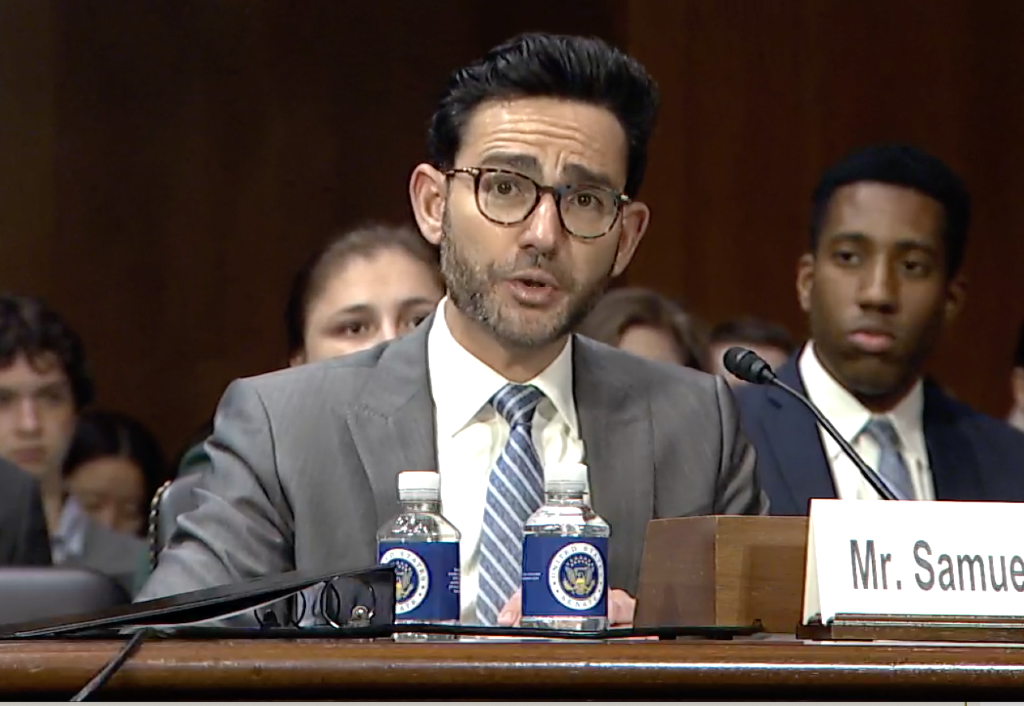
According to Samuel Levine, former director of the Consumer Protection Bureau, that scenario was quickly becoming reality.
“In a report released in January, the FTC found that an entire industry has developed around boosting profits through behavioral tracking and the collection of sensitive consumer data for pricing purposes,” Levine wrote. “These techniques include monitoring mouse movements, detecting whether consumers sort products by price, pinpointing users’ geolocation, and tracking consumers’ browsing and search history.”

The practice, known as surveillance pricing, was possible because of an explosion of individualized online data, and lax privacy laws that guard it. The FTC study found that more than 250 companies were already working with pricing consultants, in industries ranging from grocery and apparel chains to convenience and hardware stores.
It’s a practice that some fear will overtake not just the airline industry, but retail, housing, and other industries as well. At a Senate Subcommittee on Privacy, Technology, and the Law hearing held Wednesday, witnesses sought to guide lawmakers to enact stronger privacy protection standards.
“Self regulation does not work. We need legislation to ensure adequate protection for Americans online,” Alan Butler, executive director and president of the Electronic Privacy Information Center, testified. “Without strong privacy protections, we have seen an alarming expansion of surveillance and data abuses online that threaten our rights and subvert our most fundamental values of autonomy and freedom.”
Though all five witnesses agreed that online privacy protections should be strengthened, they disagreed on what forms those protections should take. When asked by Sen. Marsha Blackburn, R-Tenn., if they supported banning surveillance pricing, only Levine and Butler raised their hands.
Paul Martino, general counsel for Main Street Privacy Coalition, explained his opposition to a ban, at least for the retail industry.
“I think there’s a very significant difference between the retail industry and some other industries, and it really comes down to competition,” Martino said. “Where you have robust competition like you do in the retail industry, and very low profit margins…that leads to a market constraint, so almost like a de facto regulation in terms of having such severe competition. Your competitor is one click or tap away, or one stop away.”
The hearing, entitled “Protecting the Virtual You: Safeguarding Americans' Online Data,” lasted over 90 minutes and was primarily attended by only Sens. Blackburn and Amy Klobuchar, D-Minn. Sen. Adam Schiff, D-Calif, popped in towards the end of the hearing.
Blackburn and Klobuchar took full advantage of their time, peppering witnesses with questions ranging from the failures of Europe’s General Data Protection Regulation to proposals to simplify privacy policies.
“As we have seen in the EU's GDPR, overly sweeping privacy laws have the unintended consequence of entrenching incumbents,” Joel Thayer, president for the Digital Progress Institute testified. “The GDPR should be a cautionary tale for the US because it clearly shows that privacy regulations without market guardrails can seriously exacerbate today's competition issues we have with big tech.”
One particularly contentious issue concerned the data privacy obligations of controllers (those who collect consumer data) and processors (those who analyze that data from controllers).
Kate Goodloe, managing director of the Business Software Alliance, argued that a federal privacy law, like all comprehensive state privacy laws, should recognize the differences between controllers and processors, and as such put different obligations on them. Martino disagreed.
“Privacy laws should not permit any industry sector to shift its responsibilities onto another,” Martino asserted.






Member discussion