Experts Warn Lagging IT And Communications Technology Threatens U.S. Security
House lawmakers question witnesses on the current state of homeland security.

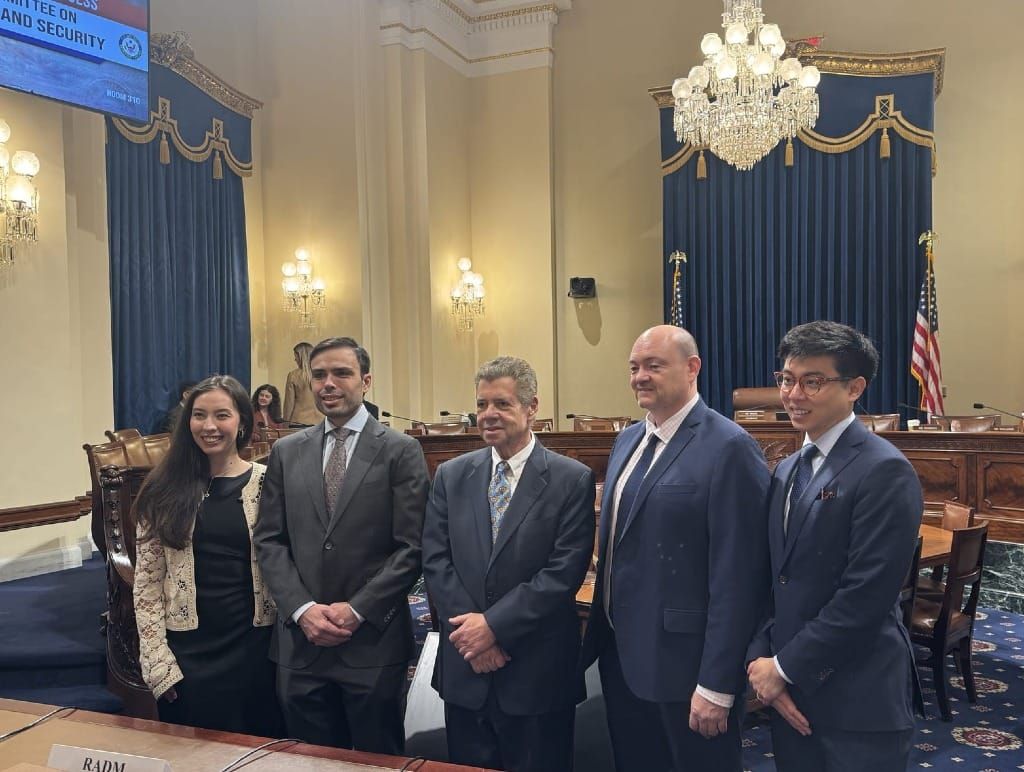
WASHINGTON, April 29, 2026 – Lawmakers and industry experts warned Wednesday that the Department of Homeland Security must move to modernize its information technology and communications systems to address growing cyber and physical threats to critical infrastructure.
During a hearing before the House Committee on Homeland Security, witnesses said a shrinking workforce and supply chain vulnerabilities are limiting the agency’s ability to respond to increasingly sophisticated attacks.
The hearing comes amid heightened concern following the Chinese government-linked ‘Salt Typhoon’ espionage campaign, which officials say compromised telecommunications providers in more than 80 countries, collected more than 1 million American call records, and infiltrated court-authorized surveillance systems.

Experts said the scale of the breach underscores the urgency of strengthening U.S. cyber defenses, particularly as the country expands digital infrastructure.
Mark Montgomery, senior director at the Foundation for Defense of Democracies, warned that critical security considerations risk being overlooked in the push to build out systems such as data centers.
“It’s my greatest concern that in our rush to build them, we’re missing the really important physical and cybersecurity discussions,” Montgomery said. He pointed to threats ranging from drone attacks to vulnerabilities in the technology supply chain, including reliance on components from countries of concern such as China.
Lawmakers echoed those concerns, focusing in part on workforce and supply chain risks.
Rep. Seth Magaziner, D-R.I., pointed to recent workforce reductions, saying the loss of personnel, including what he described as significant cuts at the Cybersecurity and Infrastructure Security Agency, has strained the federal government’s ability to manage cyber threats.
Rep. Vince Fong, R-Calif., asked what safeguards are needed to defend against adversarial threats and what consequences could arise if vulnerabilities remain unaddressed.
Magaziner also raised concerns about supply chain exposure, criticizing the continued sale of advanced semiconductor technology to China. He said the U.S. is selling to “a country that is actively engaging in cyber warfare with us.”
Witnesses emphasized the need to strengthen supply chain security, expand information sharing and formally recognize data centers and communications networks as critical infrastructure requiring coordinated federal oversight.
Robert Mayer, senior vice president of cybersecurity and innovation at USTelecom, and Scott Algeier, executive director of the Information Technology-Information Sharing and Analysis Center, called for closer collaboration between government and industry.
Sam Visner, chair of the board of directors at the Space Information Sharing and Analysis Center, highlighted growing risks to space-based communications systems.
Without significant upgrades, witnesses warned, vulnerabilities in both cyber and physical systems could leave critical infrastructure exposed to future attacks.