FCC Approves EchoStar Spectrum Sales, With Escrow Requirement
It’s a victory for tower companies, who pushed for the condition.

Jake Neenan
WASHINGTON, May 12, 2026 – Federal regulators approved EchoStar’s $42.6 billion spectrum sales Tuesday, on the condition the company set aside $2.4 billion in case court rule in favor of several tower companies suing over contract disputes.
It’s a victory for the tower industry, which has pushed hard for the Federal Communications Commission to attach such a condition to its approval of the deal. They said the escrow was necessary to ensure they were paid if they prevailed in lawsuits tied to the spectrum sales.
EchoStar subsidiary Dish Wireless has been telling business partners that EchoStar was forced to sell its spectrum by FCC pressure, and that since Dish won’t receive its parent company’s proceeds it’s excused from its contractual commitments. The company entered into the sales after the FCC opened inquiries into its licneses, and told a federal court last month it was instructed to sell or face revocation.
The tower and infrastructure companies think their leases are still in full force, and at least eight are suing Dish. That includes the three largest tower companies in the U.S.: American Tower, Crown Castle, and SBA Communications.
Now, if those companies prevail in court or reach a settlement with EchoStar, there will be $2.4 billion set aside to ensure they’re paid anything they’re owed. The FCC said in a statement that “this encourages the resolution of outstanding claims while leaving the merits of any dispute to the parties or outside fora.”
EchoStar was not happy about the requirement.
"The FCC has continuously applauded EchoStar’s spectrum sales to AT&T and SpaceX as pro-competitive transactions that serve the public interest, and we appreciate that the FCC approved them today,” a spokesperson said in an email. “However, these approvals come with an unprecedented involuntary escrow condition. We are analyzing this requirement and evaluating next steps.”
EchoStar said in a filing Monday that it's already settled with hundreds of companies and paid out hundreds of million in the process.
The Wireless Industry Association, which had asked the FCC to require the escrow fund, was for its part pleased.
“America’s world-leading networks are built on wireless infrastructure and EchoStar’s refusal to honor its obligations threatened that foundation. Chairman Carr listened,” WIA CEO Patrick Halley said in a statement. “Today’s decision ensures critical wireless spectrum is put to its highest use, while supporting the infrastructure providers that make connectivity possible.”
NATE, which represents tower climbers and other contractors, also hailed the deal both for the escrow fund and the extra spectrum deployments. NATE had along with WIA asked for the escrow requirement.
AT&T is purchasing about 50 megahertz of spectrum in the 3.45 GigaHertz (GHz) and 600 MHz bands, and SpaceX is purchasing about 65 megahertz of 2 GHz/AWS-4, unpaired AWS-3, and H-Block spectrum.
In the FCC’s release, it said it would impose buildout obligations on AT&T’s 600 MHz purchases. AT&T already uses 3.45 GHz and has been using the spectrum through lease agreements, but the FCC said the carrier would have to build out the 600 MHz “years faster than what the company originally requested and what the FCC’s rules ordinarily require for builds after auction.”
"We’ve already deployed the mid-band spectrum at record speed, delivering added capacity and stronger performance for our customers," an AT&T spokesperson said in a statement. "We look forward to closing the transaction, deploying the low-band spectrum, and continuing to invest in a network that keeps people and communities connected."
As an initial milestone, the company will have to build out to 40 percent of the population covered by the 600 MHz licenses within three years instead of five according to the agency's order.
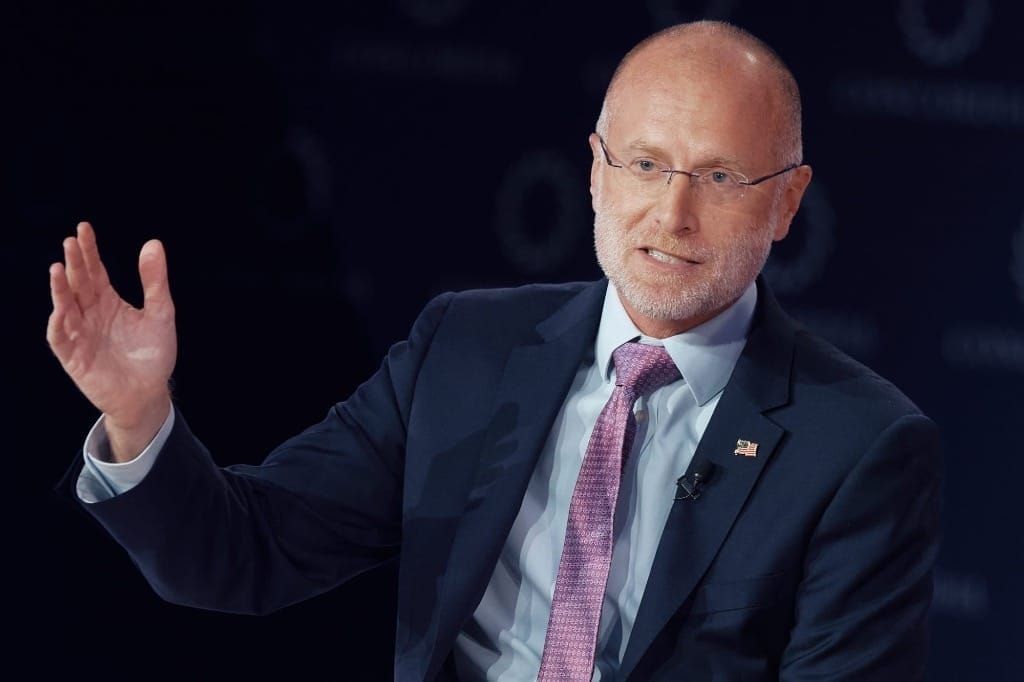
“Today’s approvals, coupled with other secondary-market transactions and FCC auctions already in the pipeline, put America on the path to releasing approximately 300 megahertz of low- and mid-band spectrum by the end of 2027,” FCC Chairman Brendan Carr said in a statement. “In the coming months, we will be taking additional actions to ensure that companies who want to innovate in D2D have the regulatory framework and spectrum resources to match. Our decisions also bring important closure that allows stakeholders to focus on the future.”
SpaceX received multiple waivers as part of the approval, including a waiver of terrestrial infrastructure build oyt requirements. The company will instead have to show direct-to-device performance and face license termination if it doesn't meet benchmarks.
“Today’s decision allows SpaceX to use its new spectrum flexibly for terrestrial, space-based, and hybrid network architectures. That flexibility is subject to first-of-its-kind performance obligations designed to be technologically neutral,” the agency wrote. “SpaceX must meet demanding standards to use its spectrum intensively and provide meaningful, reliable connectivity to the public — whether D2D, terrestrial, or both — within years.”
Update: This story was updated to add a statement from AT&T.