
FCC Chairman Carr Highlights Agency Accomplishments in 2025
The agency moved aggressively, drawing legal challenges

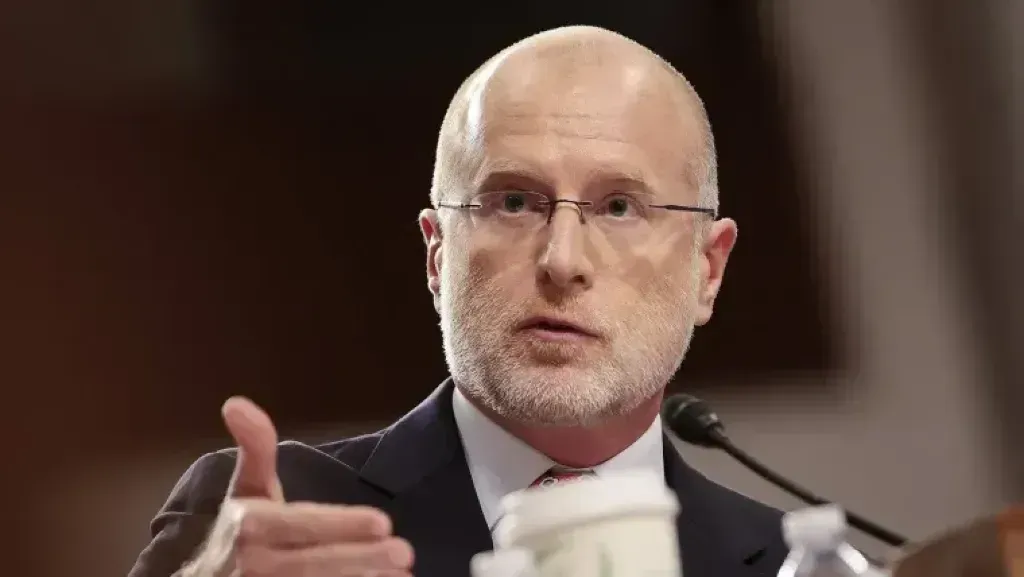
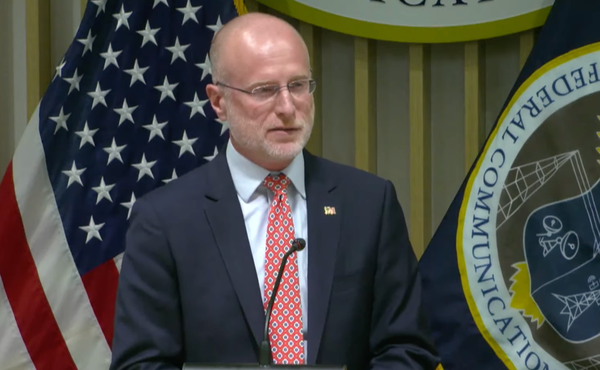
WASHINGTON, Dec. 30, 2025 – Federal Communications Commission Chairman Brendan Carr is closing out 2025 by touting what he described as a “historic” year at the agency.

In a statement summarizing the agency’s work this year, Carr highlighted a range of accomplishments across broadband infrastructure, spectrum allocation, wireless and satellite deployment, major mergers in the telecom sector, and deregulatory efforts.
Looking ahead, Carr signaled that the commission’s aggressive agenda will continue into 2026. “This is just the beginning,” he said in a statement. “The FCC is firing on all cylinders, and we will build on this momentum to deliver even more wins in 2026.”
A centerpiece of the chairman’s 2025 agenda emphasized accelerating broadband deployment. He highlighted the FCC’s efforts to streamline the retirement of copper networks, overhaul environmental and historic permitting rules, and update pole attachment regulations.
The agency proposed reforms to preempt state and local permitting barriers for towers and other wireless infrastructure, including those impeding the expansion of AI infrastructure. A new inquiry was also launched to address state and local regulations that block fiber, cable, and other wireline builds.
Key transactions approved in 2025 included Verizon’s $20 billion acquisition of Frontier and Metronet’s transfer of five subsidiaries to T-Mobile. Carr also highlighted the merger of geostationary satellite companies SES and Intelsat.
On wireless leadership, the FCC advanced 5G and 6G by executing on a massive spectrum pipeline to deliver 800 megahertz of spectrum by 2034 set out in President Trump’s Working Families Tax Cut Act, which also restored the FCC’s auction authority.
Near-term spectrum issues
In the near term, the FCC has proposed to auction 180 MHz of prime mid-band spectrum in the Upper C-band by July 2027 and announced the 2026 auction of low-band AWS-3 spectrum covering 200 markets.
Advancing satellite, the FCC enabled more robust direct-to-cell service by allowing satellite providers to operate on spectrum at higher power levels. The agency teed up more than 20,000 MHz for satellite, and proposed new technical rules to boost LEO satellite capacity by up to 180 percent.
The FCC’s “Delete, Delete, Delete” initiative targeted more than 1,100 rules and regulations – cutting 134,928 words and 312 pages from the Code of Federal Regulations. A total of over 2,000 inactive proceedings were terminated across wireline, wireless, and broadcast sectors.
Carr also highlighted the FCC’s move to end diversity, equity, and inclusion initiatives, as well as the FCC’s reversal of an expansion to the E-Rate program to fund school bus Wi-Fi and Wi-Fi Hotspots.
The FCC has faced opposition and calls for reconsideration on several of its recent decisions.
Multiple parties have formally challenged aspects of the agency’s pole attachment rules, questioned the expedited direct final rulemaking process used in the “Delete, Delete, Delete” initiative, and asked the FCC to reconsider its reversal of E-Rate program expansions.



Member discussion