
FCC, DOJ in Court Defending Plan to Open More Public Safety Spectrum to FirstNet
Supporters and opponents of the idea have sued the FCC over the plan.

WASHINGTON, August 19, 2025 – Faced with lawsuits from those on both sides of the issue, the government is defending its plan to open potentially valuable public safety spectrum to the first responder network operated by AT&T.
The FCC moved in October 2024 to begin the process of allowing FirstNet, the nationwide first responder network operated by AT&T, to access unassigned parts of the 4.9 GigaHertz band, currently set aside for local public safety users.
A group called the Coalition for Emergency Response and Critical Infrastructure (CERCI), whose members include T-Mobile and Verizon, sued to block the order, as did some current users. They alleged the FCC didn’t have the legal authority to assign spectrum to a federal entity like FirstNet, and had structured the 2024 order to circumvent the restriction. CERCI also fears the move would be a multibillion-dollar windfall to AT&T, which can use excess capacity on FirstNet spectrum for its commercial mobile network as part of its contract.

The pro-FirstNet group that had proposed the idea, the Public Safety Spectrum Alliance, also sued. PSSA was looking for the agency to move even faster and open up for FirstNet airwaves currently licensed to a local entity but not actively under routine use, rather than just unassigned spectrum. The FCC didn’t foreclose taking away incumbents’ unused spectrum in the band, but deferred making a decision until it had analyzed data from current licensees.
As for CERCI’s main argument, the agency countered in a Thursday brief to the U.S. Court of Appeals for the D.C. Circuit, where the various suits have been combined, that its plan was perfectly legal. The agency would grant a national license, encompassing just the unassigned portions of the band, to a yet-to-be-selected band manager, which would then be able to enter a sharing agreement with FirstNet.
“Spectrum sharing between Commission licensees and federal entities is grounded in decades of Commission practice,” the FCC wrote. “And, notably, NTIA – which administers federal radio services and collaborates closely with the Commission on spectrum management, agrees that sharing non-federal spectrum with federal entities is consistent with the Communications Act.”
NTIA, the National Telecommunications and Information Administration, also houses the agency responsible for overseeing FirstNet.
The FCC pushed back on the idea that AT&T’s potential use of the extra airwaves would be an undue windfall or even change the public safety nature of the band.
“Any benefit to AT&T from this approach cannot negate the ‘multiple public interest benefits that will flow from FirstNet’s future access’ to the 4.9 GHz band,” the agency wrote.
While controversial on the outside, the move was bipartisan at the FCC, led at the time by Jessica Rosenworcel. Commissioner Anna Gomez recused herself, but the remaining two Democrats and two Republicans, including current FCC Chairman Brendan Carr, voted in favor of the order.
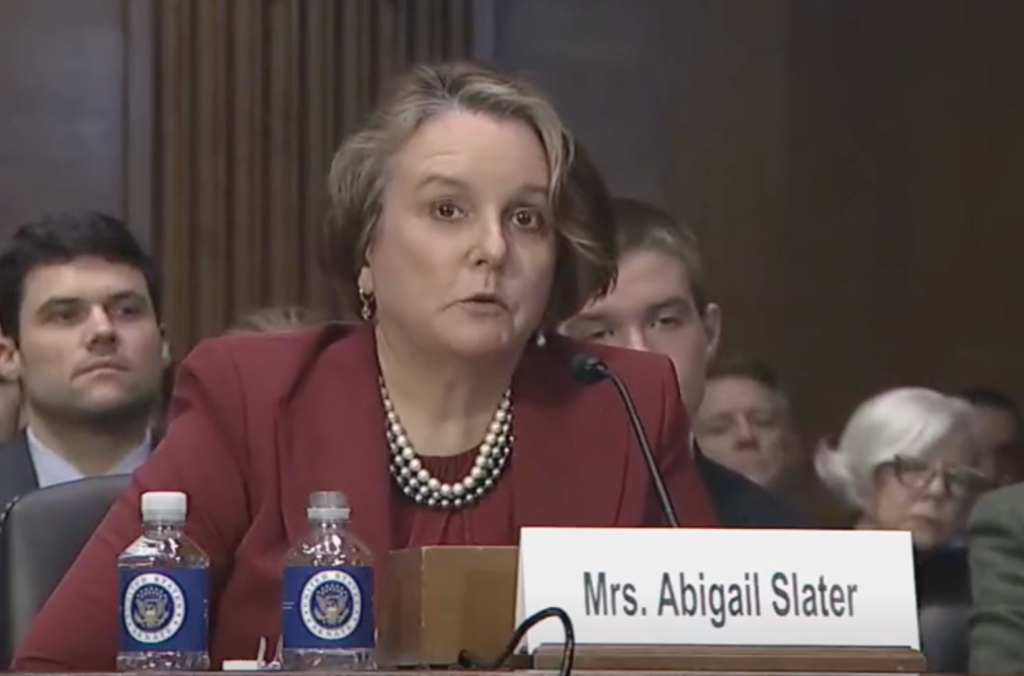
The Department of Justice’s antitrust division joined the FCC’s filing, with Assistant Attorney General Gail Slater signing on. Slater’s office has expressed concern about spectrum consolidation in the wireless industry.
The pro-FirstNet side
PSSA, the pro-FirstNet group that proposed allowing the network to access the 4.9 GHz band, had also sued the FCC for not moving fast enough. The group said the agency should have immediately forced incumbents to surrender unused spectrum, setting up the band manager and thus FirstNet to access those airwaves.
The agency had decided to hold off on a decision until after licensees responded to a data request and relicensed their operations under new service codes. The new service codes are designed to cut out areas and frequencies not actively being used, but wouldn’t yet make the unused airwaves up for grabs by FirstNet.
That decision, the FCC said, was simply an effort to avoid encroaching on incumbents’ current operations and undermining their confidence in the band.
“It was sensible for the Commission to forgo a decision on whether to require incumbents to surrender any unused spectrum before it had obtained the relevant usage data,” the FCC wrote.
Current users are also not excited about the prospect of their licenses shrinking, and the agency has in response emphasized that those entities can seek waivers if currently unused airwaves are necessary for future planning.



Member discussion