FCC Hoping New Satellite Licensing Regime Will Speed Large Applications
Space bureau chief said the agency had worked through 52 percent of its backlog since the start of 2025


WASHINGTON, July 8, 2026 – The Federal Communications Commission is hoping a new process for licensing satellite applications will keep pace with larger deployments.
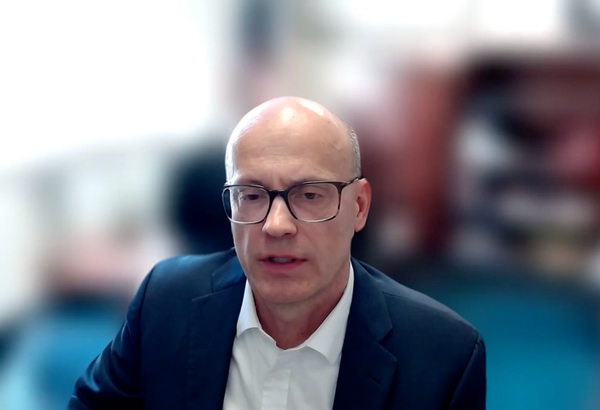
“We’re building this licensing assembly line to, hopefully in a very speedy and predictable way, move applications through the FCC so people can get their authorizations,” FCC Space Bureau Chief Jay Schwarz said at an American Enterprise Institute event Wednesday.
The agency is set to vote this month on those new rules, the culmination of a nearly yearlong rulemaking. The idea is to have a clearer, more predictable process that makes it easier for applications to get approved.
“We propose to replace our legacy default-to-no mindset with a default-to-yes framework,” FCC Chairman Brendan Carr said when the agency proposed the rules last year.
Schwarz said the satellite industry had gone from building single, bespoke units that would be in orbit for 15 years to launching thousands of satellites with shorter lifespans, and the agency was trying to respond to that.
He said the bureau had processed 52 percent of the backlog of satellite applications that existed at the beginning of 2025.
The FCC received several applications for new satellite systems Monday, which was the deadline for new applications using Ku-, Ka-, and V-band spectrum. The largest was a SpaceX plan for a 100,000-satellite constellation to support its satellite broadband service.
Jonathan Williams, chief of the agency’s office of economics and analysis, also said that in 12 states, satellite service accounted for at least 5 percent of all fixed broadband subscriptions. He didn’t specify which, or say where the figure came from.
Schwarz said he hoped the FCC ditching international satellite spectrum sharing rules would prompt other countries to do the same, ideally after they see improved satellite broadband service without disruption to GSO systems. The agency approved new standards more favorable to low-Earth orbit systems in April.
There isn’t a formal agenda item on the issue at the World Radio Communication Conference next year, but some groups are urging the U.S. delegation to marshal support for changing the rule internationally anyway in hopes it could still happen.