FCC to Vote on Upper C-band Auction Rules in July
The agency is set to sell off 160 megahertz in the band

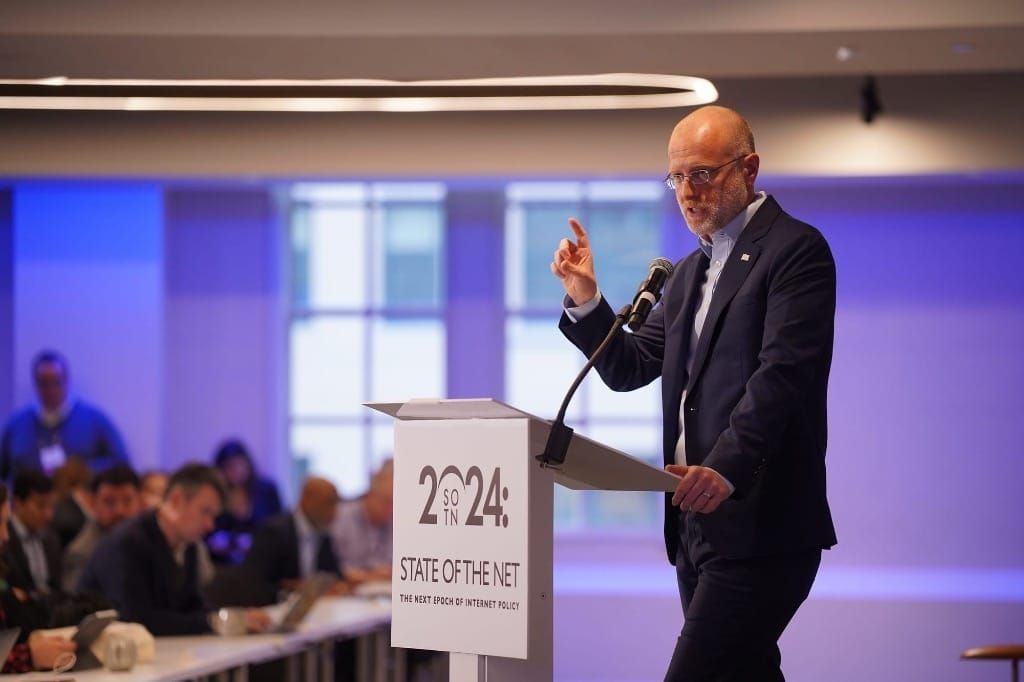
WASHINGTON, June 30, 2026 – The Federal Communications Commission is set to vote next month on rules for its spectrum auction in the upper C-band, the agency announced Tuesday.
The agency will sell off 160 megahertz in the band, and winning bidders will be able to light up the airwaves starting in December 2030 in the top 75 markets, which FCC Chairman Brendan Carr said was “years ahead of where a lot of people were thinking the timeline was going to land.”
The remaining markets can be turned on in July 2031, the agency said in a release. The auction is set to take place next summer and will put more than 3,200 licenses up for grabs.
The agency was tasked in the One Big Beautiful Bill Act with auctioning at least 100 megahertz of the band by July 2027. The wireless carriers had initially pushed for selling off 180 megahertz, while satellite incumbents wanted it limited to 160 megahertz.
The upper C-band sits at 3.98-4.2 GigaHertz (GHz), and the auction will encompass 3.98-4.14 GHz. The spectrum sits adjacent to airwaves used by altimeters critical gear that measures an airplane’s height above sea level.
Airplanes operating in the U.S. will have to be retrofitted to accommodate mobile use in the upper C-band, since the current equipment can’t handle any interference.
FCC staff told reporters Tuesday that winning bidders will pay rebates for those retrofits, something the aviation industry has supported and the wireless carriers have opposed. An official said the draft of the rules, which will be released Wednesday, would spell out a generous rebate process.
Airlines have estimated to the FCC that retrofits could cost at least $4.5 billion. The agency said in a release that the retrofit rebates would be “well below the low-end of expected proceeds from auctioning the 160 megahertz.”
Satellite companies that use the upper C-band to deliver video content will also get payments to accelerate their clearing of the band, like they did after the lower C-band auction.
The agency said in a release that those payments would be “less in aggregate” than the $9.7 billion paid out in that auction, but would be “roughly commensurate given the lower amount of spectrum being cleared.”
SES, a major incumbent, recently estimated it would cost $3.6 billion to clear 160 megahertz in the band.
The Federal Aviation Administration, which has been working closely on the auction rules with the FCC, said in a statement that it would issue its own rules on the altimeter upgrades “later this summer.”
Wireless carriers had told the FCC that the FAA’s coexistence parameters for the new altimeters were unnecessarily restrictive on wireless operations, and proposed their own standards earlier this month. The aviation industry backed the FAA.
An FCC official said the draft released Wednesday would resolve the issue, but didn’t go into detail.
The FAA, for its part, approved of the FCC’s plan.
“The FCC worked closely with the FAA while developing its auction rule, which contains key safeguards that protect the band of frequencies that aircraft radio altimeters use,” the agency said in a statement. “These safeguards include limiting the power of the auctioned 5G signals to levels the FAA has determined are safe for aviation; protecting the altimeter band with a buffer band between it and the band of frequencies that will be auctioned; and limiting the height of 5G transmission towers.”
Under the OBBBA, the FCC has to auction off 800 megahertz, including the upper C-band spectrum and another 500 megahertz of government spectrum, by September 2034. An FCC official said the agency was eyeing additional auctions in 2028, but didn’t say which bands might be included.
CTIA, the wireless industry group, was pleased with the announcement.
“This will be one of the most economically significant auctions of the decade,” CTIA CEO and former FCC Chairman Ajit Pai said in a statement. “To ensure America wins the race to AI-native 6G networks in 2030, we need the same speed and decisiveness across the full 800-megahertz spectrum pipeline.”
Other July meeting items
Also at its July 22 meeting, the FCC will vote on an order to update the agency’s process for licensing satellite earth stations, Carr said in a Tuesday blog post. The agency has an open proceeding in which it’s proposing a quicker and more standardized process.
It will also vote on an order to update its broadband nutrition label requirements. ISPs have to show information about broadband plans to prospective customers under the rules.
The updated rules will “ensure consumers have access to the clear, accurate, and concise information about broadband plans that they want — making the labels a more useful shopping tool,” Carr wrote. “The item aims to minimize some of the confusion and frustration that consumers have had with the labels since the initial rules were adopted in 2024.”
The agency proposed rolling back some of those disclosure requirements last year, something ISPs and consumer groups have disagreed on.
The agency will also vote in July on a proposal to update its robocall mitigation database, and on an order and proposal to “close a loophole” in its covered list rules.