
FCC Investigating Lifeline Providers as Advocates, Dems Push Back Against Increased ID Verification
The agency is set to vote Wednesday on a proposal that would seek comment on increased verification measures for the program.

WASHINGTON, Feb. 17, 2026 – The Federal Communications Commission said Tuesday it was investigating “an initial group” of companies for potentially defrauding its subsidy program for low-income mobile subscribers.
The announcement comes one day before the agency is set to vote on a proposal that would seek comment on increasing eligibility requirements for its Lifeline program, a move advocacy groups sought to persuade the agency against in meetings last week.
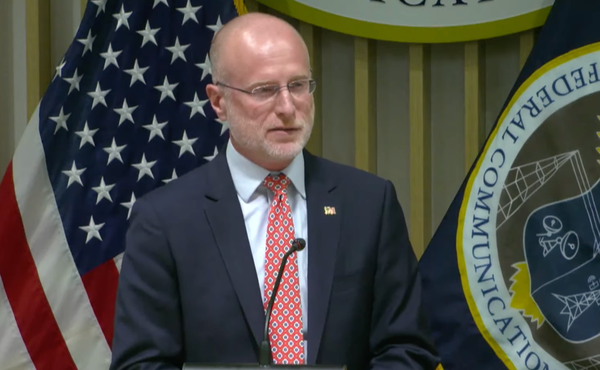
FCC Chairman Brendan Carr has accused California of being too lax with Lifelife verification – the state, along with Texas and Oregon, has used its own system rather than the federal one used by other states – and sparred with California Gov. Gavin Newsom (D) over the issue. In a statement Tuesday, Carr did not indicate he was persuaded by the concerns of advocates and Democratic FCC Commissioner Anna Gomez.
“I’ll reiterate: my position is that the government should not be spending your money to provide phone and internet service to dead people,” he said. “In keeping with this apparently controversial stance, the FCC is cracking down on waste, fraud, and abuse by launching investigations into the apparent enrollment of dead people and duplicate subscribers in this critical connectivity program.”
The agency didn’t say which, or how many, companies it was investigating, just that it had sent letters of inquiry to “an initial group” of providers in “California and other opt-out states.” The agency didn't immediately respond to an inquiry on which companies it had contacted.
“Based on initial reports, it appears that these providers enrolled dead and duplicate subscribers in Lifeline,” the agency said in its release.
Lifeline offers up to $9.25 toward mobile plans for qualifying low-income households. It spent about $940 million in 2024 and served nearly 8.8 million subscribers.
If approved, the proposal the agency is voting on Wednesday would seek comment on collecting social security numbers from Lifeline applicants and other identity verification measures.
Representatives from nine advocacy groups, including Public Knowledge, the National Digital Inclusion Alliance, the Benton Institute for Broadband & Society, and the National Consumer Law Center, met last week with staff from each of the three commissioners’ offices to argue against the extra verification measures. They got an audience with Gomesz directly.
“The NPRM before the Commission risks abandoning the agency’s role as a facilitator of universal service in favor of acting as a gatekeeper to access through the proposals to implement more procedural hurdles and administrative burdens,” they wrote in ex parte filings posted Thursday. “These changes threaten to make enrollment more complex, more surveilled, and more punitive when it is already chronically underutilized. This red tape will likely result in increased administrative costs and participation declines.”
The groups, along with the National Lifeline Association, which represents participating providers, also urged the agency to add questions on increasing the monthly Lifeline support amount.
“The current $9.25 monthly support amount does not support discounts needed to make Lifeline services with voice, text and data allotments necessary to ensure that eligible low-income consumers can stay connected in today’s digital world,” NaLA wrote.
Carr against Newsom, Gomez
When announcing the Lifeline proposal last month, Carr pointed to a recent FCC Office of Inspector General report on states that opted out of the federal Lifeline verification system.
The report found $5 million in reimbursements for 117,000 deceased subscribers between December 2020 and September 2025. Of those, 81 percent were in California and 17 percent were in Texas.
California’s utility regulator has countered that most of the subscribers died after they enrolled and said it was political to single out California.
“People pass away while enrolled in LifeLine – in California and in red states like Texas,” the CPUC said in a statement last month, which was reposted by Newsom. “That's not fraud. That's the reality of administering a large public program serving millions of Americans over many years.”
Carr said at the FCC’s January meeting he wasn’t convinced by that and that the agency would “look at all the remedies that are on the table” for bad actors. He said in an X post responding to Newsom that “payments to providers for people that died or may have died before enrollment went on for over 50 months in cases and for several months on average. Normal ‘lag time’ does not account for all of that.”
The report found companies sought support for those who died before enrollment from 1-54 months, for an average of 3.4 months, and those who may have died before enrollment for 1-58 months, for an average of 8.5 months.
Gomez, the FCC’s lone Democratic commissioner, said in a statement when the proposal was announced that she supports “efforts to protect the integrity and success of the Lifeline program,” but that the proposal’s “cruel and punitive eligibility standards” risked “excluding large numbers of eligible households, including seniors, people with disabilities, rural residents, and Tribal communities, from a proven lifeline that millions rely on to stay connected to work, school, health care, and emergency services.”
The FCC revoked California’s ability to opt out of the federal verification system in November.
“California’s efforts to get around federal rules to prevent misuse of federal dollars has already resulted in their being kicked out of the ‘opt-out’ program and now we are launching investigations into the companies that may be facilitating this type of waste, fraud and abuse,” Carr said in his Tuesday statement.

Member discussion