FCC Rolls Back Environmental Reviews to Speed Wireless Deployments
The agency also voted to make more spectrum available for satellite broadband

WASHINGTON, Sept. 30, 2026 – The Federal Communications Commission voted Wednesday to roll back its environmental review requirements, open up additional spectrum for satellite broadband, and update rules for some ultra-wideband devices.
The National Environmental Policy Act requires federal agencies to consider environmental effects before beginning infrastructure projects, and the review process can take months. The FCC has interpreted NEPA to apply to wireless equipment and towers deployed under one of its spectrum licenses.
The order the agency adopted Wednesday will narrow NEPA requirements to apply only to deployments requiring an antenna registration with the FCC and Federal Aviation Administration; those include deployments more than 200 feet above ground level or near airports.
By the estimate of CTIA, the major wireless industry group that asked for the change, carriers will save more than $2 billion over the next 10 years without NEPA compliance regulations, and nearly 15,000 projects would be spared reviews.
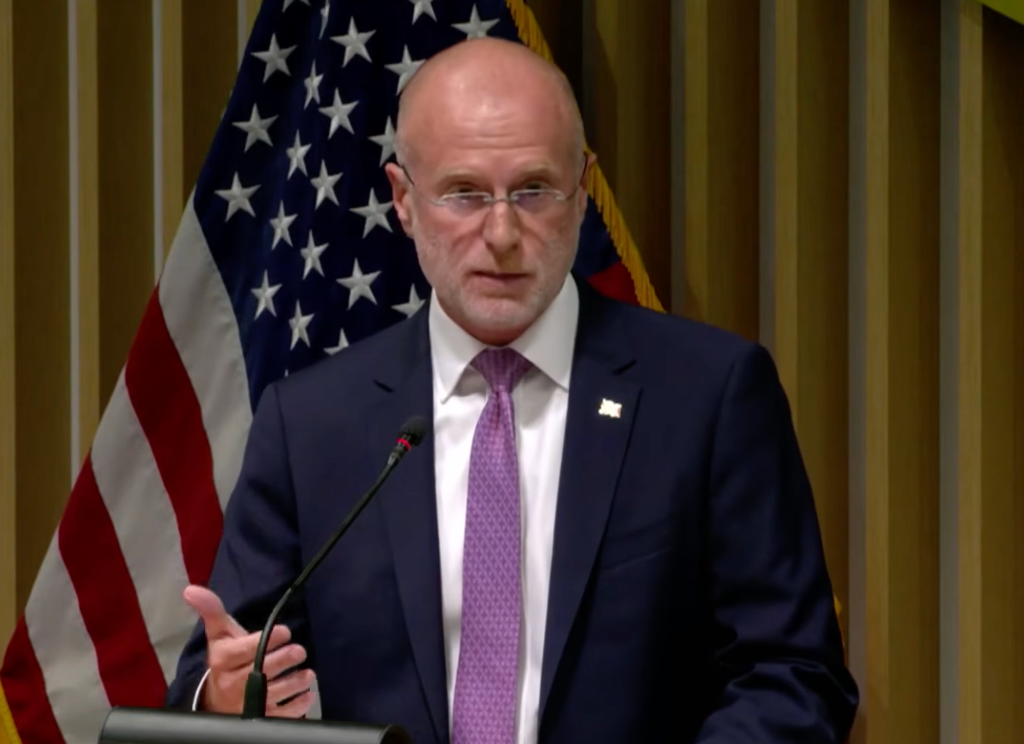
FCC Chairman Brendan Carr said the agency was implementing a 2023 law that codified which kinds of projects needed reviews, called major federal actions (MFAs), plus subsequent White House guidance and Supreme Court precedent.
“With today’s action, we finish the job here at the FCC,” he said. “We confirm that the FCC’s NEPA regulations do not apply to private wireless infrastructure decisions made by private companies.”
It was the only vote Wednesday that was not unanimous. FCC Commissioner Anna Gomez, the agency’s lone Democrat, dissented from the NEPA change but approved of the item’s inquiry on similar historical review requirements.
“While the need for streamlining review processes is clear, we cannot abdicate our responsibility with regard to our licensees,” she said. “Because I believe our proposed NEPA rules allow our interpretation of MFAs to swallow the rule, I dissent with regard to the report and order.”
Tribal nations, local governments and a group of 15 Democratic attorneys general expressed concern with the FCC’s plan last year, saying the agency was moving too fast on CTIA’s proposal, while industry groups supported it.
On Tuesday, the FCC touted support from several think tanks, companies, and industry groups.
“Years of experience have shown that the vast majority of standard wireless reviews consistently found zero environmental impact. These reviews of routine deployments diverted focus and resources away from the handful of projects that truly warranted deeper study and careful attention,” Will Johnson, Verizon’s senior vice president of regulatory affairs, said in a statement to the agency.
Joel Taubenblatt, chief of the FCC’s wireless telecommunications bureau, told reporters after the meeting that there were no major changes from the public draft released last month.
The item would also ask about changes to the agency’s rules around historical reviews. Tribal nations were concerned the proposed changes would affect some required Tribal consultation processes.
Satellite spectrum
The FCC also voted to open up more than 1,000 megahertz of spectrum it said would benefit satellite broadband speeds.
The agency said the 12.7-13.25 GigaHertz (GHz) band could be used for uplinks and downlink communications between satellites and consumer dishes for services like Starlink.
The agency also opened up the 42-42.5 GHz band for downlink communications between satellites and ground stations.
“Making next-gen satellite broadband faster and more reliable will not only benefit current subscribers, but will also enhance competition for all consumers,” Carr said.
Consumer advocacy group Public Knowledge was pleased with the order, which it said would make it easier for companies to compete with SpaceX, which dominates the satellite broadband market.
“Today’s action will improve the capacity of satellite broadband for millions of rural Americans. It will improve Wi-Fi on planes, at sea, and for RVs by creating better connections to the satellites that connect them to the internet,” Harold Feld, the group’s senior vice president, said in a statement.
The item will also seek comment on opening up swathes of additional spectrum for satellite services. Staff said there were again no major changes from the public draft.
Ultra-wideband devices
Commissioners also unanimously adopted a notice of proposed rulemaking that will propose to update the FCC’s ultra-wideband device rules.
Unlicensed ultra-wideband spectrum powers a myriad of devices, commissioners and agency staff noted at the meeting, but the FCC’s rules for the airwaves they use hadn’t been updated since 2002.
The outdated rules meant that in practice, companies had to get waivers before bringing new ultra-wideband devices to market, a process Carr said could take months. In one case, he said a tool for tracking rail traffic in tunnels launched in Canada and the EU rather than deal with the agency’s bespoke waiver process.
The item will also propose creating a new category of ultra-wideband device to make it easier to pursue modern use cases. In the public draft of the item, the agency said most recent waivers have been for things that require precision tracking, like keyless door locks and vehicle safety sensors.
“We further recognize that UWB’s fine-ranging accuracy, robust performance in multipath environments, and ability to operate across wide frequency ranges can enhance continuous spatial awareness, intent detection, multimodal sensor fusion, and autonomous navigation in emerging technologies, including AI-enabled applications,” the agency wrote.
Other items
The agency also adopted an order making it easier for people to opt out of robocalls and an inquiry on ensuring 911 access amid network modernizations.