
FCC: Supreme Court Decision Puts Brakes on School Bus Wi-Fi Suit
In NRC v. Texas, High Court narrowed who can challenge federal agency decisions in court

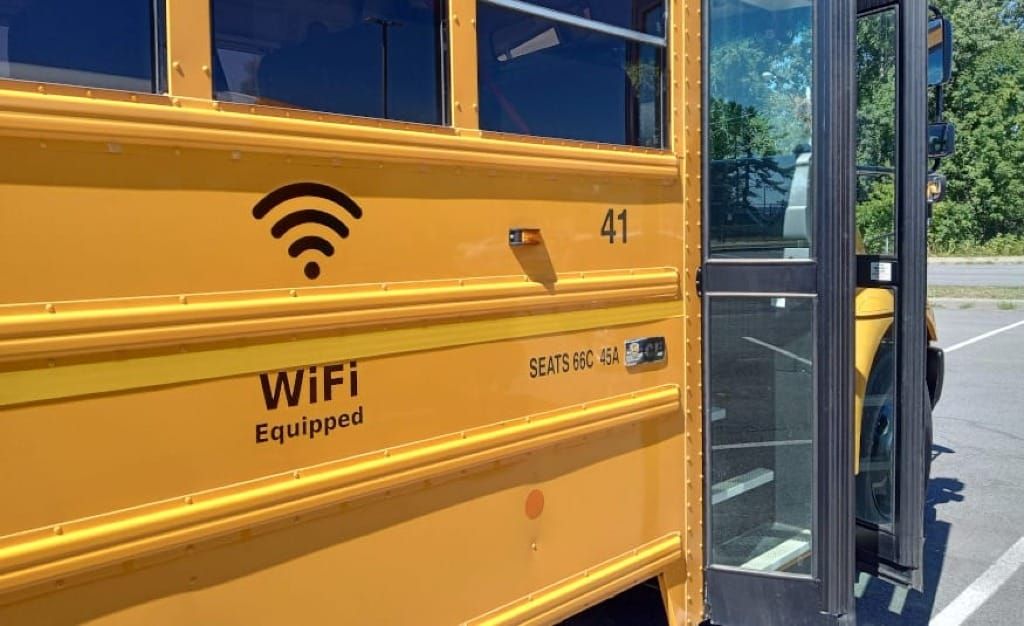
WASHINGTON, July 7, 2025 – A recent Supreme Court decision may upend a lawsuit challenging the Federal Communications Commission’s 2023 order to fund Wi-Fi on school buses.
In briefs filed Wednesday, the FCC and the Schools, Health & Libraries Broadband Coalition urged the U.S. Court of Appeals for the Fifth Circuit to dismiss Molak v. FCC, arguing the petitioners – led by child safety advocate Maurine Molak – lack standing under the Supreme Court’s June 18 ruling in Nuclear Regulatory Commission v. Texas.
The Court’s decision in NRC v. Texas significantly tightened the standard for who qualifies as a “party aggrieved” eligible to seek judicial review under the Hobbs Act. It also sharply limited the ultra vires exception to cases where an agency acts in direct defiance of a specific statutory prohibition.

FROM SPEEDING BEAD SUMMIT
Panel 1: How Are States Thinking About Reasonable Costs Now?
Panel 2: Finding the State Versus Federal Balance in BEAD
Panel 3: Reacting to the New BEAD NOFO Guidance
Panel 4: Building, Maintaining and Adopting Digital Workforce Skills
“Under the Hobbs Act, only a ‘party aggrieved by [a final agency] order may … file a petition to review the order in the court of appeals,’” the FCC wrote, quoting the statute. The FCC contended the Molak petitioners “did not participate in the underlying FCC proceedings,” and “thus, under NRC v. Texas, this Court lacks jurisdiction over the petition for review.”
The FCC argued that the petitioners neither filed comments nor participated in the rulemaking before the FCC issued the Declaratory Ruling allowing E-Rate subsidies for school bus Wi-Fi. Their only filing came after the ruling, in a later stage of the same docket. That, the FCC said, does not confer 'party' status retroactively.
Even petitioners’ fallback claim – that the FCC’s action was ultra vires, or beyond its legal authority – fails, the FCC argued, saying petitioners “dress up a typical statutory-authority argument as an ultra vires claim.”
SHLB, in a five-page brief, echoed the FCC’s claim that the ultra vires exception cannot apply, saying the petitioners’ challenge “falls well shy of the endzone.”
“Neither petitioner even attempts to claim that they meet” the Hobbs Act’s requirement of being a ‘party aggrieved’ by the agency’s order, SHLB wrote. “Instead, they argue that they are entitled to seek judicial review [under] an exception … for ultra vires claims. They are wrong.”
The Molaks, for their part, argued that NRC v. Texas was “a narrow decision grounded in the adjudicatory nature of the agency proceeding” and does not apply to the FCC’s informal rulemaking process in this case.
“The Declaratory Ruling at issue here involved a very different proceeding and statute,” the Molaks argued. “The FCC issued the Declaratory Ruling as part of a general rulemaking docket. And while the agency published a draft on its website shortly before issuing the final version, it did not follow notice-and-comment procedures – let alone afford anyone a hearing.”
“If the ultra vires exception is not applicable in this case,” they wrote, “it is not applicable in any case – a result flatly at odds with NRC preserving the exception.”
Oral arguments in the case were held on November 4, 2024. At the time, the FCC defended its interpretation of the E-Rate statute and its authority to support Wi-Fi on school buses, as previously reported by Broadband Breakfast.



Member discussion