
FCC to Examine Broadband Nutrition Labels at October Meeting
The agency will also take up satellite regulations, NextGen TV, and prison communication rates, among other things.

Jake Neenan
WASHINGTON, Oct. 7, 2025 – The Federal Communications Commission will vote on reexamining broadband nutrition labels, plus eight other items, at its October meeting.
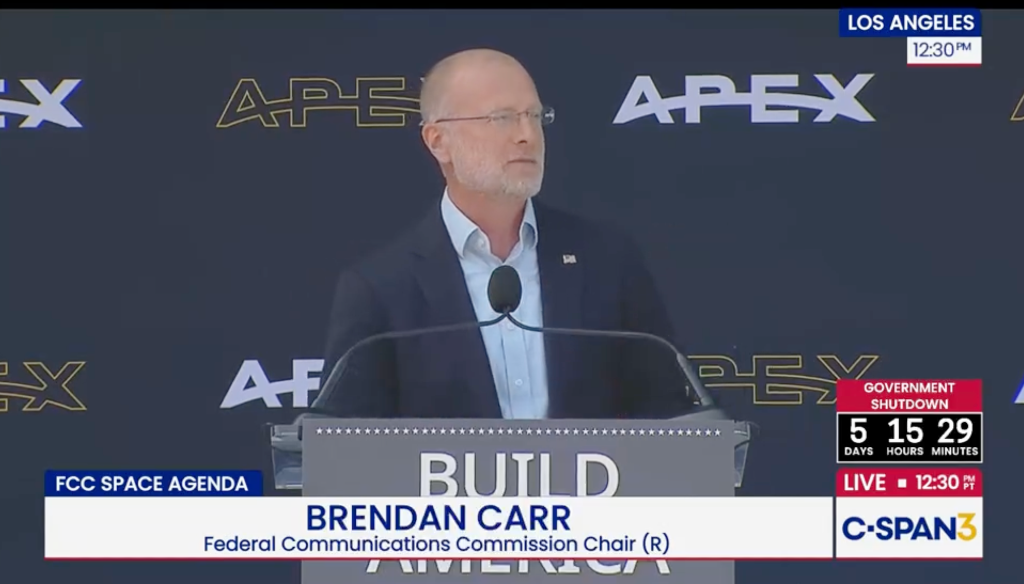
“We will vote on a notice that would reexamine broadband nutrition labels so that we can separate the wheat from the chaff,” FCC Chairman Brendan Carr wrote in a blog post Monday. “We want consumers to get quick and easy access to the information they want and need to compare broadband plans (as Congress has provided) without imposing unnecessary burdens.”
On Tuesday morning the agency hadn’t posted public drafts of the items it will be considering at the Oct. 28 meeting.
All ISPs have been required to display the broadband labels at the point of sale since October 2024. They include information on actual speeds, total long-term monthly price, state or local government fees, and other information intended to allow users to better compare plans between providers.
A study from York University in Toronto found less than perfect compliance with the rule as of August. Most major broadband providers did have a label at the point of sale, with the exception of Charter’s Spectrum brand, but most only had some of the necessary information and many deviated from the FCC’s standard format.
Only Comcast’s Xfinity had downloadable .csv files of its labels for easy comparison.
Indeed, ISPs have told the FCC the requirements are burdensome. In April, major broadband trade groups said they didn’t want to show the labels at the point of sale, asking instead for a link users would have to click to access the information.
They also opposed the mandate to provide physical nutrition label copies in stores and the requirement to display state and local fees.
Space economy
The agency will take up two proposals, one around earth station and satellite licensing and one on spectrum.
“One way to think of this is that we will replace a ‘default to no’ process with a ‘default to yes’ framework” for licenses, Carr told satellite operators in El Segundo, California Monday. “Straightforward licensing requests would be presumed to be in the public interest and expedited. We would also simplify our applications, establish clear timelines so companies know what to expect, and increase flexibility for licensed operations.”
The spectrum item would propose “more intensive use” for the upper microwave flexible use service (UMFUS) spectrum, composed of several bands in the 24.25-48.2 GigaHertz (GHz) range.
“Our current siting restrictions for these airwaves are artificial and were plucked out of thin air during a bygone era,” Carr said in his speech. “We will now propose a wide range of reforms to our Earth Station siting rules to more intensively use these spectrum bands and to streamline the Earth Station licensing process. We believe these changes will help earth stations and put 5G spectrum to more intensive use while living side-by-side in harmony.”
Other items
The six other items include an order increasing restrictions on Chinese and Russian equipment in the U.S., plus notices on Next Gen TV (or ATSC 3.0), copper retirement, robocalls, and prison communications, and more rule deletions.
Equipment and services from companies deemed security threats by the FCC, can’t be authorized for sale in the United States. The order would prohibit the authorization of new devices containing components on the covered list and allow the agency to block the sale of previously cleared gear from a blacklisted provider.
Equipment authorization is on pause due to the government shutdown.
The copper retirement notice would examine "longstanding interconnection obligations that have flowed from Section 251 and explore if there are ways for the Commission to expedite the successful transition to all-IP interconnection for voice services while considering public safety and consumer protection,” Carr wrote in the blog post.
The prison communications item would set higher rate caps for communications services offered in prisons. Providers in the space sued over a 2024 order instituting rate caps, which the FCC temporarily waived earlier this year.
Oral arguments in that case were to happen Tuesday morning in the U.S. Court of Appeals for the First Circuit in Boston.






Member discussion