
FCC to Seek Input on State, Local Barriers to Telecom Projects
The agency will also vote on whether to set up an accelerated docket for wireless permitting disputes

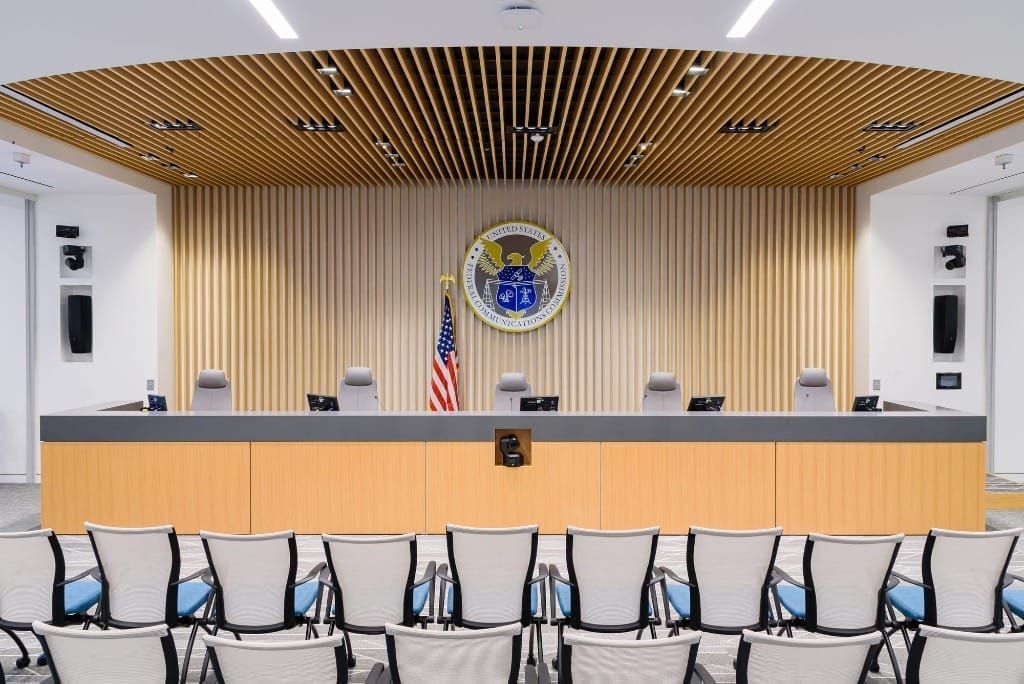
WASHINGTON, Sept. 11, 2025 – The Federal Communications Commission is poised to ask for input on state and local regulations it could preempt to ease wireless projects, and on whether to create an accelerated docket for local permitting disputes.
In a notice of proposed rulemaking, the agency would seek input on whether local policies are impeding new cell sites via delays, excessive fees, or “other regulatory impediments.” The notice would also ask whether the agency should set up a process to resolve disputes between carriers and permitting authorities, which it called a “rocket docket,” and propose to change a siting rule that the Ninth Circuit struck down last year.
A separate notice of inquiry would seek more general input on delays wireline providers experience in trying to access state and local rights-of-way.

The agency released drafts Tuesday of the items it’s considering at its Sept. 30 meeting.
NPRM
Under the Communications Act, the FCC can preempt state and local requirements that effectively prohibit the deployment of telecom services, and a 2012 law requires local governments to approve wireless carrier requests to modify existing infrastructure, provided the change isn’t major.
In a 2020 ruling, the agency issued an order clarifying its rules implementing the 2012 law, which was challenged in court by local governments. They said the order made changes to the rules that should have required a notice before being implemented.
Judges mostly upheld the order, but said its definition of a “concealment element” wouldn’t fly. Changes that defeat concealment can be more easily blocked by cities under the law, and the FCC’s order narrowed the definition of concealment too much, judges said.
The draft would propose a similar definition, and clarify that “a requested modification would ‘defeat’ a concealment element if it would cause a reasonable person to view the structure’s intended stealth design as ineffective.”
The notice would also ask about expanding the agency’s rule preempting certain fees and aesthetic requirements for small cell sites to larger infrastructure like towers.
It would seek input on updating those existing rules on locals permitting shotclocks, fees, and aesthetic criteria for small cells.
“We recognize that some state and local governments have taken important steps to modernize their approach to siting requests,” the agency wrote. “However, in recent years, a number of state and local regulations have inhibited the deployment, densification, and upgrading of wireless networks, resulting in an effective prohibition of 5G wireless services. We seek comment on such regulations, including potential preemption.”
NOI
The draft notice of inquiry would ask about issues wireline providers see in state and local right-of-way like long delays and high fees. The agency also wanted “broad comment” on other local requirements it should consider preempting with its authority under the Communications Act
“Unfortunately, while providers have indicated a willingness to expand their facilities to reach additional consumers, and the federal government recently made an unprecedented public investment in deploying communications infrastructure to communities throughout the nation, we continue to be advised that deployment projects are getting stuck in red tape on the state and local level,” the agency wrote.
Broadband trade group USTelecom went to the FCC last month criticizing local permitting processes, saying they delayed broadband projects. So did NCTA, which represents the cable industry.
Groups of municipalities shot back, saying the industry often levied vague accusations against them in a bid to secure FCC preemption of their authority.
Prison jamming
The agency is also set to vote on an item that would propose to allow prisons to jam contraband cell phones in their facilities.
The Georgia Attorney General had asked the agency for something similar last year. Then-FCC Chairwoman Jessica Rosenworcel said it would be illegal for non-federal entities to use cell phone jammers, as licensed radios are protected by the Communications Act.
The FCC’s proposal would propose to deauthorize contraband phone use under its current licensing rules.
“This approach would, we believe, allow [departments of corrections] to employ jamming solutions, or other similar technologies, without violating [the Communications Act], and would provide an additional tool to prevent criminal activity stemming from unauthorized communications within and to those outside a correctional facility,” the agency wrote in the public draft.





Member discussion