
FCC Unanimously Approves Measure to Speed Transition from Copper Lines
Commission advances Carr’s deregulatory ‘Build America’ agenda

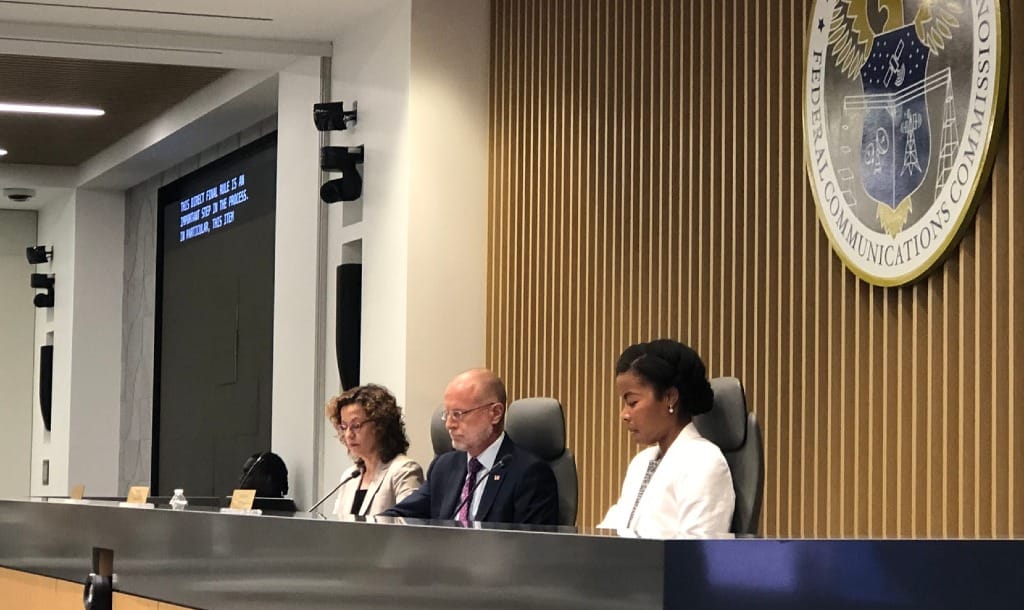
WASHINGTON, July 24, 2025 – The Federal Communications Commission voted unanimously Thursday to speed up the retirement of aging copper lines.
In a 3-0 vote at its July Open Meeting, the FCC advanced a rulemaking that would cement temporary waivers first issued in March. If finalized, the proposal would scrap FCC filing requirements for telecom providers looking to decommission copper lines.
The deregulatory measure would only require companies to give “reasonable public notice” to affected parties. The proposal would also waive filing requirements for companies seeking to grandfather legacy services, an initial step toward phasing out traditional offerings in favor of modern networks.

According to the FCC’s press release, the rulemaking was intended to “encourage providers to build, maintain, and upgrade their networks so all consumers and businesses can benefit from technological strides in the communications marketplace.”
The proceeding falls under FCC Chairman Brendan Carr’s “Build America” agenda, an effort to modernize FCC operations and eliminate unnecessary regulations.
“We are looking to unleash the private sector to build the modern networks of the future and ensure that providers are no longer forced to invest billions of dollars in aging technology,” Carr stated.
He explained that a single communications provider in the U.S. spends $6 billion a year to keep its copper line services running, despite only five percent of its customers still subscribing to copper phone service.
“With today’s action, we are moving to free up billions of dollars for new networks,” Carr said.
Democratic Commissioner Anna Gomez also expressed her support for this measure.
“The rulemaking at issue today asks whether we still need these rules to protect consumers or whether they get in the way of service providers investing in technology upgrades,” Gomez said. “I support the move to new technologies.”
The FCC’s press release noted that this proceeding will “diligently safeguard consumers’ access to critical emergency services and protect public safety.” However, Gomez urged stakeholders to weigh in to help the Commission “understand the opportunities and the challenges that copper retirement and the much-needed transition to new technologies pose to your communities and businesses.”
When Broadband Breakfast asked members of the Wireline Competition Bureau how and when consumer concerns would be addressed in the proceeding, Deputy Bureau Chief Jodie Griffin emphasized that the Commission was still gathering feedback.
“Well, the NPRM asks a lot of questions,” Griffin said. “We’re trying to build the factual record to understand where legacy services are no longer fulfilling what consumers need.”
Griffin added that the proposal sought to “break down the barriers so that customers can get more access to next-gen, high-speed services,” but acknowledged that the line between protecting consumers and deregulating legacy infrastructure remains under debate.
“To your question about how we draw that line, we’re seeking comment on a lot of different options here,” Griffin told Broadband Breakfast.






Member discussion