
FCC Urges Court to Pause Prison Phone Case as Agency Changes Rules
Attorneys for the agency decline to defend prior ban on commissions to correctional facilities.

Jericho Casper

Oct. 7, 2025 – A panel of the U.S. Court of Appeals for the First Circuit wrestled Tuesday with how to define the security costs “necessary” to provide phone and video service in prisons.
On the same day that the Federal Communications Commission issued a new set of regulations taking a different approach to implementing the Martha Wright-Reed Act, the agency declined in court to defend the rules promulgated by the agency under the prior administration.
And yet, under questioning from a judge, an attorney for the FCC said the agency would - for now - enforce a rule that it wouldn’t defend in court.
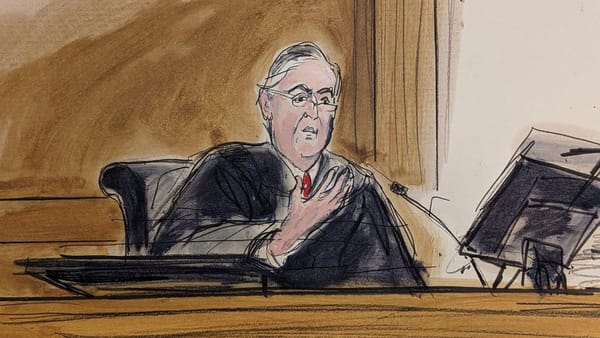
Hearing arguments in Securus Technologies v. FCC, First Circuit Judges Jeffrey Howard, David Barron, and Lara Montecalvo weighed consolidated challenges to a 2024 FCC order that sought to rein in what the agency once called “exorbitant” rates charged to incarcerated people for phone and video communications services.
As counsel for states and sheriffs, Louisiana Deputy Solicitor General Kelsey Smith argued that the FCC’s 2024 order implementing the Martha Wright-Reed Act contravened a Congressional mandate to account for all safety and security measures required to provide inmate calling services.
“The language of the statute does not say the commission has to adopt every single safety and security measure. But, it has to reasonably analyze them,” Smith said, arguing “the commission didn't do that.”
‘Site commissions’ at issue
Smith asked the court to vacate the order, arguing that the FCC exceeded its legal authority by banning “site commission” payments, which are paid by prison telecom companies to correctional facilities in exchange for exclusive contracts.
“On Friday, the FCC said it will allow site commission bans to take effect in the future, and it might keep the exclusion, but it will seek comment on any proposal,” Smith said. “The states maintain that the FCC lacks the statutory authority to prohibit site commission payments.”
The FCC did not defend its 2024 order’s original legal justification for banning site commission payments outright. Instead, the FCC’s Deputy General Counsel Bradley Craigmyle, told the panel that the FCC intends to set a date to let the ban take effect but reopen the question through a forthcoming October 2025 proposal that will seek comment on whether and how to retain the prohibition.
Senior Circuit Judge Jeffrey Howard pressed Craigmyle to explain why the FCC planned to keep enforcing a rule it would no longer defend in court.
“You’re not defending the attacks on the site commission ban?” Howard asked.
“That’s correct, your honor,” Craigmyle replied.
“Even though you’re going to keep it in place?” Howard asked.
“That’s correct, your honor,” he said.
“You want to leave in place regulations based on a statutory argument which you won't defend,” said Howard. “It is, I'd say, unusual.”
Counsel for the Direct Action for Rights and Equality and other public-interest petitioners, Arjun Ramamurti, defended the FCC’s reasoning on banning site commissions in 2024.
“If the provider is forced to eat the cost of the site commission, then they’re not being fairly compensated,” Ramamurthy told the panel. “But if the provider is permitted to pass that cost on to the incarcerated person, then the rates are not just and reasonable.”
“Faced with that dilemma, the [FCC] banned site commissions altogether,” he said, “that seems to be not just statutorily permitted, but in fact, statutorily required under the reasoning of the commission's order.”
Safety and security costs
The three-judge panel pressed attorneys on another core issue in the case: how to define which safety and security costs the FCC must consider when setting inmate calling rates.
Judge David Barron asked Ramamurti to explain which costs tied to security and monitoring were “technically necessary” for providing inmate calling services under the Martha Wright-Reed Act.
Ramamurti argued that in this context, “technically necessary” refers to the basic functions required to make a call in a correctional setting. That could include, he said, “providing PINs to incarcerated people or ensuring certain kinds of fraud management,” since those measures are essential for calls to take place securely.
But, he added, broader features such as “storing data” or “generating custom reports for a facility” don’t directly benefit the ratepayer and were serving other functions.
Representing prison communications provider Securus Technologies, attorney Scott Angstreich argued that two of the four categories the FCC itself listed as recoverable costs were missing from its 2024 rate calculations.
“They forget the ancillary service costs. They forget the telephone relay service,” he said. “Those are expenses the FCC says we get to recover through our rates, and yet they set rates that don’t let us recover them. That’s a problem.”
Representing states attorneys general and sheriffs, Louisiana’s Smith argued there were seven categories of safety and security costs that should have been included as recoverable costs.
“Inmate calling is not a two-party consumer market,” Smith said. “It is a three-party system that only works if facilities can maintain safety and security measures like monitoring, reporting and review identity and authentication.” These services “are not optional,” she said, “they are the precondition for calls to be made.”
Venue and timing concerns
The panel faced procedural questions about when and where the case should proceed.
FCC counsel urged the court to “press pause” until the FCC votes on a new order on Oct. 28, which was released after oral arguments on Tuesday afternoon.
Craigmyle said the new order would “supersede significant portions of the order” under review. Once the FCC adopts the measure, he said, “the parties could file a motion to govern on how exactly to proceed.”
Counsel for Securus and public-interest petitioners agreed that additional briefing would be needed once the FCC’s new proposed rules were finalized.
“It will likely move some of our challenges, some of the states’ challenges, and some of the public-interest challenges,” Angstreich said. “It’s probably worthwhile to have [a] supplemental briefing on which issues still need to be decided.”
Securus continued to press its request to transfer the case to the Fifth Circuit. The FCC did not oppose the motion, but public-interest groups counsel pushed back, noting that “we’re all here now, and it would not serve the convenience of the parties to move the case.”



Member discussion