
Federal Permitting Staff Reduced, Says NTIA Permitting Chief Jill Springer
The agency has been working to reduce federal permitting burdens for BEAD participants.


WASHINGTON, Nov. 7, 2025 – Retirements since the start of the Trump administration could impact permit reviews, said Jill Springer, the top permitting official at the National Telecommunications and Information Administration. The agency has been working to streamline the federal permitting process for participants in its $42.45 billion Broadband Equity, Access, and Deployment program.
“This is a thing that I am worried about,” she said. “Since January many of the federal permitting agencies have lost a lot of staff, and they’re trying to reapportion people and figure that out.”
She said agency capacity and preparation were an important part of efforts to streamline permitting processes, something multiple agencies are working on.
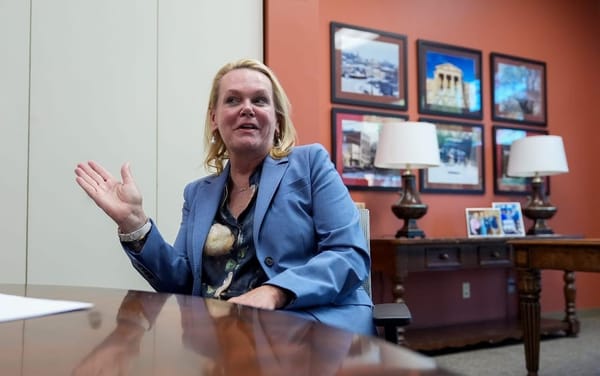
 Jill Springer
“We can have all these great changes that have happened,” she said, “but if they’re either not getting communicated down to the people who are actually pushing the paper, or worse yet, if there’s not somebody there to be processing that, then we have different problems that maybe we didn’t pay enough attention to.”
She spoke at a Broadband Breakfast webinar Wednesday moderated by Broadband Breakfast CEO Drew Clark.
The NTIA and Springer have been making a yearslong effort to stand up a system for processing federal broadband permits as quickly as possible, an effort to avoid bottlenecks when BEAD funding starts flowing.
As far as other federal land management agencies, Springer said NTIA had agreements with a number of them that allow NTIA to be the main supervisor of a project. With the help of the Permitting Council, the federal agency tasked with streamlining permitting processes, Springer said NTIA was able to “direct resources that will help the broadband permitting reviews, to make sure that there’s adequate staff and that they run smoothly.”
On the NTIA’s side, the agency has made a series of tools and policy changes aimed at making the process as painless as possible.
The agency pushed for an expanded set of projects that won’t require an in-depth historical review and additional exclusions from the full environmental review process for program participants. Those are largely built on past reviews that found federally funded broadband projects have minimal environmental impact in many situations.
The agency also created its Environmental Screening and Permitting Tracking Tool, or ESAPTT, which is designed to shepherd projects through the federal permitting process through a question-and-answer process. If all goes well and exclusions can be applied, the tool can quickly generate an approval from NTIA under the National Environmental Policy Act.
Springer said less than 10 percent of BEAD projects are expected to need heightened environmental or historical reviews. But even then, the agency is letting BEAD winners use some of the assessment work done for past federal broadband projects.
The goal is for ISPs not to have to do assessment work that has already been done and found to be satisfactory for previous federal broadband projects.
Mike Saperstein, senior vice president of government affairs at the Wireless Infrastructure Association, said getting permits on federal lands, where the managing agency often has to issue its own approval, can be cumbersome generally. He said he hopes efforts to meet BEAD demand, which are happening within multiple agencies, will help modernize the process.
“We deal with paper reviews on a lot of these systems, which is hard to believe in today’s day and age,” he said. “Hopefully we can just get some electronic applications for federal lands, and that would be a huge accomplishment for the BEAD program.”
NTIA hasn’t yet approved states’ tentative BEAD plans, the last step before grant contracts can be signed and projects can get underway. That’s supposed to happen by the end of the year for most states.
The Federal Communications Commission, which handles environmental reviews for wireless towers, is currently reviewing its NEPA policies.






Member discussion