GAO Wants Easier Coverage Challenges at FCC, More Detail on Long-term BEAD Monitoring
USDA officials said a $4.6 billion telecom loan program was largely unallocated, but they expected more interest as grant funding dried up

WASHINGTON, Sept. 1, 2026 – The Government Accountability Office wants two federal agencies to improve broadband coverage mapping and grant-funded project monitoring.
GAO said in a Monday report that the agencies, the Federal Communications Commission and National Telecommunications and Information Administration, agreed with its recommendations.

Since 2022, the FCC has maintained a granular map of broadband coverage and, since 2023, a map of federally funded broadband projects. They’re intended to keep track of where broadband is and is not available in the U.S., partly so agencies funding deployments can know where to target their efforts.
The coverage data is reported by providers, and the FCC accepts challenges to ensure the data is accurate. GAO said that in interviews local and Tribal governments, along with rural ISP trade groups, said it was difficult to submit bulk challenges to many locations at once.
Providing evidence of inaccurate service for large numbers of locations under the FCC’s current process is too labor intensive for a small staff, interviewees told GAO.
GAO recommended the FCC reach out to local governments and small ISPs directly to ask about difficulties in the challenge process, otherwise inaccurate coverage might not be corrected and locations lacking broadband might not be identified.
Eduard Bartholme, chief of the FCC’s consumer and government affairs bureau, said in a response to GAO that the agency held a Tribal workshop in August that provided assistance with filing challenges. He said the agency would also organize roundtables to gather feedback on the challenge process.
The agency had already sought input on its data collection process in May.
ISPs disagreed there about how to reverse challenges once service has been deployed or upgraded. Smaller providers that struggle to submit bulk challenges want a similarly rigorous process for reversing them, while larger ISPs said coverage wasn’t frequently exaggerated and a sworn declaration should suffice.
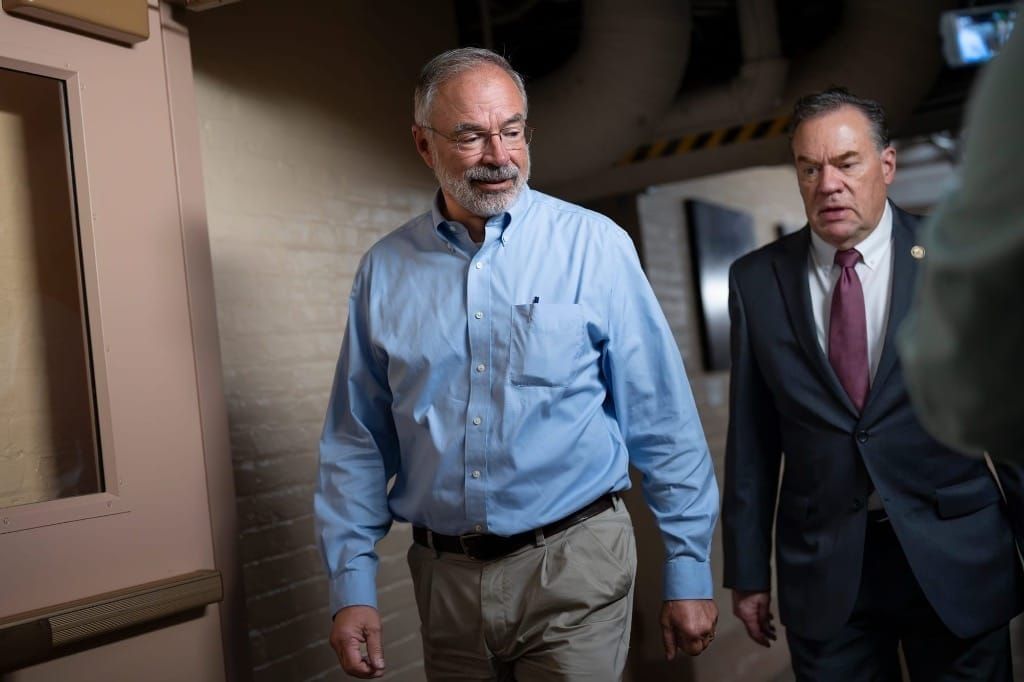
The report was prepared for the House and Senate agriculture committees, led by Rep. Andy Harris, R-Md., and Sen. John Hoeven, R-N.D., respectively.
BEAD monitoring
GAO also analyzed NTIA’s $42.45 billion Broadband Equity, Access, and Deployment program.
NTIA expects to spend about $18.2 billion of that on deployment, according to state and territory spending plans approved last week (agency officials had told GAO $18.4 billion, but the interviews likely took place before all the plans were finalized).
BEAD participants have to submit reports on their network performance at least twice annually to states during their build outs, which can last up to four years. NTIA officials told GAO the agency can’t require participants to submit reports after that, despite the government having a stake in grant-funded networks for 10 years after completion, but that states could potentially request them.
The information also doesn’t include financial metrics, which GAO said would have been helpful. GAO said NTIA should provide more details on how states can monitor BEAD projects after they’re completed to avoid rural networks going bankrupt.
“Such information could include considerations about provider defaults in other BEAD projects and other broadband deployment programs and requesting network performance data from subrecipients that have defaulted,” wrote Andrew Von Ah, GAO’s director of physical infrastructure. “Requesting performance data from subrecipients that have defaulted on other BEAD projects or in other federal broadband programs could provide states with insight into risks related to financial sustainability.”
In an effort to ensure ISPs bid for financially viable network builds, NTIA is preventing BEAD participants from accepting operational subsidies for BEAD-funded networks for 10 years. The agency didn’t offer a written response like the FCC, but GAO said NTIA agreed with its recommendation.
Other findings
The report noted that the U.S. Department of Agriculture's Telecommunications Infrastructure Program had a lot of idle cash.
The loan program was allocated $4.6 billion from 2019 through 2025, and just 10 percent of that has been obligated by USDA.
Agency officials said that had to do with a flood of grant funding from BEAD and other sources, which are more attractive than loans that need to be repaid. But they expected ISPs to seek the funding once grants dried up.
“USDA officials stated that they expect an increase in TIP applications after the recent influx of federal broadband funding winds down, as providers seek financing to complete remaining buildouts and sustain long-term network needs,” Von Ah wrote.
GAO also said agencies were starting to work on its recommendations from last year that they coordinate better on broadband funding data submissions.
The report found that some USDA and FCC programs were still not present in the FCC’s funding map, but said both agencies were working to correct that.
The report found only two instances of potential federal project overlap, one was corrected and led to USDA locations being removed from an FCC funding area. In the other, a provider won USDA funding for deployment and FCC funding for opex in an overlapping area, which the agencies said was allowed.