Guthrie Pushes Summer Timeline for Bipartisan Permitting Reform
Guthrie criticized proposals to pause or limit data center development over power concerns.

Georgina Mackie
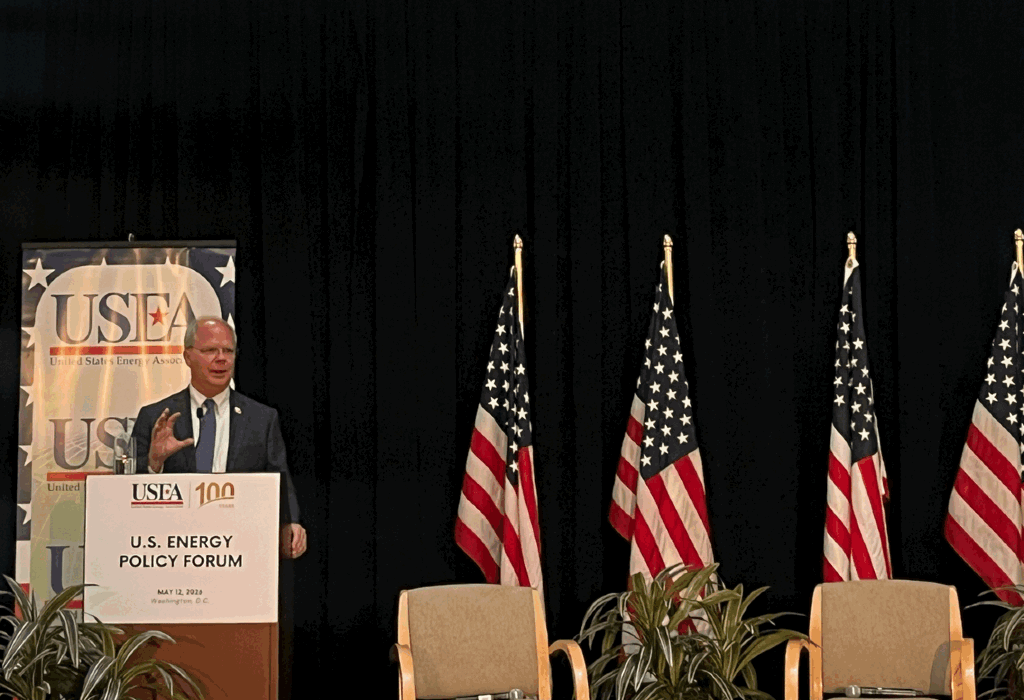
WASHINGTON, May 12, 2026 – Congress must pass bipartisan permitting reform legislation this summer to speed energy generation and transmission projects needed for artificial intelligence infrastructure growth, House Energy and Commerce Committee Chairman Brett Guthrie, R-Ky., said Tuesday.
Guthrie said lawmakers were working toward a package focused on power generation, pipelines, and transmission infrastructure while preserving existing environmental standards.
“We want to reform the process, not the standard,” Guthrie said during keynote remarks at a United States Energy Association event in Washington.
He tied permitting reform to rising electricity demand from artificial intelligence and data centers, arguing the United States risked falling behind China without more dispatchable power and transmission capacity.
“If we choose not to build data centers, and they choose to build them, it completely changes our world,” Guthrie said.
Some large AI data center sites could require up to a gigawatt of electricity, roughly equivalent to Seattle’s power demand, he said.
Guthrie said the committee was preparing transmission legislation aimed at addressing siting authority, cost allocation, and long-distance power delivery. The committee plans to hold a hearing Wednesday on transmission bottlenecks and potential reforms.
He also backed “all-of-the-above” energy policies, including natural gas, nuclear, renewables, and coal generation, to ensure reliable electricity during peak demand.
Guthrie criticized proposals to pause or limit data center development over power concerns, arguing restrictions would weaken U.S. competitiveness.
“We can’t put our heads in the sand,” he said.
Bipartisan negotiations with Democrats on transmission and permitting reform are continuing, though disagreements persist over federal transmission authority and who should bear the costs of interstate projects, Guthrie said.
Cost allocation has become a growing obstacle in transmission debates, particularly over whether states hosting new transmission lines should help pay for projects primarily delivering electricity elsewhere.
He said Congress needed to move legislation out of the House before August if lawmakers hoped to complete a broader package this year.
“This is the moment we can get something big done,” Guthrie said.