House Appropriators Move to Block NextNav Proposal
Siding with 900 MHz incumbents, lawmakers said they fear interference from the company’s proposed system.

WASHINGTON, April 22, 2026 – House appropriators are trying to block federal regulators from implementing one company’s plan for a GPS backup, fearing interference on RFID chips and tolling systems.
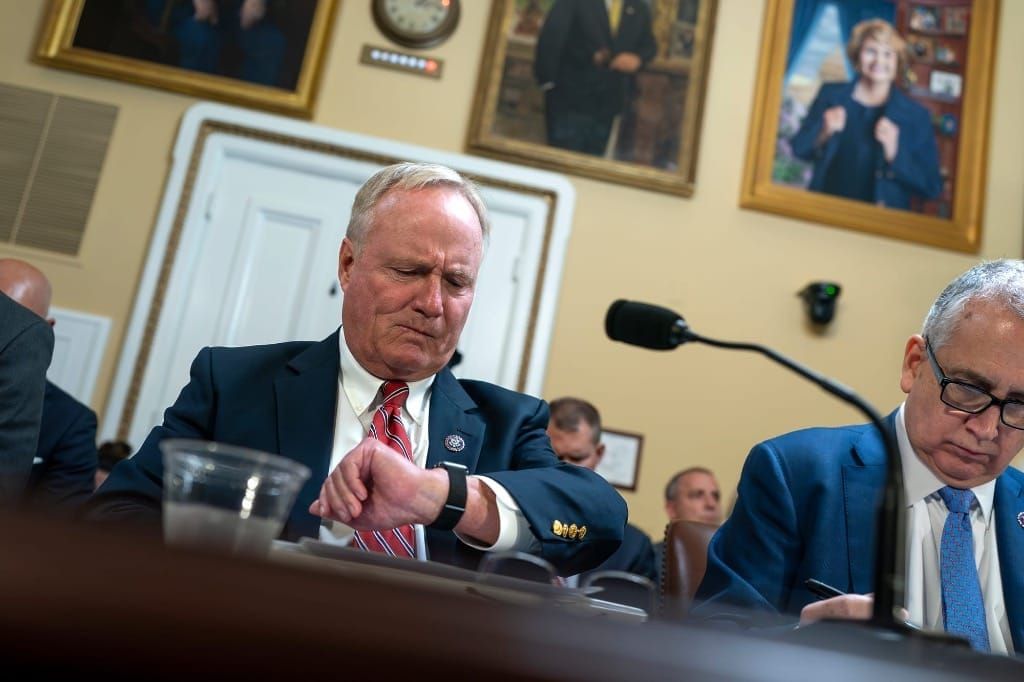
The House Appropriations Committee cleared a bill Tuesday that included the Federal Communications Commission’s fiscal year 2027 budget. The committee adopted an amendment from Rep. David Joyce, R-Ohio, that would prevent any of the agency’s money from going toward implementing the plan.
The proposal at issue comes from NextNav, a geolocation company asking the FCC to alter the 902-928 MegaHertz (MHz) band to give the company 15 megahertz in support of a terrestrial GPS backup and 5G broadband. It’s already one of the main license holders.

“I know many of us have had and continue to have concerns about the petition filed at the FCC by NextNav and the impact that this proposal could have on RFID devices, critical infrastructure, electronic highway tolling systems, aviation, retail, and manufacturing,” Joyce said Tuesday. “This language demonstrates we will be watching the FCC closely.”
Joyce’s amendment reads “None of the funds made available under this Act may be used by the Federal Communications Commission to finalize, implement, or enforce any rulemaking or order that would reconfigure, repurpose, or have the effect of reconfiguring or repurposing the 902-928 MHz band in a manner that authorizes high-power terrestrial operations in the band.”
NextNav’s plan has indeed been met with strong opposition from incumbents in the band who say they wouldn’t be able to handle interference from the proposed new system. Other 900 MHz band occupants include railroads and utilities, toll operators, municipalities, and security systems.
“The claims of RFID interference are directly refuted in the robust engineering record before the FCC. NextNav's studies and independent reviews have reached the same conclusion,” Ed Mortimer, NextNav’s vice president of government affairs, said in a statement. “Everyone agrees on the urgent need for complements and redundancy for GPS, and we commit to working with all stakeholders to address this national security imperative.”
The FCC first sought comment on NextNav’s proposal in August 2024, but both sides continue to argue their case and trade technical analyses purporting to support their positions. Multiple groups have submitted filings or met with FCC staff this month on the issue.
The agency recently approved NextNav for coexistence testing with railroad equipment in Colorado, in addition to field tests it’s already conducting in San Jose. The company told the FCC it plans to start the Colorado testing as soon as April 27.
A March FCC submission to the Office of Management and Budget has stakeholders thinking the agency is nearing another notice of proposed rulemaking related to position, navigation, and timing (PNT) systems. Both sides are at odds as to whether the agency should seek additional comment on NextNav’s proposal as part of that.
FCC budget
The bill cleared by House Appropriations would give the FCC $390,192,000 for fiscal year 2027, about 2 percent less than the $398,342,000 the agency sought and down more than 6 percent from its $416 million 2026 allocation.
The legislators would keep the FCC’s inspector general funding at its 2026 level, $13,500,000, where the agency had requested a decrease to $10,918,000. That would put the FCC’s remaining funding under the bill at $376,692,000, about 2.7 percent less than the FCC’s requested $387,424,000.
The agency estimated its request would have required 110 job cuts across the FCC, bringing its total headcount down to 1,294, its lowest ever. Should the committee’s budget advance, the agency would have even less money to work with.
The FCC is funded by regulatory fees on some of the industries it oversees, meaning the money likely won’t be appropriated from the Treasury.