
House Lawmakers Appear Supportive of Draft FirstNet Reauthorization Bill
There was bipartisan support in both chambers for more NTIA oversight.

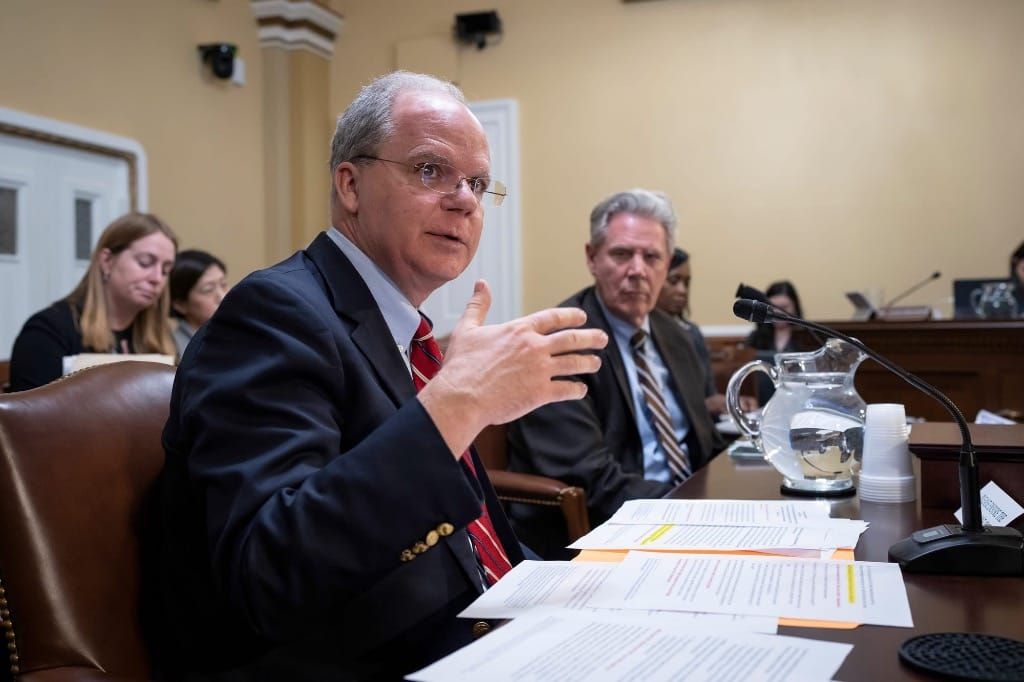
WASHINGTON, Feb. 5, 2026 – House lawmakers from both parties appeared supportive Wednesday of a draft bill to reauthorize the First Responder Network Authority.
The draft, led by Reps. Neal Dunn, F-Fla., and Jennifer McClellan, D-Va., would reauthorize the FirstNet Authority through September 2037 and put the agency under more direct control from the National Telecommunications and Information Administration.
The FirstNet Authority oversees FirstNet, the nationwide first responder network owned and operated by AT&T under a contract with the Commerce Department. FirstNet Authority will sunset in February 2027 unless Congress reauthorizes it.

“The text and the discussion draft before us today represents a good faith effort to address concerns that have been raised with the committee over the years,” Rep. Frank Pallone, D-N.J., the top Democrat on the House Commerce Committee, said during a hearing on the issue.
The Commerce Department's Office of Inspector General has issued negative reports on the FirstNet Authority, finding the agency retaliated against whistleblowers and was lax in enforcing contract milestones. Michael Adkinson, acting chair of the FirstNet Authority board, said Wednesday that many of the problems OIG identified came down to ambiguity as to whether FNA’s executive director ultimately reported to the board or NTIA.
In response to those findings, “the legislation before us today makes reforms to improve transparency, accountability, and leadership, but also to ensure the longevity and continued development and success of this network as technology evolves,” Rep. Brett Guthrie, R-Ky., the chairman of the committee, said Wednesday.”
The Senate Commerce Committee held a hearing on reauthorization last week in which committee members also expressed support for increasing NTIA oversight over FirstNet Authority.
Scott Agnew, AT&T’s president of FirstNet and public sector mobility, and Michael Dame, associate administrator of NTIA’s Office of Public Safety Communications, both told House lawmakers Wednesday they didn’t think there was anything that needed to be added to the draft bill.
Adkinson said the FNA board should have “direct oversight” over the executive director, “so that we have some say in who that is and what their performance metrics should be.” The draft bill would have NTIA appoint an FNA administrator and conduct performance reviews.
He also asked for more board seats for public safety officials and for staggered terms to help deal with turnover, both of which were included in the draft.
Some public safety groups, and former FNA board chairs, have opposed the draft bill, arguing it would take too much authority away from the board and create bureaucratic delays. Dame and some lawmakers pushed back on that view Wednesday.
“I know that some public safety groups and stakeholders have expressed concerns” with the bill, Dame said. “But this reform would strengthen FirstNet’s mission by enabling clearer oversight and more efficient stewardship of resources in service of first responders.”
He said NTIA “has no interest in supplanting” the expertise of public safety officials on FNA’s board. “Instead, we rely on it every day.”
The draft bill would provide that “any action taken by the First Responder Network Authority shall be subject to the approval of the NTIA.” The agency and FNA board would be tasked with developing a list of things FNA could do without checking with NTIA first.
“Generally favorable” for AT&T
New Street Research Policy Advisor Blair Levin said in a Tuesday research note that the draft was “generally favorable” for AT&T, as it focused on changing the FNA’s governing structure rather than the underlying economics of the contract.
AT&T was eligible for up to $6.5 billion in federal funding from spectrum auction proceeds to construct the network, which finished in 2023, and it’s now funded by subscriber fees paid by public safety agencies using the network. AT&T is supposed to pay the agency a total of $18 billion from those fees over the course of the 25-year contract, which was inked in 2017, and much of the money will be reinvested back into FirstNet.
Agnew said the company had spent more than $14 billion so far and about $40 billion over the life of the contract on building and operating the network. FNA has plans to spend $8 billion of its funding over the next decade on improvements like a physically separate network core and a platform for making legacy radios more interoperable.
Unlike the House hearing, the Senate hearing included a witness from a competing public safety offering, Verizon’s Frontline service, who advocated for FNA spending being opened up to carriers other than AT&T.
While the hearing largely focused on the increased oversight and how best to promote and monitor FirstNet’s rural expansion, there were some questions about FNA’s spending.
Rep. Julie Fedorchak, R-N.D., asked Agnew why funding should be tied to FirstNet when Verizon and T-Mobile have competing products.
He responded that “It’s important that it’s a single network, that it’s secure, that it’s interoperable, and it’s held accountable for first responders.” He said “reinvestment dollars are going to go into rural coverage, so we don’t recommend diverting any of those funds that would take away from rural sites.”
Agnew emphasized that new rural FirstNet sites were chosen based on where public safety agencies requested coverage, rather than what would also help AT&T’s commercial network.
Adkinson said it wasn’t clear to him whether the draft language would allow FNA to spend money with entities other than AT&T.
“While there are some indications of Congressional concern about the underlying economics of the FNA at least at this point we see it as unlikely that Congress will act in a way that materially changes the status quo in terms of the economics” of the major carriers, Levin wrote.



Member discussion