House to Hold Hearing on AI, Infrastructure, and U.S. Global Competitiveness
Guthrie emphasized the importance of investing in infrastructure to support the expansion of AI

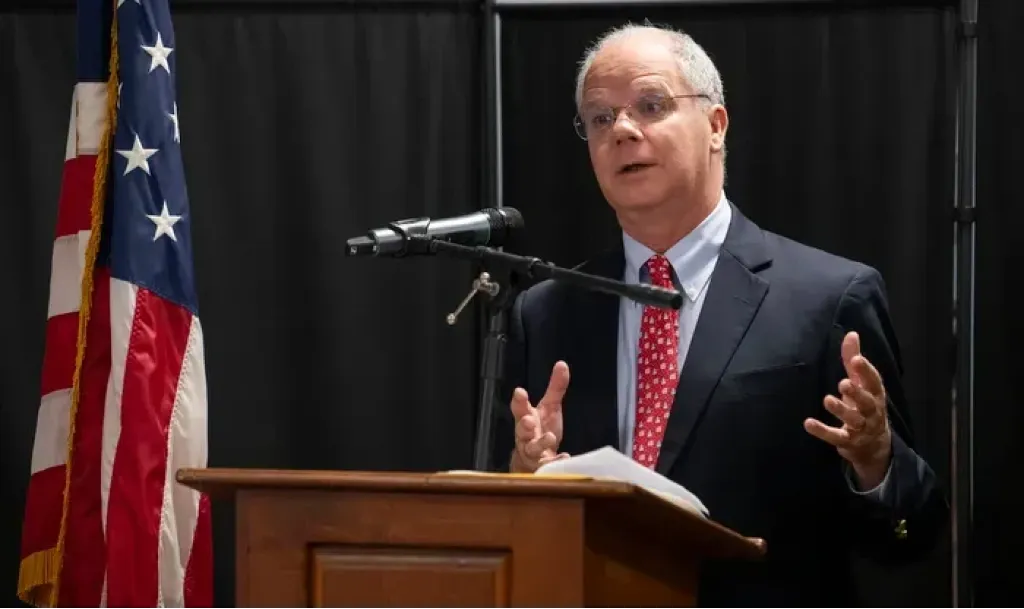
WASHINGTON, April 3, 2025 — The House Energy and Commerce Committee will hold a full committee hearing next week to examine the future of artificial intelligence and its implications for American innovation, infrastructure, and global competitiveness.
Chairman Rep. Brett Guthrie, R-Ky., announced the hearing, titled “Converting Energy into Intelligence: the Future of AI Technology, Human Discovery, and American Global Competitiveness,” and is set for Wednesday, April 9, at 10:00 a.m. in the Rayburn House Office Building.
Guthrie emphasized the importance of investing in the physical infrastructure required to support the rapid expansion of AI, including increased electricity generation, next-generation semiconductors, and advanced communications networks.
“AI gives us a once-in-a-generation opportunity to lead the world in innovation and growth,” said Guthrie in a statement. “To realize this potential, the U.S. must build the right foundation—from power and chips to computing capacity—while also ensuring consumer protections remain strong.”
A witness list has not been posted to the committee’s website..
The hearing is expected to feature leading voices from the technology, energy, and semiconductor industries and will explore how federal policy can drive AI development while maintaining safeguards.
Among the 10 companies blacklisted by China are AVEOX in Simi Valley, California; Red Cat Holdings and Teal Drones, both in South Salt Lake, Utah; and IMSAR in Springville, Utah.
Society has no choice but to change in the advent of AI, although Huang has been optimistic about the technology’s potential.
The Federal Energy Regulatory Commission has ordered regional grid operators to help large energy users connect more quickly to the grid.
French President Macron criticized the U.S. for restricting foreign access to advanced AI models, a sentiment echoed by OpenAI CEO Sam Altman